


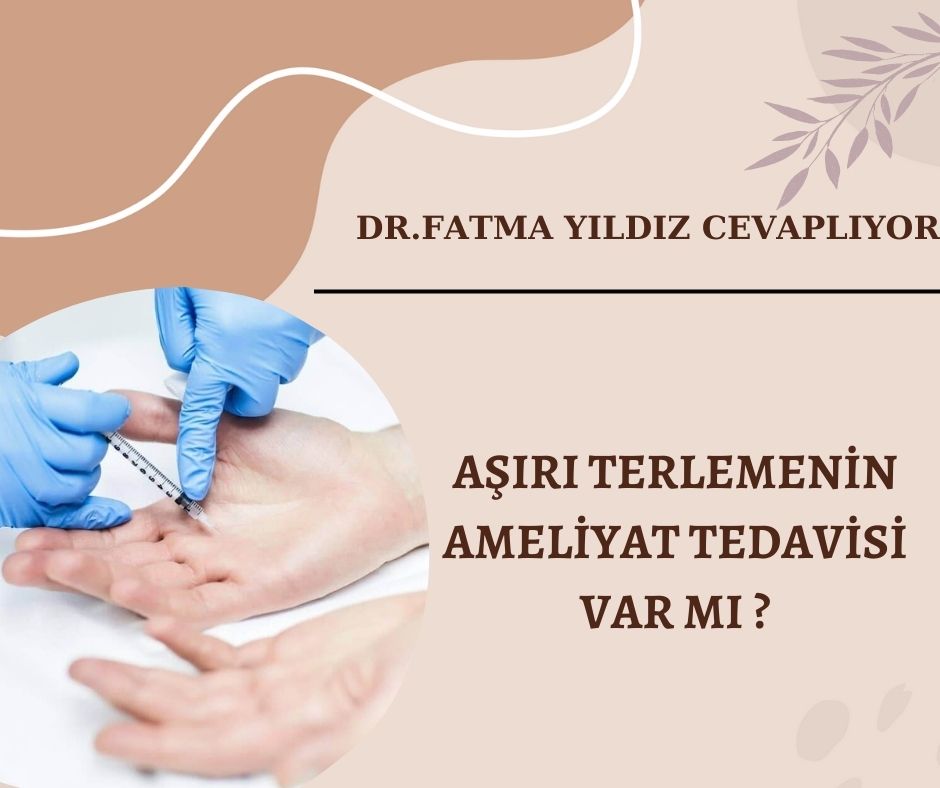

Is There a Surgical Treatment for Excessive Sweating?
LOCAL TREATMENTS USED IN THE TREATMENT OF EXCESSIVE SWEATING
Some topical agents (anticholinergic drugs, formaldehyde, tanning agents) used in the past in the treatment of hyperhidrosis (excessive sweating) are no longer widely preferred due to low efficacy and side effects. Instead, more effective and tolerable agents are used.
Topical Agents Used
Boric Acid and Tannic Acid Solutions:
Tannic acid or boric acid solutions of 2-5% can be used.
Potassium Permanganate Bath:
In our clinic, a 0.1% potassium permanganate bath is applied for 10 days in the treatment of hyperhidrosis. After this treatment, a powder containing boric acid, talc and zinc oxide is used for a certain period of time.
Formaldehyde and Glutaraldehyde:
Formaldehyde reduces sweating by closing the sweat pores. However, it is short-acting and can cause skin sensitivity.
Glutaraldehyde is used especially on the soles of the feet and usually causes a temporary brown coloration. It is generally not effective for the axillary (armpit) area.
Methenamine Mandelate:
This antibacterial agent, effective for mild to moderate hyperhidrosis, reduces sweating by converting to formaldehyde. It can be applied 3 times a week and rarely causes allergic reactions.
Treatment with Metal Salts
Aluminum salts are antiperspirant substances commonly used in the treatment of hyperhidrosis. These substances reduce sweating by physically blocking the sweat glands and are more effective when applied at night.
Method of Application:
In the treatment of axillary hyperhidrosis, a 20% aluminum chloride hexahydrate solution in absolute alcohol is applied to dry skin before going to bed at night.
Treatment is usually started for 2-7 days and continued if necessary after sweating is under control.
To reduce irritation, the skin can be washed in the morning, 1% hydrocortisone cream can be applied or it can be cleaned with carbonated water.
Advanced Application:
Aluminum chloride solution is covered with plastic sheeting and a 6-8 hour occlusion is applied. With this method, sweating can be reduced by up to 50% in a few days.
Hand and Foot Applications:
Concentrations of up to 30% may be required on the hands and feet. Treatment is continued regularly starting 3-5 nights a week. A plastic sheet can be sewn into a glove or sock for easier use.
Side Effects and Warnings
Stinging, burning, itching and irritation are common during treatment with aluminum salts.
Rarely, contact dermatitis may develop.
Since long-term use can cause atrophy in the sweat glands, the frequency of treatment should be reduced over time.
Treatment Success Rates:
The success rate in axillary hyperhidrosis is over 90%. However, there are disadvantages such as staining of fabrics.
Topical antiperspirants offer an effective and easy-to-apply treatment option for controlling mild to moderate hyperhidrosis. However, in cases of severe hyperhidrosis, switching to other treatment methods may be necessary.
I HAVE EXCESSIVE SWEATING, DOES IONTOPHORESIS TREATMENT WORK?
Iontophoresis with Tap Water: Simple and Effective Hyperhidrosis Treatment
Tap water iontophoresis is a safe, economical and simple method used in the treatment of excessive sweating (hyperhidrosis). This treatment is performed by applying a low level of electric current to tap water. The current reduces sweating by creating a physical blockage in the skin layer (stratum corneum) where the sweat glands are located.
How is the Treatment Applied?
Materials and Preparation:
Warm water is filled into shallow plastic containers where the hands and feet will be placed.
If there is damage to the skin on the palms, soles or around the nails, these areas are covered with Vaseline. This prevents burning or irritation of the skin.
Stainless steel or aluminum electrodes are used to conduct the electric current.
Treatment Process:
The hands and feet are immersed in water, then the current level is increased until a slight tingling sensation occurs.
The treatment period is usually between 10-20 minutes.
3-4 sessions are applied per week for the first week.
Significant improvement is seen after an average of 5-10 sessions, and complete treatment can be achieved after a total of 10-15 sessions.
Maintenance Sessions:
After the treatment is completed, 1-2 sessions are performed per week to maintain sweating control.
Success Rates
The success rate in hand and foot hyperhidrosis is close to 90%.
Full recovery is usually achieved within 20 days.
With battery-powered iontophoresis devices used at home, sweating reduction of 100% in the hands, 78% in the feet, and 75% in the armpits has been achieved.
Side Effects and Safety
Temporary skin irritation, tingling, or water-filled blisters (bullae) may occur during treatment. However, these effects are usually mild and short-term.
Long-term use is safe and does not cause any serious side effects.
Combined Treatment with Anticholinergic Drugs
In some cases, treatment can be strengthened by adding anticholinergic drugs to tap water. These drugs allow the treatment effect to start more quickly and last longer.
However, these drugs can cause dry mouth, difficulty urinating or abdominal pain
 Call
Call
 Whatsapp