


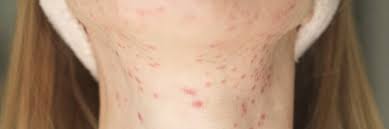

Why Do Large Acne Occur on the Neck?
The neck area is prone to large acne formation due to both its sensitivity to hormones and its openness to external factors. Especially with inflammation of hair follicles or deepening of clogged pores, lesions that grow under the skin and feel painful when touched may develop. Such large acne is usually cystic in structure and may spread under the skin over time.
The Effect of Hormonal Imbalances
Hormonal imbalances such as puberty, premenstrual cycle or polycystic ovary syndrome may trigger the formation of large and inflamed acne in the neck area. If there are recurring acne especially around the lower jawline and neck, the underlying hormonal causes may need to be investigated. In such cases, not only skin care but also supports that will provide internal balance become important.
Incorrect Product Use and Skin Irritation
Heavy-smelling perfumes applied to the neck area, alcohol-based lotions used after shaving or inappropriate cosmetic products may cause reactions in the skin. The blockage or irritation of such products in the pores may invite large acne. Skin-friendly ingredients should be preferred, and perfumed products should not be applied directly to sensitive areas such as the neck.
Why is it dangerous to squeeze large pimples?
Deep-seated and large pimples usually tend to spread under the skin. Therefore, intervening or squeezing can cause the inflammation to go deeper, heal in a longer time and leave a scar. In addition, new bacteria can be transferred to the area with the squeezing process. This brings a greater risk of infection.
How is it treated?
Topical (superficial) treatment may generally be insufficient for large neck pimples. At this point, antibiotic creams recommended by dermatologists, oral antibiotics or anti-inflammatory drugs can be used when necessary. Laser treatments or chemical peeling procedures can be effective in preventing scarring and improving the appearance of the skin.
Skin Cleansing and Preventive Measures
Regularly washing the neck area with soap-free cleansers, not leaving it moist after sweating and not allowing hair products to come into contact with the skin can reduce the formation of large pimples. In addition, avoiding tight collars that squeeze the throat in clothing selection prevents irritation and relaxes the skin.
Things to Remember
Not every big pimple may be just a superficial problem. Professional evaluation is essential, especially for recurring and persistent structures. Early intervention to prevent the progression of subcutaneous inflammation also minimizes the risk of scarring. For this reason, big pimples on the neck should be taken seriously and should be avoided by treating them with random products.
 Call
Call
 Whatsapp