


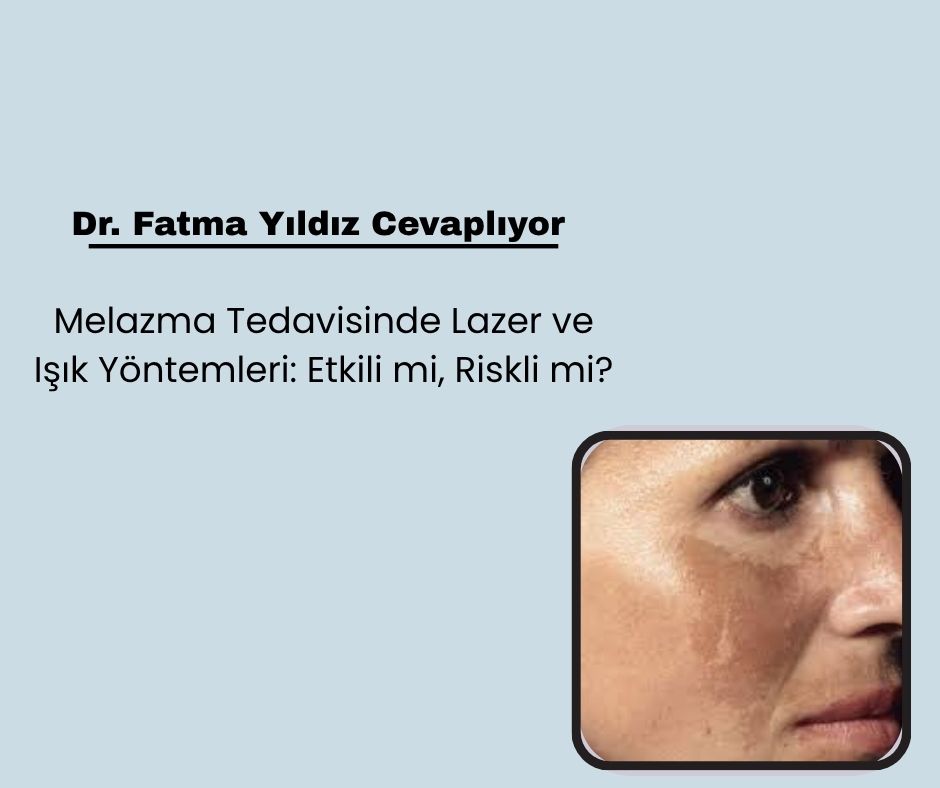

Laser and Light Methods in Melasma Treatment: Effective or Risky?
Melasma is an acquired hyperpigmentation disease that usually appears as symmetrical brown spots on the face, especially on the cheeks, forehead, nose and above the lips. Although it is most commonly seen in women with dark skin types, it can also occur in men and those with fair skin. Although the exact frequency of melasma is not known, it is detected in 4-10% of patients who apply to dermatology clinics and 15-50% of pregnant women.
Causes of Melasma
Many factors can contribute to the formation of melasma:
Hormonal changes (pregnancy, oral contraceptive use)
Intense exposure to sunlight
Genetic predisposition
Cosmetic products
Thyroid diseases and certain medications (e.g. antiepileptics)
Not only the increase in melanosomes, but also vascular changes and inflammation play an important role in melasma.
Laser and Light Methods in Melasma Treatment
Traditional treatments are performed with sun protection, topical lightening agents such as hydroquinone, azelaic acid, kojic acid, and topical retinoids such as tretinoin. However, laser and light treatments come to the fore in patients resistant to these treatments.
Q-Switched Lasers (Laser Toning)
Q-switched Nd:YAG laser targets melanin with low-energy, large-spot applications. This method is based on the principle of “subcellular selective photothermolysis”. However, mixed results have been obtained in studies: While significant improvement is seen in some patients, undesirable conditions such as increased pigmentation and recurrence have been reported in others.
Studies in which Nd:YAG laser and topical treatments are used in combination have reported more effective results than laser or topical treatment alone. However, even with these methods, the recurrence rate is high and complications such as hypopigmentation may occur.
Dual-Toning Method
This method, developed by Korean researchers, combines the long-pulsed Nd:YAG laser with the low-pulsed Q-switched laser. Thus, both effectiveness increases and side effects decrease. It has been shown that mosaic-style hypopigmentation rates are particularly low.
Other Laser Types
Alexandrite Laser (755 nm): Its effectiveness is similar to the Nd:YAG laser.
Erbium-YAG Laser (2940 nm): Although it provides significant improvements, it carries the risk of serious postinflammatory hyperpigmentation.
Fractional Lasers: Provides skin regeneration by creating microscopic thermal damage. However, the risk of recurrence and pigmentary disorders should be considered.
Pulse Dye Laser (PDL): Targets the vascular component and its effectiveness has been proven in some studies.
IPL (Intense Pulsed Light) Treatment
IPL can be effective on the pigment and vascular components of melasma by targeting both melanosomes and oxyhemoglobin. It has been shown that healthy melanocytes are preserved after IPL application, and therefore continuing topical treatment after IPL may reduce recurrence.
Disadvantages of Laser and Light Treatments
Postinflammatory hyperpigmentation
Hypopigmentation (especially in dark skin types)
High recurrence rates
Formation of temporary crust (scab) after application
Conclusion: Are Lasers Really Effective in Melasma Treatment?
The effect of laser and light treatments on melasma is still unclear. Since most studies have been conducted with a small number of patients and include short-term follow-ups, the results are contradictory. Therefore, regular sun protection and topical treatments are recommended as the first step in melasma treatment. Laser and light treatments should only be considered in resistant cases, considering possible complications.
It should not be forgotten that patience and long-term care are essential in melasma treatment.
 Call
Call
 Whatsapp