


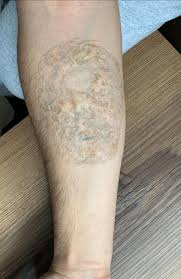

Laser Tattoo Removal: The Process and What You Need to Know
Getting a tattoo is a big decision, and removing it is also a process that should be carefully considered. Thanks to developing laser technologies, tattoos can now be largely removed. However, it is important to know how this process works, how many sessions it requires, and the factors that affect it.
How Does Laser Tattoo Removal Work?
Laser tattoo removal uses light energy at a specific wavelength to target and break down ink particles under the skin. Laser beams break the ink into very small pieces, and the body's immune system destroys these particles over time. As the sessions progress, the tattoo color gradually lightens and in some cases can disappear completely.
Different laser systems can be used:
✔ Q-Switch Laser: It is the most widely used tattoo removal technology. It can be effective for many colors with different wavelengths.
✔ Pico Laser: It is a more advanced system and can speed up the removal process by breaking the ink into smaller pieces.
✔ Nd:YAG Laser: It is a method used especially on dark skin tones and may leave fewer side effects.
How Many Sessions Does It Take to Remove a Tattoo?
The tattoo removal process is not completed in a single session. It usually requires a process ranging from 4 to 10 sessions. However, this period may be longer for some tattoos.
Factors affecting the removal time of a tattoo:
✔ Size of the tattoo: While small tattoos can usually be removed faster, large tattoos require more sessions.
✔ Color of the tattoo: Black and dark colored tattoos absorb the laser better and are removed faster. Light colors (yellow, green, blue) are more difficult.
✔ Age of the tattoo: Old tattoos can be removed more easily as the ink fades over time. New tattoos may require more sessions.
✔ Depth of the ink: While amateur tattoos are superficial and can disappear faster, professional tattoos can take longer as they are processed deeper.
✔ Skin type: While laser energy reaches the ink directly in people with light skin, more care should be taken in people with dark skin.
It is usually necessary to wait 6-8 weeks between sessions. This period is necessary for the skin to heal and the body to remove the broken ink.
Is Laser Tattoo Removal Painful?
A mild to moderate pain may be felt during the tattoo removal process. The pain may be similar to the feeling of being hit by a tire and for some people it may be milder or more intense than the pain felt while getting a tattoo.
To reduce pain:
✔ Local anesthetic creams can be applied before the session.
✔ The skin can be numbed using cooling systems.
✔ Applying ice after the session can reduce sensitivity.
Things to Consider After Laser Tattoo Removal
After the procedure, slight redness, crusting and temporary swelling may occur on the skin. This is completely normal and the skin will heal within a few weeks. However, the following rules should be followed for the process to proceed healthily:
✔ Do not expose the area to water for the first 24 hours.
✔ Do not pick the crusts and avoid scratching the area.
✔ Sun protection is very important. Use at least 50 SPF sunscreen to protect the treated area from sunlight.
✔ Avoid swimming in the pool, sauna and sea for a while.
✔ Aloe vera gel or moisturizing creams can be used to soothe the skin.
Is Tattoo Removal Suitable for Everyone?
Laser tattoo removal is safe for most people, but caution should be exercised in some cases:
???? It is not recommended for pregnant and breastfeeding women.
???? Those with skin diseases or wound healing problems should consult their doctors beforehand.
???? Pigment changes (hyperpigmentation or hypopigmentation) may occur in very dark-skinned people, so the appropriate laser type should be selected.
Can Tattoos Be Completely Removed?
Whether a tattoo can be completely removed or not depends on the factors mentioned above.
✔ Black and dark colored tattoos can usually be completely removed.
✔ Light colored tattoos are more difficult to remove and may leave a slight mark.
✔ Very deep tattoos can fade to a great extent, even if they do not completely disappear.
Therefore, it is important to create realistic expectations before starting the tattoo removal process. The specialist performing the procedure will inform you about the process your tattoo will go through.
Conclusion: Laser Tattoo Removal is an Effective but Patience-Requiring Process
Laser tattoo removal is one of the most effective and safe methods for getting rid of tattoos today. However, it should not be forgotten that it can take several sessions and that the results will vary depending on your skin type and the characteristics of the tattoo. If you are considering removing your tattoo, you can determine the most suitable method for you by consulting a specialist doctor or aesthetician.
The removal process requires careful research, as much as getting a tattoo. When the right specialist and appropriate technology are chosen, you can get rid of your tattoo healthily and safely!
 Call
Call
 Whatsapp