


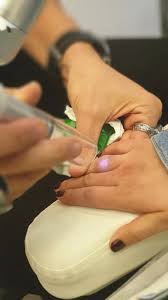

Why is Q-Switched Laser Preferred?
Q-Switched laser is one of the most preferred methods for tattoo removal because:
It targets only the ink without damaging the skin.
It can remove tattoos of various colors thanks to its different wavelengths.
It offers minimal side effects and a fast healing process.
It gives the best results especially in ink tones such as black, dark blue and dark green. Additional sessions may be required for light-colored tattoos.
Tattoo Removal Process with Q-Switched Laser
This process usually requires several sessions and a significant fading of the tattoo color is observed in each session.
While small and superficial tattoos can be removed in 4-6 sessions, 8-12 sessions may be required for deep and densely inked tattoos.
Session intervals are usually 4-6 weeks and sufficient time should be given for the skin to repair itself.
Even after the first session, a visible fading occurs in the tattoo.
Post-Procedure Skin Care
Some important care steps should be taken for the skin to heal quickly after laser tattoo removal:
Sun protection is very important. High factor sunscreens should be used, and the treated area should not be exposed to direct sunlight.
Precautions should be taken against skin dryness. Moisturizing creams recommended by the doctor should be used, and excessive drying of the skin should be prevented.
In case of itching and crusting, the area should not be intervened. Early removal of crusts may increase the risk of scarring on the skin.
Is Tattoo Removal with Q-Switched Laser Safe?
This method is approved by the FDA and is quite safe when applied by specialist doctors. A slight stinging sensation may occur during the procedure, but this discomfort is usually minimized with anesthetic creams.
Conclusion
Q-Switched laser is one of the safest and most effective methods of tattoo removal. However, the process of completely removing the tattoo may vary depending on the person. The success of the procedure depends on the color of the tattoo, the density of the ink and the skin type. Therefore, it is the best approach to evaluate the process with a specialist.
 Call
Call
 Whatsapp