


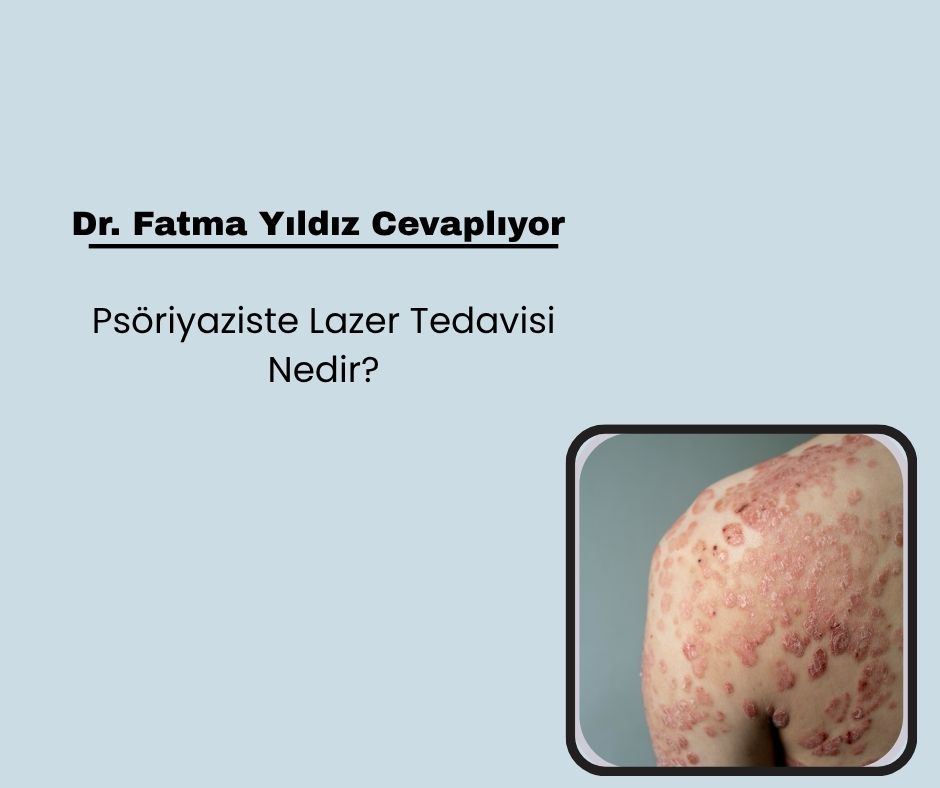

Laser Treatment in Psoriasis
A Guide with Effective Methods and Scientific Data
Psoriasis is a chronic, inflammatory skin disease. Treatment in this disease is planned depending on many factors, from the patient's age to gender, pregnancy-breastfeeding status to the presence of internal organ disease, and the prevalence and location of the lesions. Since it is a long-term disease, the selection of treatment is very important for the few side effects and ease of application.
Today, topical treatment, phototherapy, systemic treatments and laser applications are included in the treatment of psoriasis. However, topical treatments are found troublesome by patients, phototherapy can cause undesirable effects on healthy skin and serious side effects are on the agenda in systemic treatments. For these reasons, interest in laser treatments that can only be applied to lesions is increasing.
308 nm Excimer Laser Treatment (Targeted Phototherapy)
Excimer laser is a new generation phototherapy method used in many dermatological diseases, especially psoriasis. It operates at a wavelength of 308 nm and is very close to narrowband UVB. This treatment prevents damage to healthy skin by delivering high-dose UV rays only to the lesioned area.
Advantages of Excimer Laser:
Reduces UV-related side effects on healthy skin.
Application time is short.
Since it delivers high-dose energy only to the lesioned area, the treatment provides rapid results.
It can be applied to anatomically difficult-to-reach areas such as the nose, ear, scalp, and genital area.
It can also be used in pediatric patients.
The treatment dose usually varies between 8-16 times the minimal erythema dose and is continued until the plaques become thinner or hyperpigmentation is seen. It can be applied 1-3 times a week and 1 to 6 sessions may be sufficient. Side effects include burning, erythema, purpura, pigmentation changes, and rarely bullae. It should not be applied to those with photosensitivity, lupus, skin cancer risk or history, or those using drugs that cause photosensitivity.
Excimer laser, which has been used since 1997, has been found to be effective especially in localized lesions resistant to other treatments. It has given quite successful results in resistant areas such as scalp, genital area, knee and elbow.
Excimer Laser vs. Narrowband UVB
Köllner et al. found no significant difference in a comparative study of 308 nm excimer laser, excimer lamp and 311 nm UVB; however, they reported that the cumulative dose was lower in laser treatment. Other studies have emphasized that excimer laser is more effective.
Patient Satisfaction
In a study conducted in 2002, 55% of 124 patients who received UVB laser treatment stated that they were satisfied with the treatment. Another study reported the healing rate as 75% in UVB laser and 46% in classical phototherapy. It is also stated in the literature that excimer laser is more effective than placebo and some topical treatments.
Combination Treatments
Excimer laser; It provides more effective results with topical treatments such as flumethasone/salicylic acid, calcipotriene, dithranol. It is also effective and safe in pediatric patients.
Remission Period and Maintenance Treatment
The duration of remission varies between 3 months and 1 year depending on the studies. Weekly, biweekly and monthly applications have been recommended for maintenance treatment.
CO2 Laser Treatment
There are only three studies on CO2 laser in PubMed and only one of them reported positive results. The general opinion is that CO2 laser is not effective in psoriasis and is not used today.
Er:YAG Laser Treatment
Erbium:YAG laser was used in animal models in only one study to increase methotrexate absorption. Its clinical use is not widespread yet.
Nd:YAG Laser Treatment
The 1064 nm wavelength form of Nd:YAG laser has yielded positive results with its effect on vessels in resistant psoriasis plaques. 1320 nm Nd:YAG provided 3-month relief, but early recurrence was observed in some cases.
Pulse Dye Laser (PBL) Treatment
Pulse Dye Laser with a wavelength of 595 nm has been found to be particularly effective in nail psoriasis. Both long and short pulse durations have yielded successful results. PBL treatment is applied once a month and high patient satisfaction has been reported.
Conclusion
According to current literature data, the most effective laser treatment for skin lesions in psoriasis treatment is 308 nm Excimer Laser, and Pulse Dye Laser for nail lesions stands out. Excimer laser is an effective and safe option for both pediatric and adult patients. The results are more successful, especially when combined with topical treatments.
For detailed information and individual evaluation regarding laser applications in psoriasis treatment, you can contact dermatologist Dr. Fatma and make an appointment through Ankara Life.
 Call
Call
 Whatsapp