


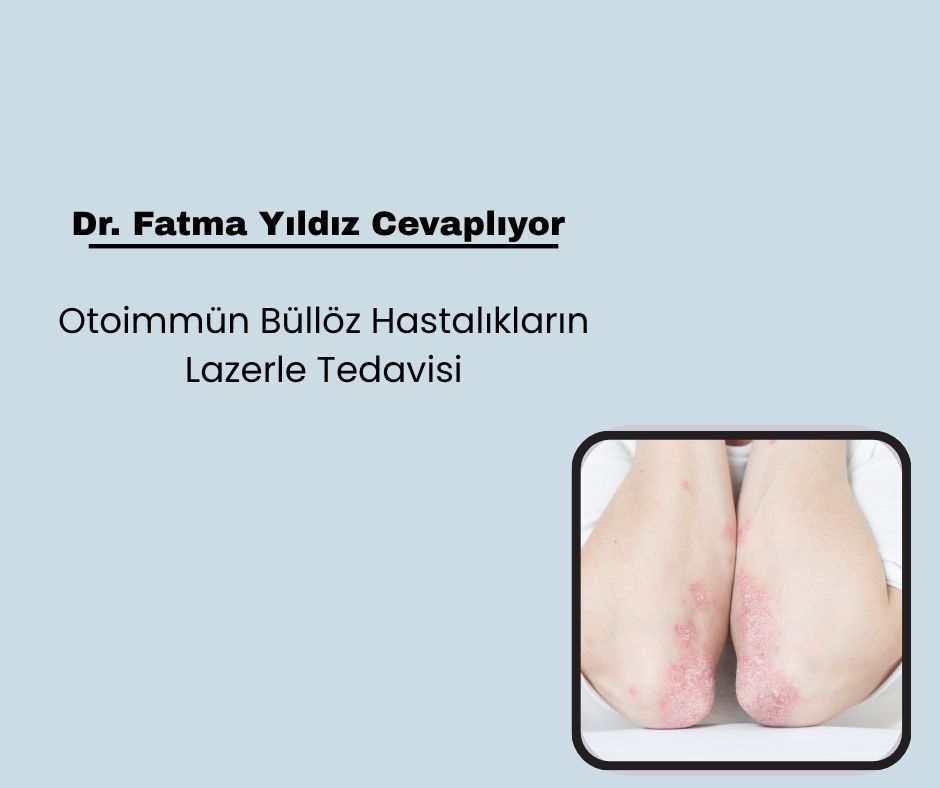

Laser Treatment of Autoimmune Bullous Diseases
Safe and Effective Approaches at Ankara Life Polyclinic
Autoimmune bullous diseases are disorders that progress with chronic and resistant skin lesions, especially pemphigus vulgaris, cicatricial pemphigoid, Hailey-Hailey (HH) disease and epidermolysis bullosa. Although traditional treatments are often limited to systemic steroids, immunosuppressants and topical agents, there have been significant developments in the use of laser technology in the field of dermatology in recent years.
Ankara Life Polyclinic is one of the leading centers that closely follows these developments and introduces modern laser treatment options to its patients. One of the experienced physicians of the clinic, Specialist Dr. Fatma Yıldız, offers an evidence-based and patient-focused approach based on scientific literature in the laser treatment of autoimmune bullous diseases.
Targeted Intervention in Resistant Lesions with CO₂ Laser
CO₂ laser is a type of laser that creates an ablative effect by targeting water and vaporizes the epidermal layers in a controlled manner. It is reported in the literature that it provides successful results especially in autoimmune bullous diseases such as Hailey-Hailey disease and rarely pemphigus vulgaris. With the wound healing process lasting 1-4 weeks after the application, significant improvements can be achieved in resistant and localized lesions.
At Ankara Life Polyclinic, under the leadership of Specialist Dr. Fatma Yıldız, CO₂ laser treatment is safely applied especially in patients with localized lesions and significant improvements are observed in a short time.
Er:YAG Laser: Less Thermal Damage, Faster Recovery
Er:YAG laser is a system that provides tissue ablation with less thermal effect compared to CO₂ laser. With this feature, it minimizes the risk of scarring in HH disease and offers a more comfortable recovery process. In addition, it is well tolerated by patients due to its painless application feature.
In our polyclinic, Er:YAG laser is evaluated as a minimally invasive but effective option in patients with high skin sensitivity and successful results are obtained.
Low-Level Diode Laser Treatment (DSLT): Special Solution for Oral Mucosa
In diseases such as pemphigus vulgaris and cicatricial pemphigoid, resistant and painful lesions are frequently seen especially in the oral mucosa. In such cases, low-level diode lasers operating at wavelengths of 660–980 nm stimulate cell metabolism, accelerate tissue regeneration and reduce pain.
Specialist Dr. Fatma Yıldız makes significant contributions to the treatment of patients with oral lesions, especially with DSLT applications, and increases patient comfort by minimizing the side effects of systemic treatments.
Laser Successes in HH and EB Patients
There are many cases where both CO₂ and fractional lasers are successfully used in HH disease. Laser ablation eliminates defective epidermal tissue while supporting the regeneration of normal epidermis over intact structures. In addition, reducing sweating by destroying eccrine glands eliminates disease triggers.
In patients with epidermolysis bullosa (EB), laser therapies are preferred especially for the purpose of accelerating wound healing and successful results are obtained.
Alexandrite and Pulsed Dye Laser (PDL): Alternative Methods
Alexandrite laser, which targets melanin, has been used successfully in only one HH case in the literature. Pulsed dye laser (PDL), on the other hand, has incidentally provided remission in HH disease by acting on vascular structures. These lasers have a safe usage profile, especially in dark-skinned patients.
Conclusion: Laser Treatments Are Now an Effective Alternative in Skin Diseases
Today, laser technology has gained an important place in the treatment of autoimmune bullous diseases not only in terms of aesthetics but also in terms of clinical success. Ankara Life Polyclinic offers personalized and effective treatment options by bringing together current approaches in this field with its patients.
Specialist Dr. Fatma Yıldız successfully applies laser therapies in both localized resistant lesions and oral mucosal involvements and exhibits a holistic approach to increase the quality of life of her patients.
 Call
Call
 Whatsapp