


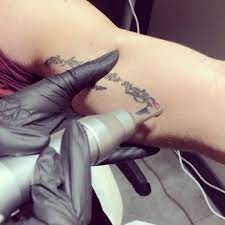

Nd:YAG Laser Tattoo Removal
The Nd:YAG (Neodymium-doped Yttrium Aluminum Garnet) laser is a widely used technology for tattoo removal. This laser, especially the Q-Switch Nd:YAG version, targets tattoo ink and breaks up the ink particles under the skin. Over time, the process allows the body to naturally remove these broken ink particles.
How Does It Work?
Laser Light: The Nd:YAG laser delivers powerful pulses of light. This light targets tattoo ink under the skin and breaks up the ink particles.
Light Absorption: The ink absorbs the laser light and this energy heats up the ink particles and breaks them up.
Broken Ink: The broken ink is cleared by the body's immune system through the lymph.
Q-Switched Nd:YAG Laser Features:
Different Wavelengths: The Q-Switch Nd:YAG laser generally has wavelengths of 1064 nm (for dark tattoos) and 532 nm (for red, yellow, green tattoos). These different wavelengths are used to affect tattoos of various colors.
Fast and Effective: The Q-Switched Nd:YAG laser usually removes tattoos quickly and effectively, but may require several sessions.
What Tattoos Does It Work With?
Dark Tattoos: Dark colored tattoos, such as black and blue, can be removed more easily with the Q-Switched Nd:YAG laser. Black ink responds particularly well.
Colored Tattoos: The 532 nm wavelength of the Q-Switched Nd:YAG laser can target colors such as red and orange. However, yellow, green, and blue tones usually require more sessions.
Treatment Process:
Number of Sessions: Depending on the size, color and depth of the tattoo, 6-12 sessions may usually be required. A break of approximately 6-8 weeks is recommended between sessions.
Healing Time: There may be slight redness and crusting after laser treatment, but this usually passes within a few days.
Skin Care: Skin care is important after laser treatment. Sun protection should be provided and irritating chemicals should be avoided until the skin heals.
Side Effects and Risks:
Skin Irritation: There may be redness, swelling or bruising on the skin after laser treatment, but it is usually temporary.
Pigmentation Changes: There may be a risk of hypopigmentation (skin lightening) or hyperpigmentation (darker color) in low skin types.
Scar Risk: As with any laser treatment, scarring may occur as a result of incorrect technique or excessive application.
 Call
Call
 Whatsapp