


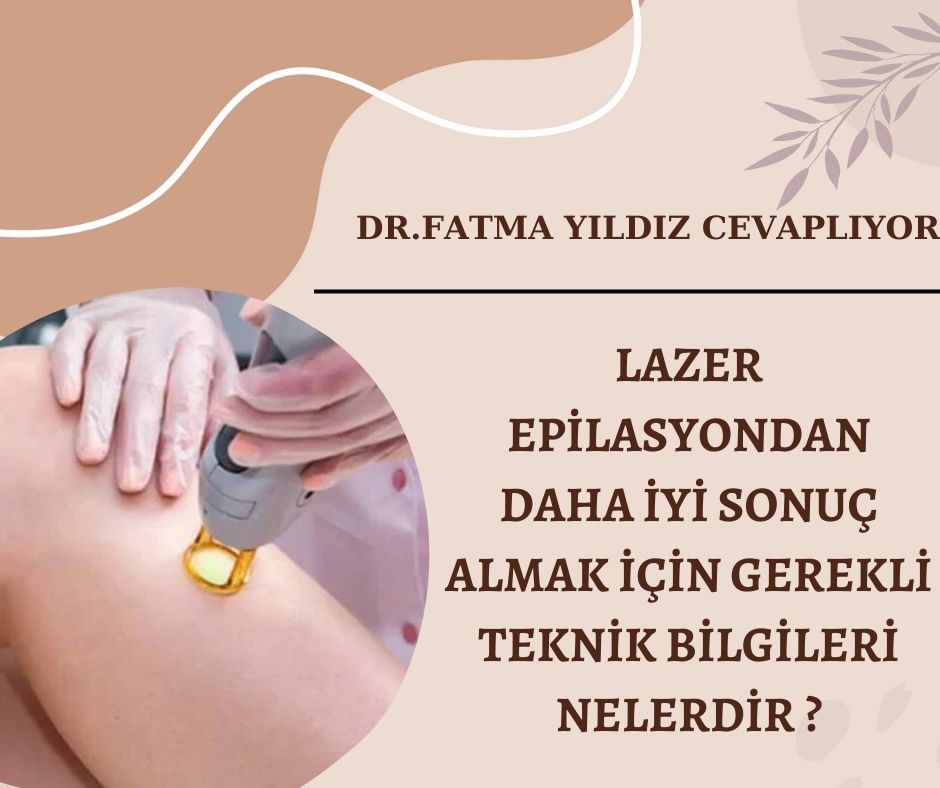

NECESSARY TECHNICAL INFORMATION TO GET GOOD RESULTS FROM LASER EPILATION?
The technical specifications of laser devices used in laser epilation are summarized below. The subject I want to mention is the gold standard in laser epilation is the alexandrite laser. Especially FDA-approved brands of alexandrite laser devices should be preferred. Technical specifications to be considered to get good results from laser epilation
;
1. Wavelength
Wavelength determines the depth the laser device affects and how effective it is on the hair follicle. Laser devices are named according to their wavelengths and each offers different advantages for different skin types:
Ruby Laser (694 nm): It is the first laser epilation device, but it is no longer used because it is insufficient in depth and has a high risk of skin damage.
Alexandrite Laser (755 nm): More effective on people with fair skin.
Diode Laser (808-810 nm): Suitable for people with medium dark skin.
Nd:YAG Laser (1064 nm): Safe for very dark skinned and tanned individuals.
The laser beam reaches deeper as the wavelength increases. For example, Diode and Nd:YAG lasers are preferred for tanned or dark-skinned individuals because there is less risk of skin damage.
2. Energy Level
The amount of energy (Joule/cm²) sent by laser devices increases the effect of epilation. However, the higher the energy level, the greater the risk of side effects on the skin.
Goal: To use the highest energy level without damaging the skin to get the most effective results.
The appearance of redness and slight swelling (perifollicular erythema and edema) on the skin indicates that the correct energy level is being used.
3. Pulse Duration
The pulse duration indicates how long the laser beam is applied to the skin and is usually measured in milliseconds (ms).
For bronze and dark-skinned individuals: The risk of skin burns can be reduced by extending the pulse duration.
Since human hair can withstand heat for 3-300 ms, most epilation devices work within this range.
4. Head Size
Head size refers to the size of the area affected by the laser beam on the skin.
Large heads: Can reach larger areas and the laser beam penetrates deeper into the skin. This makes epilation more effective.
For example, a study found that 10% more hair was lost in an area where an 18 mm head was used compared to a 12 mm head.
5. Cooling
In laser epilation, only the melanin in the hair follicles is targeted, but the melanin on the skin surface can also absorb the beam, and this can cause heat-related damage to the skin.
Cooling methods:
Devices that blow cold air.
Cooling systems that come into contact with the skin.
Cryogenic gas (cold gas spray).
Cooling reduces the risk of burns on the skin, especially in dark-skinned individuals, and relieves pain during the procedure. It also ensures that high energy levels are used safely.
Each of these factors allows laser hair removal to be adjusted to the individual. Therefore, it is of great importance to adjust the parameters according to the skin type, hair structure and the patient's expectations before the procedure.
 Call
Call
 Whatsapp