


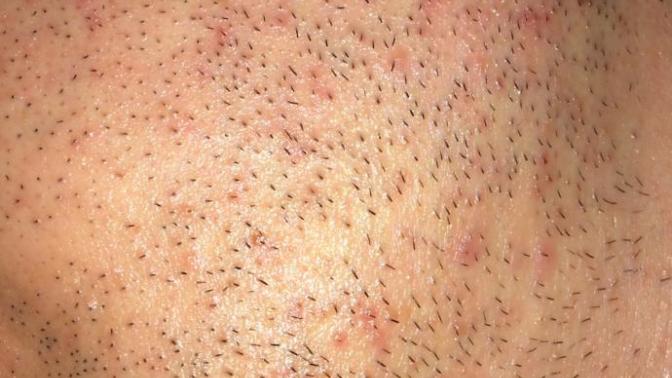

Why Do Hollow Scars Form?
When acne is deep and inflamed, the skin tissue may not be able to fully recover during the healing process. This causes hollows to form on the skin surface. Especially when acne is squeezed or harsh interventions are made without leaving it alone, skin damage increases and the risk of scarring increases.
There May Be Different Types of Hollow Scars
Pit-shaped acne scars are called "atrophic scars" in medicine. They are also divided into different types. There are varieties such as ice pick scars (deep and narrow), boxcar scars (wide with sharp edges) and rolling scars (wavy appearance). The treatment approach may be different for each.
How Effective is the Use of Cream at Home?
If the scars are very new, some improvement can be achieved by regularly using creams containing skin-supporting ingredients. Vitamin A derivatives (retinoids), in particular, can reduce the appearance of light hollow scars by supporting skin renewal. However, it may be difficult to get results with creams alone in deep scars.
More Effective Results with Professional Skin Applications
The most effective methods in the treatment of pit scars are usually dermatological procedures. Applications such as fractional laser, micro-needling (dermaroller or dermapen), PRP and chemical peeling increase the skin's collagen production and allow the tissue to recover over time. The appropriate method is determined by the depth of the scars and skin structure.
The Treatment Process Requires Time and Patience
The treatment of pit scars is a process. Since the skin is a structure that renews itself slowly, it is unrealistic to expect a miracle in a few sessions. With regular follow-up, the right products and expert support, significant improvement can be achieved in the skin. The important thing is to approach the process patiently and ensure that the treatment continues steadily.
It is Necessary to Prevent the Formation of New Acne
It is also very important to prevent the formation of new acne while the treatment of existing scars continues. Because every new inflamed acne means a potential new scar. Therefore, both stain treatment and acne control should be carried out simultaneously. Cleansing products, sunscreen and a care routine suitable for the skin type gain importance at this point.
 Call
Call
 Whatsapp