


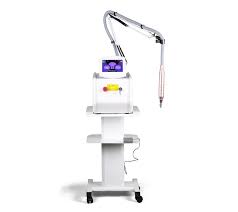

Information About Tattoo Removal with Q-Switched Laser
Although getting a tattoo is a personal choice, there are many people who give up this decision over time and do not want to carry their tattoos anymore. Today, thanks to the developing laser technologies, tattoo removal processes have become much safer and more effective. One of the most preferred methods in this field is Q-Switched laser technology. In this article, I would like to explain in simple language the questions about the tattoo removal process with Q-Switched laser.
What is Q-Switched Laser?
Q-Switched laser is a laser system specially developed for tattoo removal processes that can produce short and high-energy light pulses. The most important feature of this system is that it can break down the pigments under the skin into microscopic particles without damaging the tattoo ink. These broken paint residues are naturally eliminated by the body over time.
For Which Tattoos Is It Used?
Q-Switched laser is a technology that can give effective results in both black and colored tattoos. It is especially successful in black and dark colored tattoos. For light-colored tattoos, the number of sessions may increase, but satisfactory results can still be achieved with advanced devices.
What is the Application Process?
First, the color, density, depth and skin type of the tattoo are evaluated. Before the application, if necessary, the area can be numbed by applying local anesthetic cream. During the procedure, the laser light is sent to the tattoo and affects the pigments. Each session usually lasts 10 to 30 minutes and the procedure is performed in an outpatient, clinical environment.
How Many Sessions Are Required?
Q-Switched laser tattoo removal requires more than one session. A process that usually varies between 4 and 10 sessions is planned depending on the characteristics of the tattoo. An average of 6-8 weeks must be waited between sessions for the skin to heal.
What Changes Occur in the Skin After the Procedure?
After the procedure, slight redness, edema or crusting may be observed in the application area. These are temporary reactions and will decrease and disappear within a few days. During this period, taking care of your skin, protecting yourself from the sun and using products recommended by the doctor support healing.
Will There Be a Permanent Scar?
Q-Switched laser applications performed with the appropriate dose, the right device and by a specialist physician usually do not leave permanent scars. However, factors such as skin type, tattoo structure and the person's healing process can affect the result. Therefore, it is important to make a special evaluation for each patient.
Who is it not suitable for?
Q-Switched laser is not recommended during pregnancy, for individuals with active skin infections and for people with hypersensitivity to light. In addition, the medications used before the procedure, skin type and general health status should be evaluated in detail.
Conclusion
Q-Switched laser is an effective and skin-friendly technology that has been used safely in the field of tattoo removal for many years. If you want to get rid of your tattoo safely, the best step is to evaluate this method with the help of a specialist physician. Every skin is different, and the structure of every tattoo is special. Therefore, a controlled progress of the process with a personalized plan both increases success and protects skin health.
I Wish You Healthy Days.
 Call
Call
 Whatsapp