


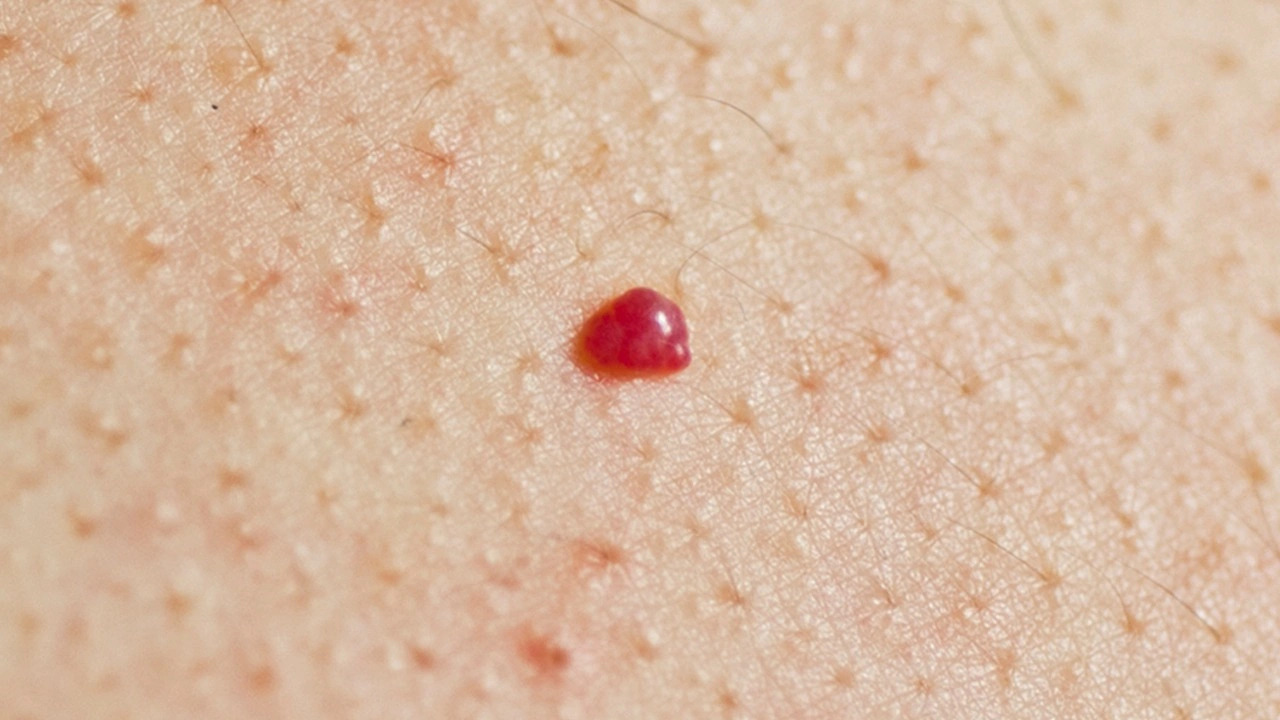

A red mole, or "hemangioma" as it is called in medicine, is a red, swollen lesion on the skin. This lesion is caused by excessive development of blood vessels under the skin. Although it is mostly a congenital condition, it can sometimes occur later.
Red moles are usually located in visible areas of the body such as the face, neck, arms or torso. It initially appears as a small dot, but over time it can grow and become more noticeable. Some red moles are flat and smooth, while others may have a more raised and irregular appearance.
Red moles can be quite striking in appearance and can be a source of aesthetic discomfort for some people. However, most of the time red moles do not cause any health problems and are not dangerous. However, in some cases, especially large or visible red moles can affect a person's social and psychological well-being.
Symptoms and causes of a red mole
The most obvious symptom of a red mole is a red, swollen lesion on the skin. This lesion is usually a congenital condition, but sometimes it can occur later.
The main reason for the formation of a red mole is the excessive development of blood vessels under the skin. This excessive development causes a swollen and red lesion to form on the skin. In some cases, red moles may be congenital, while sometimes they may develop later as a result of various factors such as trauma, infection or hormonal changes.
Red moles usually appear within the first year after birth and are mostly seen in young children. However, red moles may also occur in adults. Red moles, which are more common in women, may also appear as a result of hormonal changes.
Red moles do not usually cause any health problems, but in some cases they can cause bleeding, infection or psychological problems due to their appearance. Therefore, it is important to be informed about red moles and take the necessary precautions.
Red mole treatment and prevention methods
Red moles often do not require any treatment and can disappear on their own over time. However, in some cases, treatment may be required due to the size, location or discomfort caused by the red mole.
Various methods can be used in the treatment of red moles:
Monitoring: Small and asymptomatic red moles are usually kept under monitoring. The doctor regularly checks the size and changes of the mole.
Corticosteroid creams: Creams containing corticosteroids can be used to slow down or reduce the growth of the red mole.
Laser treatment: Laser treatment can be applied to target the vessels of the red mole and shrink the lesion.
Surgical intervention: Red moles that are large or located in visible areas and cause aesthetic or functional problems can be surgically removed.
In order to prevent red moles, precautions to be taken during birth are important. Mothers not smoking, not drinking alcohol and adopting healthy eating habits during pregnancy can reduce the risk of red moles in babies.
It is also important for children with red moles to be protected from the sun, avoid trauma and have regular check-ups. In this way, the growth of the red mole and its complications can be prevented.
Prevalence of red moles
Red moles are a very common skin lesion. Although they are more common among babies and young children, red moles can also be seen in adults.
According to research, red moles develop in approximately 10% of babies at birth. Some studies show that the prevalence of red moles is between 12% and 22% in the first year after birth.
Red moles are usually seen on the face, neck, trunk and extremities. In some children, red moles can also occur on internal organs, but this is quite rare.
Although red moles are mostly an aesthetic problem, in some cases they can also cause functional or psychological problems. Therefore, it is important to be informed about red moles and take the necessary precautions.
 Call
Call
 Whatsapp