


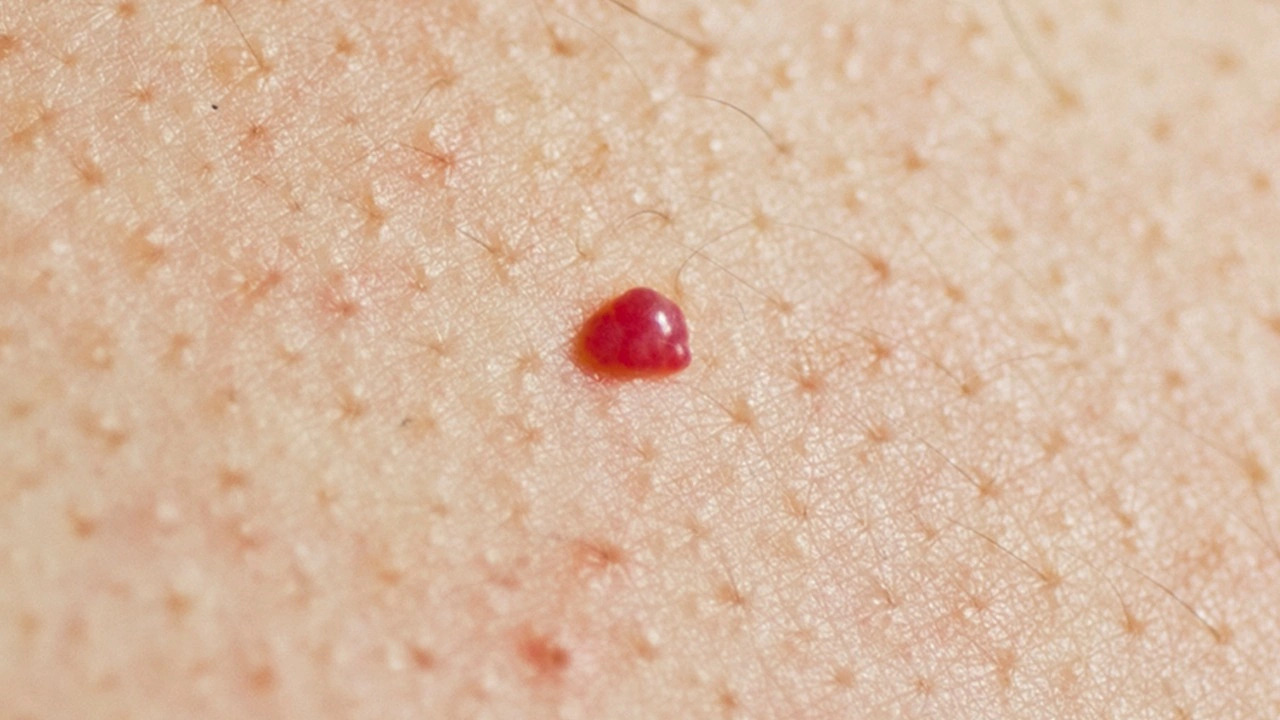

There are always moles of different shapes and colors on our body. Most of them usually appear in brown, pink or lighter tones. However, sometimes red moles can occur. These red moles are actually a condition caused by the blood vessels being close to the skin.
Red moles can be seen in any part of the body. They usually appear as irregularly shaped and undefined spots. Sometimes they can be seen as small, round or oval red dots. These red moles can vary from person to person and can be more noticeable in some, while they can be almost unnoticeable in others.
The formation and appearance of red moles can vary depending on the body structure, skin color, age and other factors. However, in any case, these red moles are considered to be completely normal and healthy. The important thing is to check these moles regularly and observe if there are any changes.
Red Mole Formation on the Body
The formation of red moles is basically related to the blood vessels being close to the skin. There are capillary vessels in our body that provide blood circulation. These capillary vessels are located very close to the skin.
Sometimes, the walls of these capillaries can thin, causing blood cells to come closer to the skin. In this case, blood cells come closer to the skin surface and create a red appearance. This is the reason for the formation of red moles on the body.
In addition, differences in skin structure can also be effective in the formation of red moles. The skin structure of some people can cause blood vessels to appear more prominent. This leads to a more visible appearance of red moles.
Age is also an important factor in the formation of red moles. Especially in old age, red moles can be seen more frequently due to decreased skin elasticity and changes in blood circulation.
Red Mole Types and Characteristics
Red moles on the body can be seen in different types and characteristics. The most common of these are:
1. Hair Root Moles: These moles are usually seen in hairy areas of the body (e.g. back, chest, legs). They appear as small, round or oval-shaped red spots.
2. Vascular Moles: These moles are seen as irregularly shaped and undefined red spots caused by blood vessels being close to the skin surface.
3. Aneurysmal Moles: These moles are caused by dilated blood vessels and usually cause more pronounced, round or oval-shaped red spots.
4. Strawberry Moles: These moles refer to red, raised spots that resemble strawberries. They are often seen on areas such as the face, neck or chest.
5. Lymphangioma Moles: These moles describe irregularly shaped and undefined red spots caused by the dilation of lymphatic vessels.
The characteristics of red moles may vary depending on their type. Some are more pronounced and darker in color, while others may be paler and harder to notice. In addition, some red moles may grow or shrink over time and their colors may also change.
Causes of Red Moles
Many different reasons may be effective in the formation of red moles. The main ones are as follows:
6. Changes in the Structure of Blood Vessels: The thinning or widening of the walls of blood vessels can cause red moles to form.
7. Differences in Skin Structure: The skin structure of some people causes blood vessels to appear more prominent.
8. Age: Red moles can be seen more frequently in old age due to decreased skin elasticity and changes in blood circulation.
9. Sunlight: Excessive sun exposure can cause blood vessels to widen and red moles to form.
10. Hormonal Changes: Pregnancy, menopause or some hormonal disorders can cause red moles to appear.
11. Traumas: Various traumas that occur in the body can cause red moles to form.
12. Genetic Factors: The genetic structure of some people can cause red moles to appear more frequently.
As a result, many different factors can play a role in the formation of red moles. Understanding these is important in order to correctly evaluate these moles and take the necessary precautions.
 Call
Call
 Whatsapp