


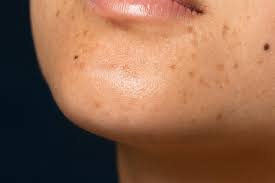

What is the Difference Between a Sun Spot and a Mole?
While dark spots that appear on the skin from time to time can sometimes be sun spots, they can sometimes be confused with structures we call moles (nevus). Making this distinction is very important both for aesthetic concerns and health. Because while some moles can rarely be a symptom of serious problems such as skin cancer, sun spots are usually harmless but can be visually disturbing.
What is a Sun Spot?
Sun spots usually appear in areas exposed to the sun such as the face, hands, shoulders and décolleté. They are flat and painless formations in light brown tones, usually with no clear borders. They are formed due to melanin pigment accumulating in the skin after prolonged sun exposure. They are most commonly seen in people over the age of 30, but can also appear at an earlier age if the skin type is suitable.
What is a Mole?
Moles are structures formed by the clustering of pigment cells (melanocytes) in the skin. They can be congenital or develop over time. Their colors can range from light brown to black. Their surfaces can be flat or raised. Some moles may change shape or color over time, and this should be monitored carefully.
How to Understand Which One is Caused by the Sun?
Sunspots usually become more visible in the summer months and are usually seen in flat, widespread areas of a few millimeters. Moles, on the other hand, appear in more limited numbers and in individual foci. A mole does not form directly due to sunlight; however, the sun can darken the color of existing moles or affect their shape.
Are Color and Shape Changes Important?
Yes, especially changes that occur in moles over time (darkening of color, irregular edges, growth, itching or bleeding) should definitely be evaluated by a specialist dermatologist. Sunspots, on the other hand, usually remain fixed, do not grow and do not change shape.
What Methods Are Used to Make a Diagnosis?
The formations on the skin can be examined in detail with the help of a special magnifying glass called dermatoscopy. The specialist approaches the diagnosis by evaluating the borders, color, surface and internal structure of the spot or mole. Advanced tests such as biopsy may be performed if necessary.
What is the Treatment Approach?
Sunspots are usually treated for aesthetic purposes. Their appearance can be reduced with methods such as spot-lightening creams, chemical peels, laser or mesotherapy. Moles are generally not treated. However, if there is a suspicious situation, they may need to be surgically removed.
Protection Comes First
Whether it is a mole or a sunspot; sun protection is very important in both cases. Using a broad-spectrum, high-factor sunscreen helps prevent both the formation of new spots and damage to existing moles.
When to See a Specialist?
When you notice a new spot on your skin, especially if it is dark in color, growing rapidly or irregular in shape, you should definitely see a dermatologist. Because early diagnosis is the most effective step in all skin-related problems.
 Call
Call
 Whatsapp