


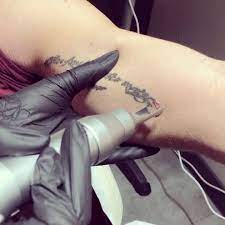

Can Tattoos Be Completely Removed?
The tattoo removal process uses laser technology to break down the tattoo ink and eliminate it over time. However, whether a tattoo can be completely removed depends on many factors such as the color, size, age, ink density and skin type of the tattoo.
Can They Be Completely Removed?
✅ Black and Dark Tattoos
They are the easiest to remove because they absorb laser light the best.
With technologies such as Q-Switched Nd:YAG and PicoLazer, they can be completely removed by 90-100%.
???? Colored Tattoos (Blue, Green, Yellow, Red)
They can be more difficult to remove because some colors do not absorb laser light well.
Especially blue and green colors can be resistant in some laser systems.
The success rate can be increased with special wavelength lasers (such as PicoLazer).
???? White and Flesh-Colored Tattoos
Almost indelible because these colors reflect laser light back.
Darkening may occur as a reaction to the laser procedure.
???? Old Tattoos vs. New Tattoos
Old tattoos are usually easier to remove because the ink breaks down over time.
New tattoos (especially those done within 1-2 years) may require more sessions because they are applied deeper.
⚠ Amateur Tattoos vs. Professional Tattoos
Amateur tattoos are usually easier to remove because they are more superficial and irregular ink.
Professional tattoos may require more sessions because they are applied to deeper layers of the skin.
How Many Sessions Are Required to Completely Remove?
???? Black tattoo: 4-8 sessions
???? Blue, green, red tattoo: 6-12 sessions
???? Large and deep tattoos: 10+ sessions
4-8 weeks should be waited between sessions so that the skin can renew itself.
Does the skin remain smooth after tattoo removal?
???? Will there be a scar?
With the right laser and proper care, there is usually no scar.
However, there may be a slight risk of scarring in very old, large or colored tattoos.
???? Will There Be Any Changes in Skin Color?
In light-skinned people, sometimes slight darkening (hyperpigmentation) or light skin areas (hypopigmentation) may occur.
The skin usually returns to its original state within a few months.
???? Is Crusting and Redness Normal?
There may be slight crusting and redness on the skin after laser, but it heals quickly with proper care.
What Should You Do for Complete Removal?
Have the procedure done by a specialist doctor or polyclinic.
✅ Prefer advanced laser technologies such as PicoLazer or Q-Switched Nd:YAG.
✅ Avoid the sun after the procedure and use SPF 50+ sunscreen.
✅ Let your skin rest between sessions and use a moisturizer.
✅ Do not pick off the shells to avoid irritating the skin.
 Call
Call
 Whatsapp