


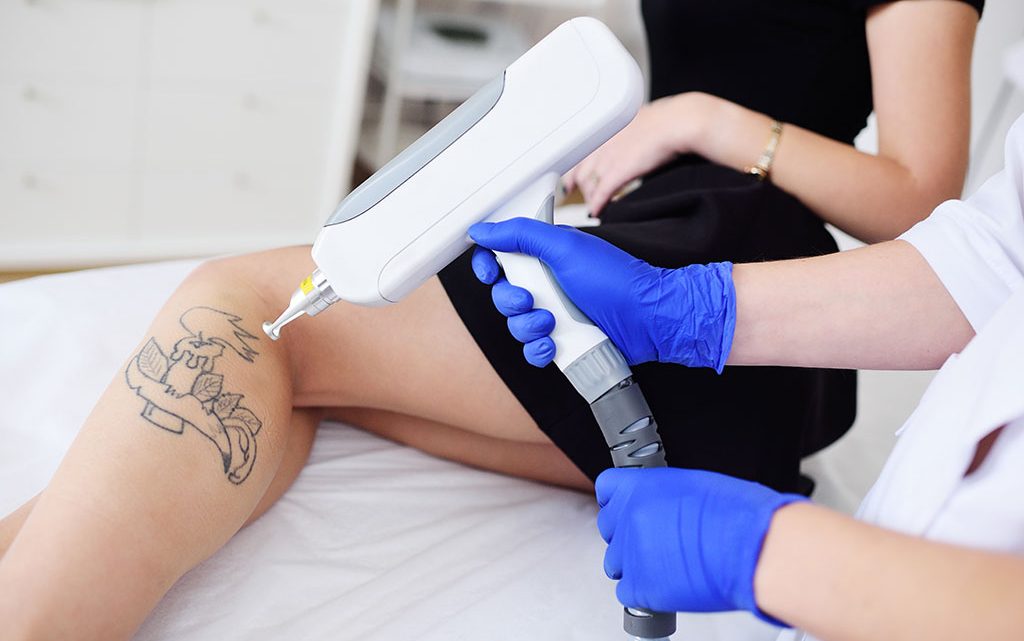

Tattoo removal is a practice that people can perform at their own discretion. Some people may regret their tattoos or feel that they do not suit their changing lifestyle. Additionally, those who want to hide their tattoos due to work life or social environment can resort to tattoo removal methods.
Tattoo removal requires a process that varies depending on the size of the person's tattoo, its location, color characteristics and skin structure. A person's expectations and goals are also among the factors that affect the process.
Tattoo Removal Methods
Various methods are used for tattoo removal. The most common among these are:
Laser Tattoo Removal:
Using laser technology, the pigments of the tattoo are broken down and removed from the body.
Different laser types (Q-Switched, Picosure, Nd:YAG) are preferred according to the color and characteristics of the tattoo.
Laser tattoo removal is considered the most effective and reliable method.
Dermabrasion (Skin Abrasion):
The skin layer of the tattoo area is abraded and tattoo pigments are removed.
Depending on the depth of the tattoo, several sessions may be required.
Dermabrasion is a more aggressive procedure than the laser method.
Chemical Peel:
Chemical agents applied to the tattoo area dissolve and remove tattoo pigments.
It is a suitable method for more superficial tattoos.
Chemical peeling is less effective than other methods.
Surgical Excision:
The area where the tattoo is located is surgically removed.
It is the preferred method for large and complex tattoos.
The surgical procedure is more invasive and involves health risks than other methods.
Each method has its own advantages and disadvantages. The most appropriate method should be determined according to the characteristics and preferences of the person's tattoo.
Factors Affecting Tattoo Removal Cost
There are several factors that affect the cost of tattoo removal:
Size and Complexity of the Tattoo:
Large and complex tattoos require higher fees as they require more processing and time.
Small and simple tattoos can be removed for lower fees.
Feature of Tattoo Color:
Dark colored tattoos are charged higher because they require more laser energy.
Light-colored tattoos may cost less because they can be removed with less laser energy.
Location of Tattoo:
Tattoos on easily accessible areas of the body may cost less.
Tattoos on hard-to-reach areas of the body are charged higher.
Technology and Equipment Used:
Clinics that use more advanced laser technology and equipment may charge higher fees.
The services of experienced and specialist physicians are also charged higher.
Geographic Location and Regional Differences:
Clinics in city centers may charge higher fees.
Regional economic differences may also affect pricing.
Personal Preferences and Expectations:
A person's expectations and wishes can also determine pricing.
More comprehensive services and specialized applications may require higher fees.
Taking all these factors into consideration, a personalized tattoo removal fee should be determined.
Tattoo Removal Process
The tattoo removal process consists of the following steps:
Preliminary assessment:
The characteristics of the tattoo (size, color, location) and goals are evaluated.
The appropriate deletion method is determined.
Information is given about expected results, number of sessions and pricing.
Preparation and Anesthesia:
The tattoo area is cleaned and prepared.
If necessary, local anesthesia is applied to the area.
Deletion Process:
The selected removal method (laser, dermabrasion, chemical peeling, etc.) is applied.
The patient may feel discomfort and pain during the procedure.
Healing Process:
Redness, edema and leakage may occur in the tattoo area.
The patient must follow the care instructions given during the recovery period.
Follow-up Appointments:
Tattoo removal usually requires more than one session.
Follow-up appointments are important to evaluate results and plan additional procedures.
All these steps are carefully applied to create a personalized tattoo removal process.
 Call
Call
 Whatsapp