


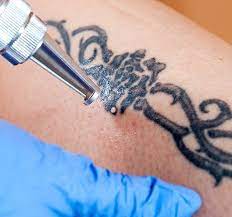

Things You Wonder About Tattoo Removal Sessions
Tattoos are made by processing special dyes into the lower layers of the skin. These dyes may fade over time but do not disappear completely. In laser tattoo removal, laser light breaks down these dyes and allows the body to remove them naturally. However, this is a process and requires patience.
How many sessions are required?
The number of sessions required varies depending on the characteristics of the tattoo.
Color of the tattoo: Black tattoos are the easiest to remove. Colored tattoos such as blue, green and yellow may require more sessions.
Age of the tattoo: Old tattoos are usually easier to remove because the dyes have already spread to some extent.
Depth of the tattoo: Amateur tattoos are closer to the surface, so they are easier to remove. Since the dye is processed deeper in professional tattoos, the process may take longer.
Skin type: Laser light can be more effective on fair-skinned people and the results can be seen faster.
On average, 4-6 sessions may be required for small and black tattoos, and 6-10 sessions may be required for colored or large tattoos.
How long should there be between sessions?
It is usually necessary to wait 6-8 weeks between each session. This period is important for the skin to repair itself and for the body to cleanse itself of the dye residues broken down by the laser. Frequent sessions will not speed up the process, on the contrary, it can damage the skin. Being patient is very important here.
How long does a session take?
This also varies depending on the size of the tattoo. While the process for small tattoos can take 5-10 minutes, it can take up to 20-30 minutes for larger and more detailed tattoos. The procedure is performed standing up and you can easily return to your daily life afterwards.
Is it possible to reduce the number of sessions?
Yes, thanks to advanced laser technologies, the number of sessions can be reduced. Devices such as PicoSure in particular make the dye particles smaller, allowing the body to eliminate them faster. In addition, paying attention to skin care after the procedure, protecting yourself from the sun and following the doctor's recommendations also positively affect the process.
In conclusion:
Tattoo removal is a process that requires patience. However, very successful results can be achieved with the right method, advanced technology and applications performed by a specialist doctor. More important than the number of sessions is the healthy and safe progress of this process.
Remember, every tattoo has a story… but some stories want to be left behind over time.
With health and confidence,
 Call
Call
 Whatsapp