



Tattoo Removal Stages: Getting Rid of Tattoos Step by Step
Getting a tattoo is a choice, but getting it removed is often a new need that develops over time... Your tattoo may no longer reflect you, or you may just want to turn a new page. Fortunately, today, thanks to laser technologies, tattoos can be removed safely and effectively. However, this process is a process. Unfortunately, it is not possible to say, "I'll go today and get rid of my tattoo tomorrow." That's exactly why I want to clearly explain to our patients how this journey will progress. Let's examine the stages of tattoo removal together step by step.
First Examination and Evaluation
Everything starts with a doctor's consultation. The size, color, depth of the tattoo and your skin type are evaluated. At this stage, it is determined how many sessions may be needed, which laser device will be used and how your skin may react, and a treatment plan specific to you is created.
At the same time, any past skin problems or special conditions (such as pregnancy, medication use) are also taken into consideration.
Preparation for Laser Application
The area is cleaned before the procedure and in some cases, an anesthetic cream is applied to the skin to make the procedure more comfortable. This is especially useful in sensitive areas.
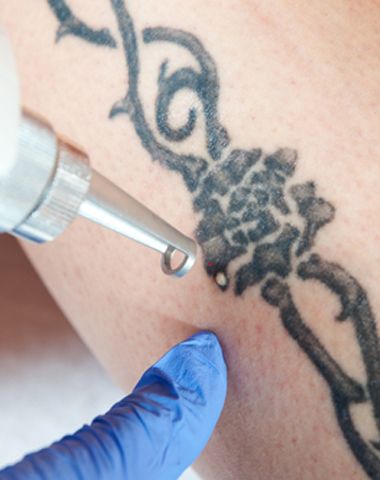
During the application, laser beams are directed at the tattoo. This light breaks down the tattoo pigments and allows them to dissolve in the lower layers of the skin. The body then naturally eliminates these parts over time.
First Reactions After the Procedure
Symptoms such as slight redness, a feeling of heat, swelling or crusting may be observed immediately after the laser application. These are completely normal and usually go away on their own within 1-3 days.
During this period, the skin should be supported with moisturizers or restorative creams recommended by the doctor. It is very important not to scratch the area, not to pick the crusts and to protect it from the sun.
Healing Process and Between Sessions
After each laser application, the skin needs time to heal and shed the pigments. Therefore, it is usually waited for 6-8 weeks between each session.
With each session, the tattoo is erased a little more and its color becomes lighter. Being patient is very important in this process because the tattoo cannot be completely removed in a single session.
Follow-up and Evaluation
As the sessions progress, the change in the skin is observed. The treatment plan is updated if necessary. While some tattoos are easily removed, some can be resistant. Especially colored tattoos and old tattoos may require more sessions.
Your doctor will make skin care recommendations after each session and explain how to proceed.
Result and Skin Re-Evaluation
When the desired result is achieved, the tattoo is largely or completely removed. The skin color and texture return to normal. In some cases, a very slight mark or tone difference may remain on the skin, but with the right care and skin support, this will decrease over time.
In summary
Tattoo removal is a process, requiring patience and regular follow-up. The initial examination and planning phase are very important. The tattoo will decrease a little more with each session performed with the laser. Paying attention to skin care ensures that the process progresses healthily. The result varies depending on the person, the tattoo and the skin type.
Remember, every tattoo can be removed; the important thing is to do this process with the right method and under the supervision of a specialist. If you want to say goodbye to your tattoo, I recommend that you first consult a dermatologist and have your skin evaluated.
 Call
Call
 Whatsapp