


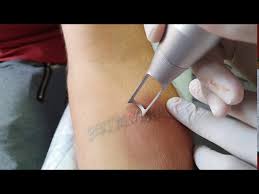

Is It Possible to Remove a Tattoo Without Leaving a Scar?
Getting a tattoo requires courage, but removing it requires patience. One of the biggest concerns of people who want to remove their tattoos is whether there will be a scar on the skin after the procedure. So can a tattoo be removed completely and without leaving a scar? The answer to this question depends on many factors, from the structure of the tattoo to the skin type and the technology used. Let's evaluate this process in all its aspects.
Why Can a Scar Be Left on the Skin?
Laser tattoo removal affects the lower layers of the skin. During this time, the pigments in the tattoo are broken down and removed from the body by the immune system. However, slight damage may occur to the skin during this intervention. This damage, if not managed properly, can lead to skin color changes, slight depressions or superficial scars.
The risk of scarring generally increases in the following cases:
When the wrong laser type or dose is used
When sufficient healing time is not allowed between sessions
When the person does not follow the post-procedure care instructions
When the person's skin is very sensitive or prone to pigment changes
When the crusts are torn off early or the area is itchy
The Most Effective Method for Scar-Free Removal: Picosecond Laser
The picosecond laser technology developed in recent years is one of the methods that minimizes the risk of scarring. This laser breaks the pigments into extremely small pieces by pulsing light in a very short time (one trillionth of a second). This both ensures less damage to the skin and helps the immune system to clear the particles more easily.
This system, which is especially successful in dark-colored tattoos, can also be applied with special heads for colored tattoos. When done with the right device, the right dose and by an expert practitioner, the probability of scarring is quite low.
The Importance of Post-Procedure Care
The key to scar-free recovery is hidden in the period after the procedure. The skin becomes sensitive after laser application. During this period, the use of the right cream, regular moisturizing and sun protection are of great importance. The crusts should not be picked off and the area should not be itched. Otherwise, while the skin renews itself, tissue integrity may be disrupted and this may pave the way for scar formation.
Using high factor (SPF 50+) sunscreen prevents color changes (hyperpigmentation or hypopigmentation) after the procedure.
Skin Type and Tattoo Structure Are Also Important
Every skin is different. Fair-skinned people generally respond better to laser applications and the risk of scarring is lower. However, in dark-skinned and dark-skinned individuals, laser light may interact more with melanin, which may increase the risk of pigment changes.
In addition, amateur, superficial tattoos are usually more easily removed. Since the ink is applied deeper in professional tattoos, the number of sessions may increase and the load on the skin increases accordingly.
Starting the Process with Realistic Expectations
It is possible to remove a tattoo without leaving a scar, but this is not always a situation that can be 100% guaranteed. The important thing here is to have the procedure done by an experienced specialist who complies with medical standards and to show the necessary care to the skin afterwards.
Keeping expectations realistic is also important for the healthy progress of this process. If the tattoo is very deep, very large or very colorful, a completely scarless result may sometimes not be possible. However, the possibility of scarring can be greatly reduced.
Conclusion
Tattoo removal without leaving a scar is possible with the right technology, expert approach and conscious patient cooperation. The experience of the practitioner and post-procedure care directly affect the result, as well as the quality of the laser device.
Remember, the skin has a strong structure that can renew itself. If you give it the right support at the right time, there will be no scars or regrets left from your tattoo.
 Call
Call
 Whatsapp