


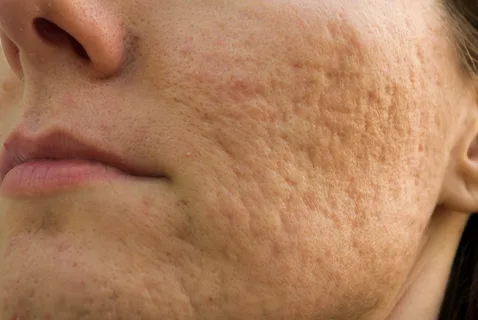

More professional methods are on the agenda for the treatment of deep scars on the skin. Pimples or acne scars may appear as indentations and holes in the skin. These scars, which appear when the underlying layers of the skin are damaged, can be treated with different treatment methods. Treatments on some skin types may be less tolerated. Expert dermatologists make choices among these methods by performing skin analysis for the treatment of scars on the skin. More successful results can be achieved when treatment methods are determined according to the skin type and the depth of the pitted scars. In this area, methods such as chemical peeling, dermabrasion, microdermabrasion and fractional laser can be used to treat acne scars on the skin.
Chemical Peeling and Dermabrasion in the Treatment of Deep Scars on the Skin
One of the first methods used for the treatment of deep scars on the skin is chemical peeling. This treatment is used for hollow areas of the skin after acne. The outer layer of the skin is removed with a layer of acid applied to the face. In this way, the skin is renewed and deep scars are treated. Similar results can be achieved with the dermabrasion method without using chemical peeling. Application is made on the pitted skin with a single rotating brush to scrape the upper layers. This method can give the skin a more even appearance. It can be used especially for the treatment of pitting acne scars. It can provide results in reducing the appearance of acne scars.
Microdermabrasion and Fractional Laser in the Treatment of Deep Scars on the Skin
In the microdermabrasion method used for the treatment of deep scars on the skin, the outer layers of the skin are removed. In this method, which aims to reduce pitting scars, skin care experts use abrasive ingredients such as aluminum oxide crystals or bicarbonate. In this way, its effect is quite successful in treating acne pitted on small surfaces. Apart from these, very successful results can also be obtained as a result of laser treatment methods. The outer layer of skin is burned off with laser treatments, which encourages self-regeneration of scars. New cell growth is stimulated in this way. The potholes will appear noticeably less. This makes laser treatment of deep scars on the skin a more effective and comfortable method in terms of its process and results, making it widely preferred among treatment alternatives. In applications performed with ablative laser, the skin will need a maintenance and recovery period of several weeks.
 Call
Call
 Whatsapp