


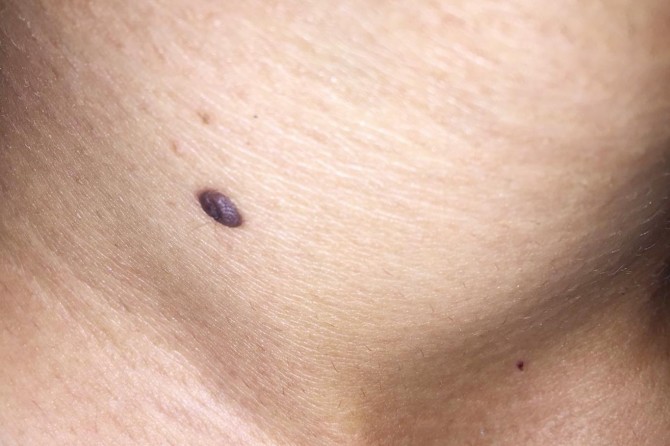

Skin tags originate from fat cells or connective tissue in the lower layers of the skin. They are structures that are either innate or develop over time and are found in most people. Some people tend to develop more skin tags, while others develop fewer.
Skin tags are generally not a cosmetic problem. However, sometimes they can reach large sizes or be disturbing in appearance. In these cases, treatment methods may be considered.
Causes of Skin Tag Formation
The main causes of skin tag formation include:
Genetic Factors: Some people have a genetic predisposition that makes them more likely to develop skin tags. This condition can also be observed in family members.
Age: Skin tags usually become more noticeable with age. They are especially common in people over the age of 30.
Hormonal Changes: Hormonal changes can trigger skin tag formation. For example, skin tags may become more noticeable during pregnancy or menopause.
UV Rays: Sun rays can increase the formation of skin tags. Long-term sun exposure can cause cells in the lower layers of the skin to overgrow.
Trauma or Infection: Trauma or infection occurring on the skin can trigger the formation of a skin tag.
All of these factors can contribute to the formation of a skin tag. However, the process of skin tag formation may vary from person to person.
Symptoms of Skin Tags
Skin tags usually show themselves with the following symptoms:
Skin Color: Skin tags are usually skin colored or slightly darker.
Shape and Size: Skin tags can be round or oval in shape and can range in size from a few millimeters to a few centimeters.
Surface Structure: Skin tags usually have a flat and smooth surface.
Pain or Pain: Skin tags usually do not cause pain or pain.
Malignant Changes: Skin tags usually do not show malignant changes and do not turn into cancer.
However, in some cases, skin tags can reach large sizes or their appearance can be disturbing. In such cases, treatment methods may be considered.
Treatment Methods of Skin Tags
Various methods can be used in the treatment of skin tags. The method to be chosen is determined by the size, location and preferences of the patient. Below are the most common treatment methods:
Cryotherapy (Freezing Treatment): In this method, the mole is destroyed by freezing. The freezing process is usually carried out using liquid nitrogen.
Laser Treatment: Using laser beams, the mole is reduced in size or completely destroyed. Laser treatment usually requires several sessions.
Surgical Removal: Large or unsightly skin tags can be removed surgically. This procedure is performed under local anesthesia.
Electrocauterization: In this method, the mole is burned and destroyed using electric current.
Chemical Peeling: Using chemical agents, the tissue layer on the mole is peeled off and destroyed.
The choice of treatment method is made by considering the characteristics of the mole, the patient's preferences and needs. In some cases, combined treatment approaches can also be applied.
 Call
Call
 Whatsapp