


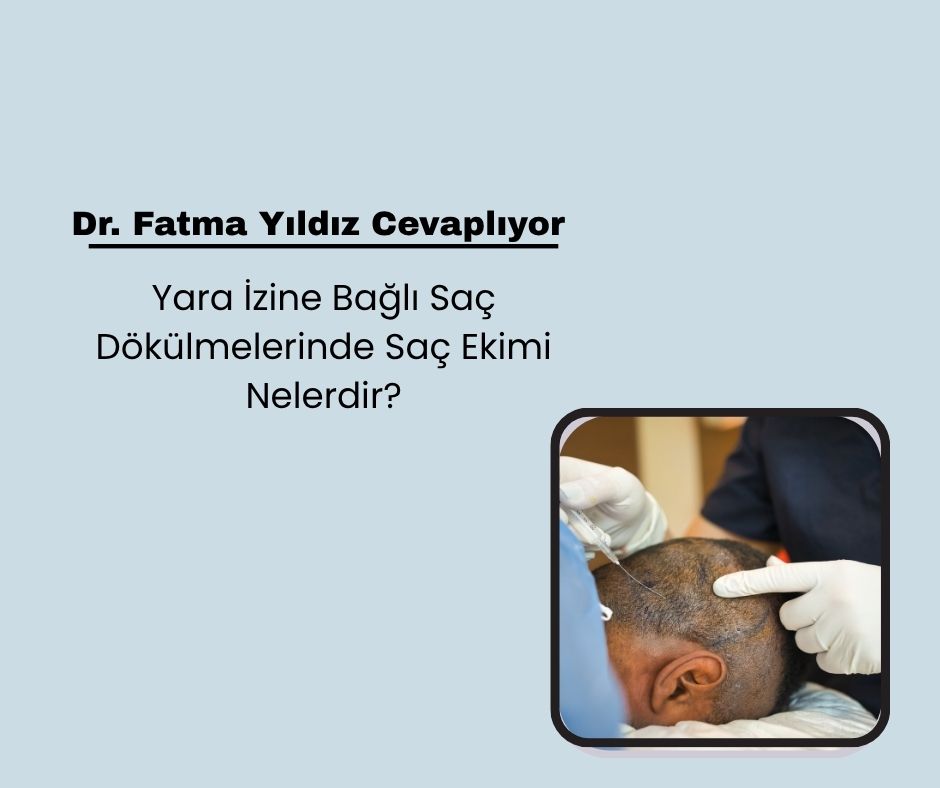

What are Hair Transplants for Scar-Related Hair Loss?
When it comes to hair loss, most people think of genetic hair loss. However, in some cases, the cause of hair loss is permanent damage. Burns, traumas, surgical scars or some skin diseases can damage the hair follicles and make it impossible for the hair to grow back. This type of hair loss is called cicatricial alopecia in medicine.
What is Cicatricial Alopecia?
In cicatricial alopecia, the hair follicles are permanently damaged. As a result of this damage, it is not possible for the hair to grow back. The condition is classified in two ways:
Primary cicatricial alopecia: Diseases that directly target the hair follicles (e.g. lichen planopilaris, discoid lupus).
Secondary cicatricial alopecia: Hair loss caused by external factors such as trauma, infection, burns.
This type of hair loss can be quite disturbing visually. Especially when it occurs in the forehead line, beard area, eyebrows or visible areas of the scalp, it has a great impact on the self-confidence of the patients. Fortunately, it is now possible to compensate for these losses with modern hair transplantation techniques.
Is Hair Transplantation Possible in Cicatricial Alopecia?
Yes, it is possible. However, a more careful approach is required in these patients, unlike classical hair transplantation applications. Because:
The skin tissue may be hard, thick or avascular.
The rate of hair follicles holding is lower.
The risk of infection or graft loss is higher.
Therefore, a detailed evaluation should be made before hair transplantation, and if necessary, the suitability of the skin for transplantation should be measured with dermatoscopic analysis, biopsy or tissue tests. In addition, the chance of success should be increased by increasing the tissue quality with supportive treatments such as PRP.
Factors Affecting Success
Some points to consider for a successful hair transplantation in cicatricial alopecia:
The donor area should be strong
The healing potential of the area to be transplanted should be high
The placement of the grafts with the correct technique
The post-application care and follow-up process should be carried out meticulously
All these processes should be managed by an expert team and an experienced dermatologist. In this way, aesthetic problems caused by scarring or permanent hair loss can be eliminated and the patient's quality of life increases.
Conclusion
Today, thanks to the developing surgical techniques, hair transplantation can be successfully applied in primary and secondary cicatricial alopecia. Scars are no longer fate. It is possible to achieve natural and satisfactory results with the right patient selection, appropriate technique and a patient healing process.
Fatma Yıldız - Dermatology Specialist
Ankara Life Polyclinic
 Call
Call
 Whatsapp