


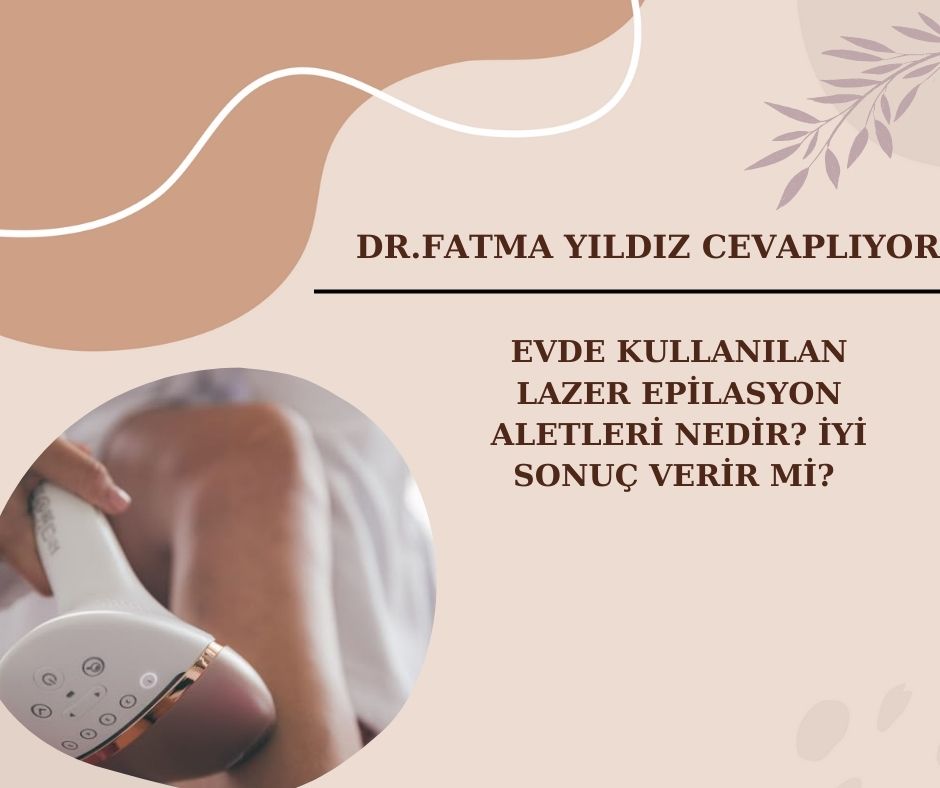

What are Laser Hair Removal Devices Used at Home? Do They Give Good Results?
Home laser hair removal devices are never as powerful and effective as laser hair removal devices used in clinics. These devices have some important differences and limitations when compared to professional laser hair removal machines. I will explain what laser hair removal devices used at home are, how they work and the points to be considered.
1. Working Principle of Home Laser Hair Removal Devices
Laser hair removal devices used at home work on the same principle as professional machines, that is, the laser light targets the pigment (color substance) of the hairs. The laser light damages the hair root by heating this pigment and thus prevents the hair from growing again. However, devices used at home are generally lower in power. This means that laser hair removal sessions done at home are much less effective than professional treatments. There may even be an increase in hair due to the small dose of energy given.
2. Laser Types and Technology
Laser hair removal devices used at home generally use Diode lasers and IPL (Intense Pulsed Light). However, most devices used at home use IPL technology. Unlike laser light, IPL uses broad wavelengths of light and damages the hair follicles. This technology is generally more common in home devices and requires less sensitivity to the skin.
IPL Devices: Although IPL is not as effective as laser technology, it is a suitable alternative for weakening and reducing hair. These devices are usually more accessible and easy to use, but the results may not be as permanent as professional laser hair removal.
Diode Lasers: Some devices used at home use Diode laser technologies. These lasers are more powerful and can affect the hair follicles more deeply. However, these types of devices are usually more expensive and require professional training to use.
3. Suitability for Skin Type and Hair Color
The effectiveness of home laser hair removal devices can vary depending on skin type and hair color. Laser hair removal is more effective for dark hair, but less effective for light-colored hair. However, since the laser light targets the pigment in the skin, people with dark skin should be more careful. Because dark skin can absorb too much laser light and cause burns. Home laser hair removal devices are generally designed to target light-skinned and dark-colored hair.
4. Ease of Use and Safety
One of the biggest advantages of home laser hair removal devices is that users know they can perform the treatment in their own comfort. These devices are usually lightweight and compact, and have user-friendly designs. However, there are some safety precautions to be taken when using them. It is very important to use the device correctly, otherwise unwanted results such as skin irritation, burning or bruising may occur. Home laser devices are often equipped with various safety features for safe use. For example, some devices do not work without direct contact with the skin, reducing the risk of misuse. In addition, most devices have sensors to determine your skin tone. These sensors prevent the device from being compatible with your skin type.
5. Session Duration and Results
Sessions performed with laser hair removal devices at home last longer than professional laser hair removal sessions and may cause hair growth due to the low dose. This is because the laser light of home-type devices is less powerful and takes longer to effectively reach the hair roots. Home laser hair removal sessions usually last between 15-30 minutes. Results appear over time. It can be seen that the hair starts to fall out immediately after the first sessions, but it is not possible to achieve full and permanent results with home devices. Most people prefer to have sessions once a week or two weeks apart to get effective results.
6. Side Effects and Things to Consider
Although home laser hair removal devices have lower risks compared to professional treatments, some side effects can still be seen. Redness, swelling or sensitivity may occur on the skin. There may be burns if too many shots are taken in a row. It is important to use the device correctly to avoid permanent damage to the skin. In addition, the skin must be clean and dry before laser hair removal. During laser hair removal at home, exposure to sunlight should be avoided. Since the skin will be sensitive after laser treatment, it is important to use a high protection factor sunscreen before going out in the sun. In addition, you should not use methods such as tweezing or waxing to remove your hair, because the laser must be at the root of the hair for it to be effective.
In Conclusion
Compared to FDA-approved laser hair removal, home-use devices are generally lower in power, which can increase
 Call
Call
 Whatsapp