


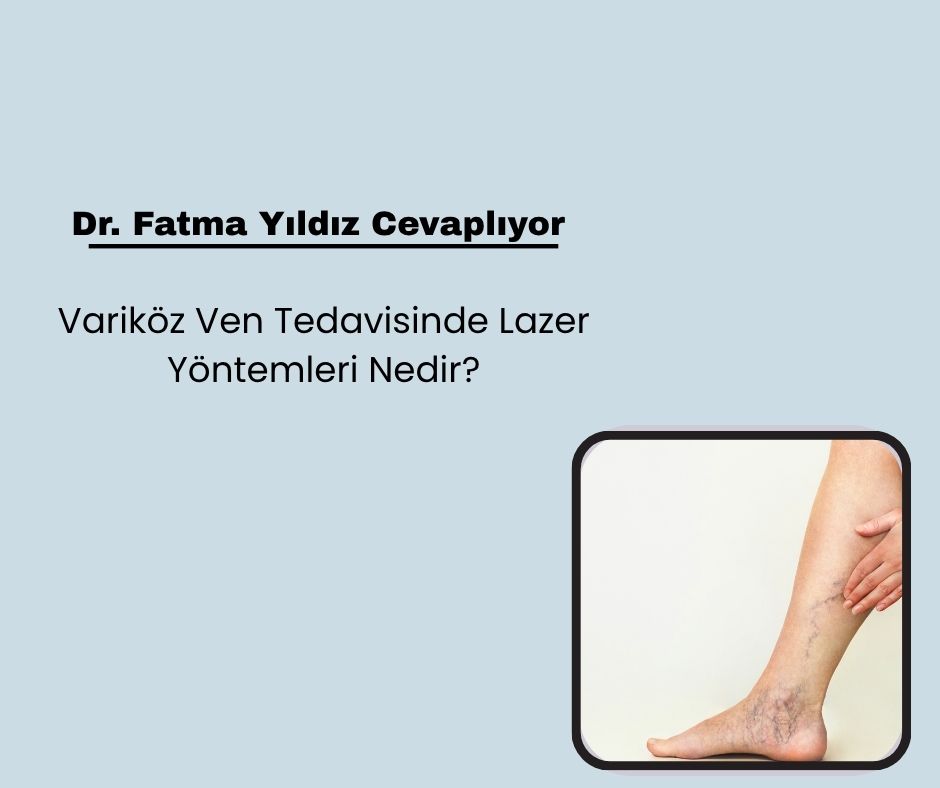

What are Laser Methods in Varicose Vein Treatment?
A Modern and Effective Approach
Varicose veins are enlarged and tortuous vein structures, usually seen in the lower extremities. This condition, which is quite common in society, both creates aesthetic discomfort and reduces the quality of life with complaints such as pain and restlessness. There are many methods in the treatment of varicose veins, which can develop due to genetic predisposition, age, hormonal changes, pregnancy and the effect of gravity. Among these, laser treatments have stood out with their increasing success rates in recent years.
The Place of Laser Treatment in Varicose Veins
Sclerotherapy has been considered the gold standard treatment for varicose veins for many years. However, laser treatments offer an important alternative for patients with needle phobia, those allergic to sclerosing agents or in cases resistant to sclerotherapy. Laser treatment is based on the principle of selective photothermolysis; By targeting intravascular chromophores (oxyhemoglobin, deoxyhemoglobin and methemoglobin), the veins are closed without damaging the surrounding tissues.
Laser Types and Areas of Use
1. 532 nm KTP Laser:
It is suitable for superficial veins. It is effective in telangiectasias smaller than 1 mm in diameter. However, it should be used with caution in dark-skinned individuals due to the risk of hypopigmentation.
2. 585-600 nm Pulse Dye Laser (PDL):
It is especially preferred in congenital vascular lesions. It has been found to be superior to KTP in leg varicose veins. The most common side effects include purpura and temporary pigmentation disorders.
3. 755 nm Alexandrite Laser:
It is effective in deeper veins. It is especially successful in blue reticular veins and lesions with a diameter of 0.2-3 mm. However, it has limited use in dark-skinned patients due to high melanin absorption.
4. 800-983 nm Diode Laser:
It provides deep penetration and can be used safely on dark-skinned individuals. Its effectiveness has been proven at various wavelengths (810, 940, 983 nm).
5. 1064 nm Nd:YAG Laser:
It is the type of laser that provides the deepest penetration. It offers high success rates especially in the treatment of veins larger than 2 mm. Melanin absorption is low, so it can be used safely on all skin types. However, pain and scar risk should be taken into consideration.
6. IPL (Intense Pulsed Light):
It is effective in the treatment of small-diameter veins thanks to its wide wavelength spectrum (515-1200 nm). However, temporary side effects such as epidermal thickening and pigmentation changes may occur.
7. Endovascular Laser Treatment (EVLT):
It involves administering laser energy into the vein with a catheter to eliminate reflux in the saphenous veins. It has a success rate of over 90%. However, it is of great importance that the procedure is performed under appropriate conditions and by experienced teams.
Things to Consider in Laser Treatments
Before starting laser treatment, the patient's detailed history should be taken and technical details such as the depth and diameter of the veins, the wavelength of the laser to be used, and the pulse duration should be carefully planned. Informed consent should be obtained before the application, and the possible side effects after the procedure should be explained to the patient.
Conclusion
Laser treatments for varicose leg veins have become safer and more effective with technological developments. However, since the appropriate laser type, wavelength and dose adjustment differ for each patient, a personalized treatment approach is required. More randomized clinical studies are needed to evaluate the effectiveness of laser treatments and determine their standard doses.
You can consult specialist doctors for more information and consultancy about this innovative method offered by modern medicine.
Source: Türkiye Klinikleri J Dermatol-Special Topics 2016;9(1)
Prepared by: Fatma Yıldız | Publication: Ankara Life
 Call
Call
 Whatsapp