


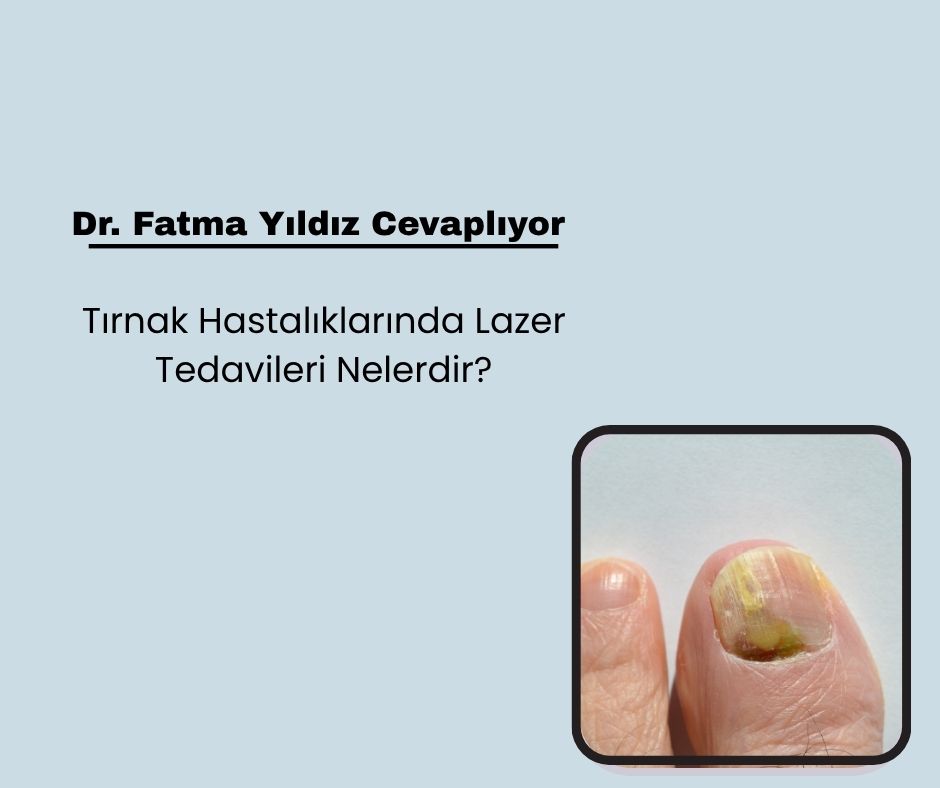

What are Laser Treatments for Nail Diseases?
Effective, Safe and Modern Approaches
Today, laser technologies offer groundbreaking innovations in the field of dermatology; and they also stand out as an effective, reliable and comfortable treatment method for nail diseases. Laser-assisted treatment applications have increasingly become preferred, especially for common problems such as nail fungus (onychomycosis), nail psoriasis (psoriatic onychopathy) and ingrown toenails.
Laser Treatment for Onychomycosis
Onychomycosis, or nail fungus, is the most common of nail diseases. This disease, which can cause pain, infection and a decrease in quality of life in addition to aesthetic problems, can be challenging for patients because it can be resistant to classical treatment.
Laser treatments offer an important alternative at this point. FDA-approved laser devices help clean fungal nails and support healthy nail development. In particular, Nd:YAG (1064 nm), Diode (870/930 nm), CO₂, Q-Switched Nd:YAG and Fractional CO₂ laser systems are widely used in the treatment of onychomycosis.
Laser Types Used and Their Effectiveness
Long Pulsed Nd:YAG Laser (1064 nm): Targets fungal colonies by penetrating deep tissues. There are clinical studies that have shown successful results.
Q-Switched Nd:YAG (1064/532 nm): This high-energy, short-pulsed system can suppress the growth of fungi such as Trichophyton rubrum. Mycological recovery rates can exceed 90%.
CO₂ Laser: Thanks to its ablative feature, it facilitates the passage of topical antifungal drugs into the nail bed. Success rates are high.
Diode Laser (870/930 nm): It has been found effective in in vitro and clinical studies and can provide a healthy appearance to the nail.
Fractional CO₂ Laser: Its effectiveness increases when used in combination with topical treatments, especially in advanced dystrophy cases.
Laser Use in Nail Psoriasis
Nail psoriasis (psoriatic onychopathy) is another important nail disease that causes both aesthetic and functional problems. Recently, laser systems such as Pulsed Dye Laser (PDL) and Intensified Light Pulse (IPL) have been shown to be effective in this area.
PDL (595 nm): Since it is effective on vascular structures, it provides positive results in psoriatic nail bed lesions. Significant improvements in NAPSI scores have been reported.
IPL (550 nm): Although less common, it can provide significant improvements in the nail bed and matrix.
Laser for Matricectomy and Onychodystrophy
Conclusion
Laser systems have taken their place in dermatology practice as a fast, effective and patient-comfort-oriented option in the treatment of nail diseases without the need for surgery. Personalized treatment plans should be created for each patient and laser parameters should be determined correctly.
For those who want to learn more about this subject, the content written by Fatma Yıldız is presented on the Ankara Life platform, enriched with expert opinions. If you are looking for modern solutions for your nail health, you are at the right place!
 Call
Call
 Whatsapp