


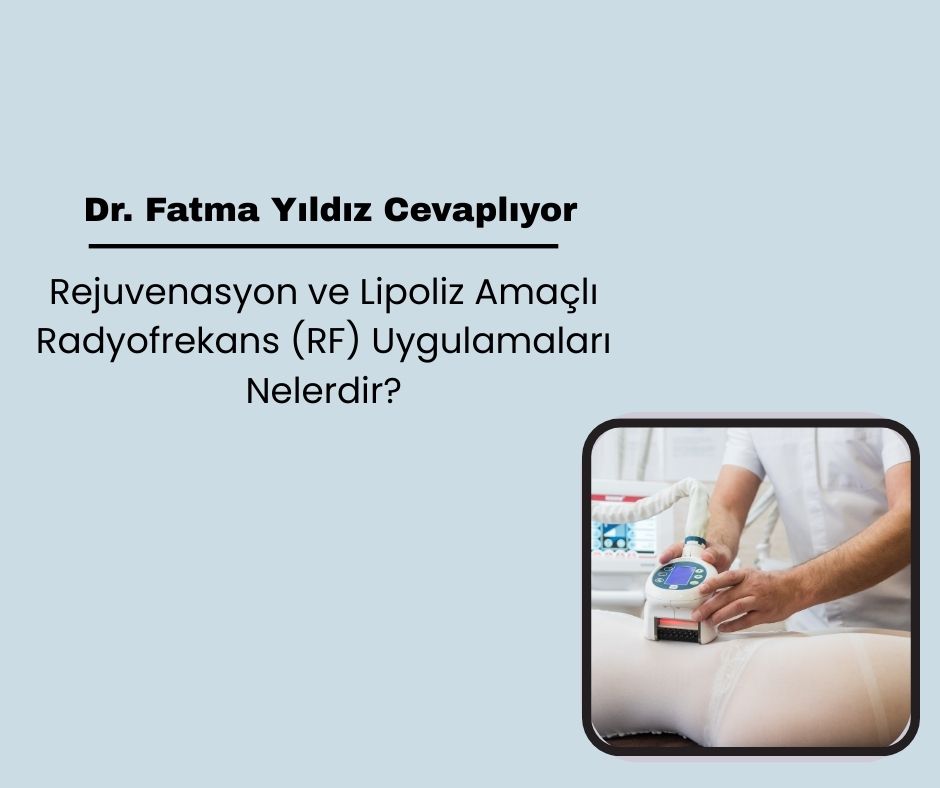

What are the Applications of Radiofrequency (RF)?
The search for an aesthetic appearance has been a source of motivation throughout human history. With the popularization of non-surgical aesthetic applications today, radiofrequency (RF) systems have gained an important place in areas such as skin rejuvenation (rejuvenation) and regional thinning (lipolysis).
Fundamentals of Radiofrequency (RF) Technology
RF is a system that delivers thermal energy to the tissue via electromagnetic waves. Devices operating in the 3 kHz – 300 MHz frequency range use the electrical resistance of the tissues to radiate heat to the dermis and subcutaneous tissue. With this thermal effect:
Fibroblast activation increases,
Collagen synthesis is triggered,
Vasodilation, lymphatic drainage, oxygenation are provided,
Apoptosis occurs in fat cells.
As a result of these physiological processes, the skin tightens, wrinkles decrease and contour improvement is observed.
Types of RF Systems
RF systems are classified according to the number of electrodes used:
Monopolar RF
Bipolar RF
Multipolar RF
Multigenerator systems
RF Applications for Rejuvenation Purposes
Skin aging is characterized by loss of collagen, elastin and decreased hydration. RF systems offer a non-invasive treatment option against this process. It is particularly effective in:
Individuals with mild to moderate sagging complaints,
Individuals showing signs of premature aging,
Patients who do not want surgical intervention.
Monopolar RF (MRF)
MRF systems have an active electrode and a grounding pad placed outside the body. RF current penetrates to the lower layers of the skin. Devices such as Thermage™, Exilis, Pelleve represent MRF technology.
Its effectiveness has been proven in problems such as periorbital wrinkles, brow ptosis, and eyelid sagging.
Patient satisfaction is high in applications in the middle-lower face and neck area.
It provides additional aesthetic gains such as skin brightness, pore tightening and increased moisture.
Clinical Findings
It has been reported that eyebrows have increased by 1-4 mm in 6-month follow-ups,
Nasolabial folds have decreased,
Visible tightening has been achieved.
Maximum effectiveness usually occurs in 4-6 months.
Session Protocol
Generally:
Applied in 3-6 sessions at 2-3 week intervals. Maintenance sessions are recommended to extend the effect period.
Advanced RF Methods
Microneedle RF: Collagen stimulation is achieved by RF being delivered to the dermis with needles. It is especially effective in periorbital region wrinkles.
Percutaneous RF (ThermiTight): Energy is delivered directly under the skin, providing tightening in deeper tissues.
RF in Body Shaping
RF is used not only in the face area, but also in body areas such as the abdomen, hips and legs. Its effectiveness, especially in postpartum looseness complaints, has been supported by clinical studies.
Advantages
It can be safely applied to all skin types because RF energy is independent of skin pigments.
The recovery period is short; daily life can usually be returned to immediately.
The complication rate is low.
Conclusion
RF applications are a safe, effective and common option among non-invasive aesthetic treatments for rejuvenation and lipolysis. Monopolar RF systems are a technology with particularly high patient satisfaction in the treatment of signs of aging such as loss of skin elasticity, fine wrinkles and contour loss.
 Call
Call
 Whatsapp