


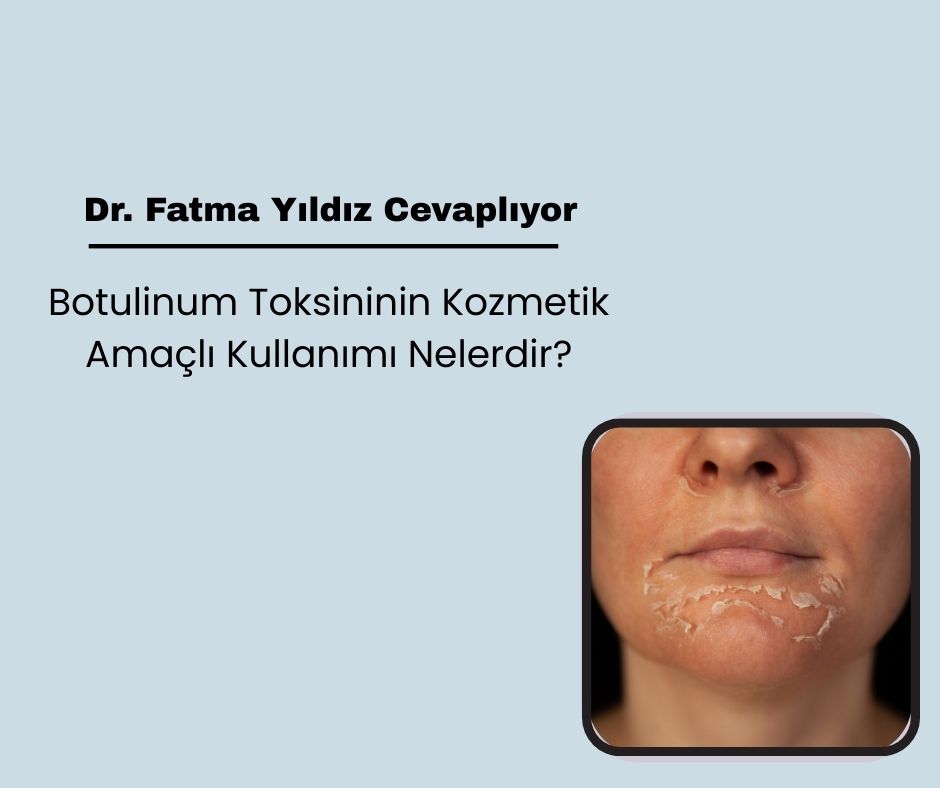

What are the Complications of Chemical Peel Procedures?
1. Definition and Indications of Chemical Peeling Procedure
Chemical peeling is a cosmetic procedure that allows the controlled destruction and renewal of certain layers of the epidermis and/or dermis. It is effectively used in the treatment of photoaging, dyschromia, acne and superficial wrinkles.
2. The Role of the Physician in Preventing Complications
The success of treatment depends on the physician's knowledge of skin anatomy, chemical structure of peeling agents, wound healing physiology and pathogenesis of diseases. Patient selection, pre-treatment preparation and post-procedure care are critical in preventing complications.
3. Precautions to be Taken Before the Procedure
a) Identification of Risky Patients
The following patient groups have a high risk of complications:
Patients with Fitzpatrick type IV-VI skin color
Those with atopic, dry and sensitive skin structure
Those with a history of keloids
Those using isotretinoin or photosensitizers
Those with a history of HSV infection
b) Detailed Anamnesis and Clinical Evaluation
Cardiac diseases (especially in cases where phenol is planned)
Previous HSV infection
Postinflammatory hyperpigmentation, keloids, active inflammatory diseases
Skin type, degree of photoaging and sebaceous gland activity should be evaluated.
c) Skin Preparation
Hydroquinone, retinoic acid should be started 2-4 weeks before the application
It should be stopped 3-5 days before the application.
Antiviral prophylaxis is recommended for those with a history of HSV.
4. Precautions to be Taken During the Procedure
Choosing the right agent and concentration
The inner canthus of the eye, nasolabial grooves should be protected with vaseline
Neutralizing agents (saline, mineral oil) should be kept ready
5. Precautions to be Taken After the Procedure
The skin should be gently washed with soap-free cleansers
Calamine lotion and emollients can be used
If there is an active infection, topical antibiotics should be started
Sun protection is essential
Products containing retinoids and glycolic acid should be avoided until desquamation is complete
Skin peeling should not be interfered with
6. Chemical Peel Complications
Complications are divided into early and late periods according to timing.
I. Early Complications
a) Burning and Pain
May last 2-5 days
Symptomical treatment with ice application, topical steroids and calamine can be done
b) Pruritus
May increase during the re-epithelialization period
Contact dermatitis or exacerbation of the underlying disease should be considered
c) Edema
Appears within 24-72 hours
Especially thin, dry, periorbital skin is more risky
Ice and systemic steroid treatment may be required
d) Blister Development
Generally in the periorbital, nasolabial regions
Protection with Vaseline may be preventive
e) Persistent Erythema
Superficial peeling: 3-5 days
Medium: 15-30 days
Deep: 60-90 days
If it exceeds the period, it carries the risk of hypertrophic scarring
It can be controlled with treatments such as steroids, silicone sheets, pulse dye laser
II. Late Complications (may be later in the text)
(Not specified in the current text; however, the following may be observed in general: postinflammatory pigmentary changes, scarring, infection, milia, contact dermatitis, etc.)
Conclusion
The risk of complications in chemical peeling procedures can be greatly reduced with correct patient selection, appropriate preparation, careful application during the procedure, and effective postoperative care. The physician's knowledge, experience, and correct communication with the patient are the cornerstones of complication management.
 Call
Call
 Whatsapp