


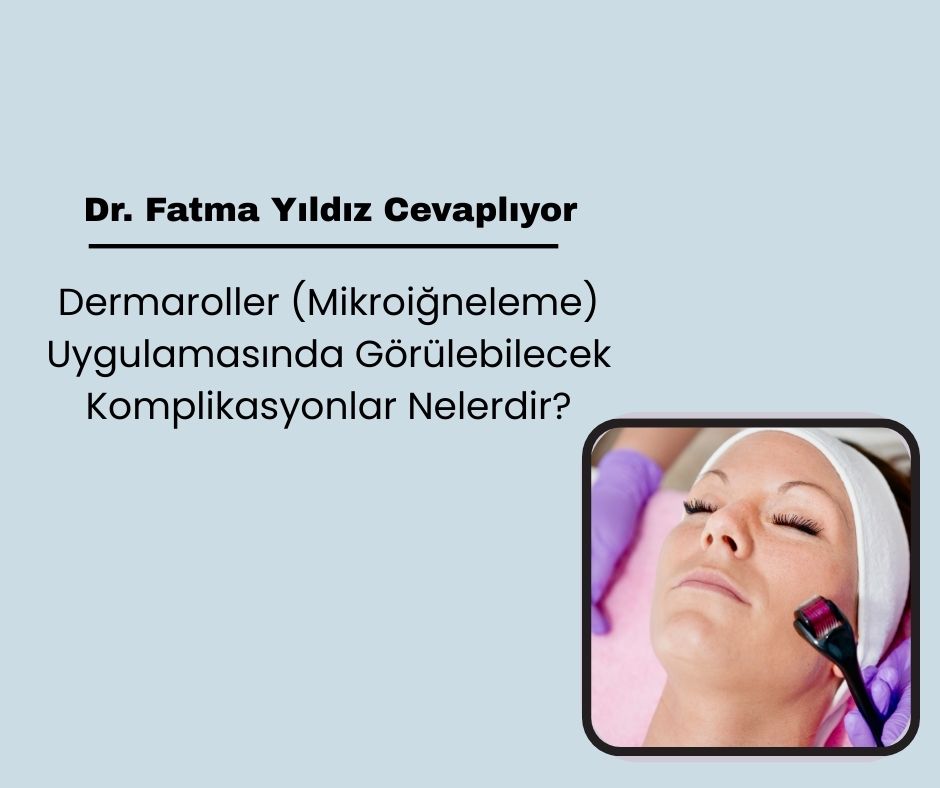

What are the Complications That Can Be Seen in Dermaroller (Microneedling) Application?
1. General Information
Microneedling (dermaroller) is a minimally invasive, low-cost and effective technique that allows superficial, controlled needling of the skin. It is used in many areas such as acne scars, melasma, alopecia, skin rejuvenation.
2. Application Process
The procedure performed with topical anesthesia takes approximately 10-20 minutes. Sun protection and topical antibiotic use are recommended after the procedure if necessary. Recovery is rapid, the patient can return to work the next day.
Common Complications and Management
1. Erythema, Irritation and Ecchymosis
They are especially common in fair-skinned individuals.
They usually regress within a few hours.
They can be treated with cold compresses, hyaluronic acid masks or creams containing vitamin K.
2. Postinflammatory Hyperpigmentation (PIH)
They can be seen more in dark-skinned individuals.
Using sunscreen reduces the risk of PIH.
Treatment: Hydroquinone, retinoids, chemical peels or fractional laser.
3. Tramway Scars
May develop as a result of incorrect technique, excessive pressure and improper application over bony prominences.
Treatment: Silicone-based scar products, topical agents containing tretinoin.
4. Acne Flare
Some patients may develop temporary new lesions after application.
Treatment: Topical benzoyl peroxide and retinoic acid combinations.
5. Herpes Simplex Reactivation
May be seen especially in individuals who have had HSV before.
Precaution: Prophylactic antiviral therapy (acyclovir) may be considered.
Treatment: Oral antiviral agents.
6. Local Infection
Infection may rarely develop after the use of non-sterile devices.
Symptoms: Pain, redness, increased temperature.
Treatment: Systemic antibiotics (e.g. cephalosporins).
7. Hypersensitivity Reactions
Although rare, they can be seen. Allergic reactions developing simultaneously in two siblings have been reported in the literature.
 Call
Call
 Whatsapp