



What are the Current Approaches to Alopecia Areata Treatment in Adults?
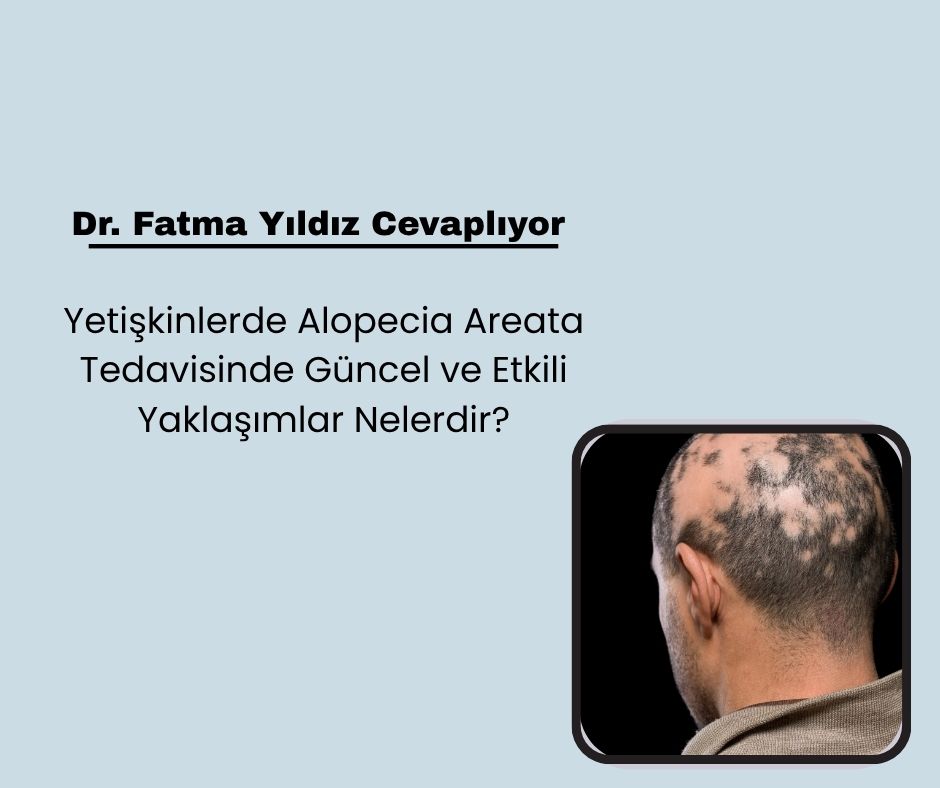
Alopecia areata (AA) is a common hair loss disease that occurs when the immune system attacks the hair follicles, but has high psychosocial effects. This autoimmune condition manifests itself with round, well-defined areas of hair loss on the scalp. It can rarely cause hair loss in eyebrows, eyelashes or body hair. Although it is seen with similar frequency in men and women, the course of the disease can vary greatly from person to person.
Cause and Course of Alopecia Areata
Although the cause of AA is not fully known, it is thought to occur through a combination of genetic predisposition, stress, environmental factors and autoimmune mechanisms. It is also likely to be seen together with autoimmune diseases such as thyroid diseases, vitiligo and lupus. While the disease heals spontaneously within a year in approximately 50% of AA patients, a more resistant and recurrent course may be observed in some.
Diagnostic Process
AA is usually diagnosed by clinical examination and dermatoscopic evaluation. In addition to sudden hair loss on the scalp, the presence of short, brittle hairs in the form of an "exclamation mark" supports the diagnosis. Biopsy is rarely needed to make a diagnosis.
Treatment Methods
The treatment of AA varies depending on the prevalence, duration, age and expectations of the patient. Treatment approaches include topical (applied to the skin), intralesional (injection into the lesion), systemic (drugs taken orally or intravenously) and biological treatments.
Topical Treatments
Corticosteroids: These are the most commonly used first-line treatments. They can be effective in mild cases.
Minoxidil: Supports growth by stimulating hair follicles, but has a limited success rate.
DPCP and SADBE: These are contact sensitivity treatments that aim to distract the immune system and reduce its attack on hair follicles.
Tretinoin and tacrolimus: They are among the alternative topical agents.
Intralesional Corticosteroids
Direct cortisone injections into areas of hair loss are highly effective, especially in limited plaques. However, the application can be painful and repeated injections are required.
Systemic Treatments
Oral corticosteroids: May be effective in the short term in widespread AA. However, they should be used with caution in the long term due to their serious side effects.
Immunomodulators: Drugs such as methotrexate and azathioprine are preferred in more resistant cases.
Cyclosporine and sulfasalazine: They act by suppressing the immune system.
Biological and Targeted Therapies
JAK Inhibitors (Janus Kinase Inhibitors): This is a group of drugs that have shown promising results in the treatment of AA in recent years. Agents such as baricitinib, ritlecitinib and tofacitinib can stop hair loss by suppressing inflammation and support hair regrowth.
The first FDA-approved JAK inhibitor, baricitinib, has shown significant benefits, especially in severe AA patients.
Other Approaches
PRP (Platelet Rich Plasma): It is a treatment method performed by injecting growth factors obtained from the person's own blood into the scalp.
Phototherapy: It can be tried more in cases that do not respond to other treatments.
Conclusion and Recommendations
Alopecia areata is a disease that can seriously affect quality of life and progresses with recurrences. However, today's increase in both topical and systemic treatment options, especially the promising results obtained with new drugs such as JAK inhibitors, has started a new era for patients. The treatment plan must be individualized and determined for each patient.
Adult individuals struggling with hair loss can minimize the effects of the disease with regular follow-up and appropriate treatment under the control of a dermatologist.
For more information and support, you can apply to Ankara Life Polyclinic and meet with Dermatologist Doctor Fatma Yıldız.
 Call
Call
 Whatsapp