


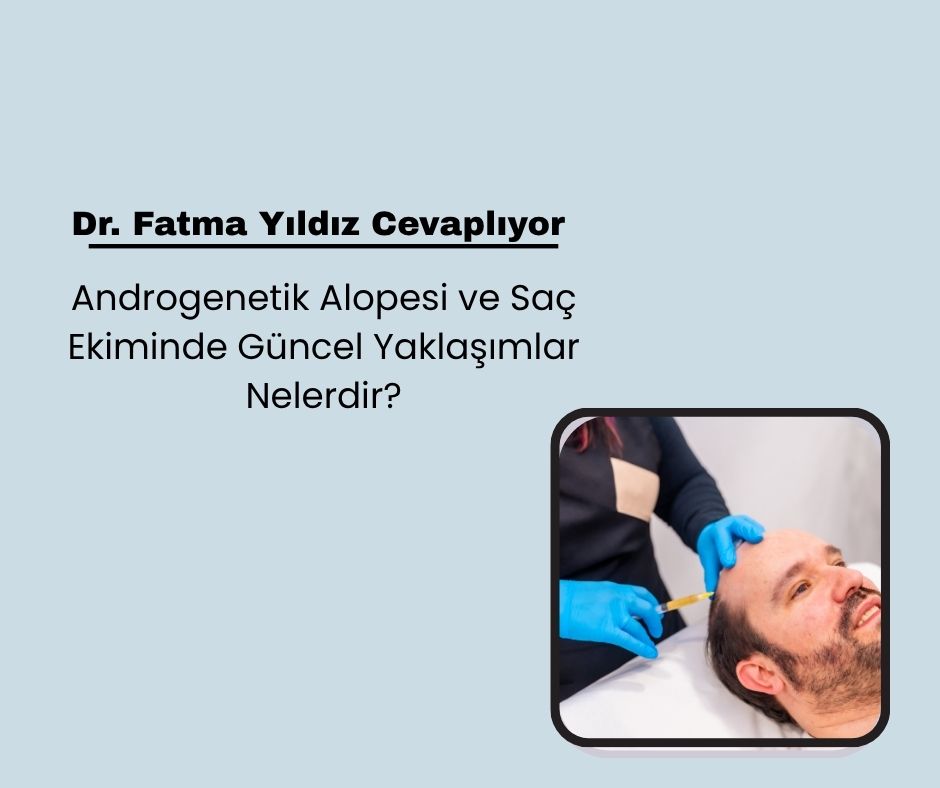

What are the Current Approaches to Androgenetic Alopecia and Hair Transplantation?
When it comes to hair loss, one of the first conditions that comes to mind is androgenetic alopecia, or male-pattern hair loss. This process, which starts in men in their 20s, can progress over time and turn into a serious problem that aesthetically disturbs the person. This condition, which can also be seen in women, occurs for both genetic and hormonal reasons. Today, hair transplantation stands out as a permanent solution that provides very successful results in the treatment of androgenetic alopecia.
Who Can Have Hair Transplantation?
Hair transplantation comes to the fore in cases where hair loss is irreversible and there is no sufficient response to drug treatments. Individuals with sufficient density of hair, especially in the back of the head, called the donor area, are ideal candidates for hair transplantation. Appropriate patient selection is the most critical factor in achieving a successful result.
What Are the Stages of Hair Transplantation?
Graft Collection: Hair follicles are usually collected from the nape area with the help of a micromotor. These follicles are kept in special solutions to preserve their vitality.
Preparation of the Recipient Area: A channel is opened in the area where the hair to be transplanted will be placed. This process should be done in accordance with the natural growth direction of the hair.
Placement of Grafts: The process is completed by placing the grafts one by one in the prepared recipient area.
Post-Operative Process
After hair transplantation, some care recommendations are given to patients. Hair is not washed for the first three days, then gentle washing with special shampoos begins. There may be crusting in the first weeks. Transplanted hair may fall out starting from the 3rd week; this is natural and is called shock loss. The actual hair starts to grow after the 3rd month and takes its final form within 12-18 months.
New Technologies and Applications that Increase Success
Today, the methods used in hair transplantation have greatly improved and success rates have increased. The most preferred methods include FUE (Follicular Unit Extraction) and DHI (Direct Hair Implantation). In addition, support treatments such as PRP (Platelet Rich Plasma), LLLT (Low Level Laser Therapy) facilitate the adhesion of hair follicles and accelerate the healing process.
Hair Transplantation is an Aesthetic Art
Hair transplantation is not only a technical procedure, but also an aesthetic art. In order to achieve a natural look, the hairline should be designed in accordance with the person's facial structure and the grafts should be placed in accordance with the direction of hair growth. Therefore, the procedure should be performed by experienced dermatologists and hair transplant specialists.
If you are experiencing hair loss due to androgenetic alopecia and are looking for a permanent solution, you can regain self-confidence with modern hair transplantation methods.
Fatma Yıldız - Dermatology Specialist
Ankara Life Polyclinic
 Call
Call
 Whatsapp