


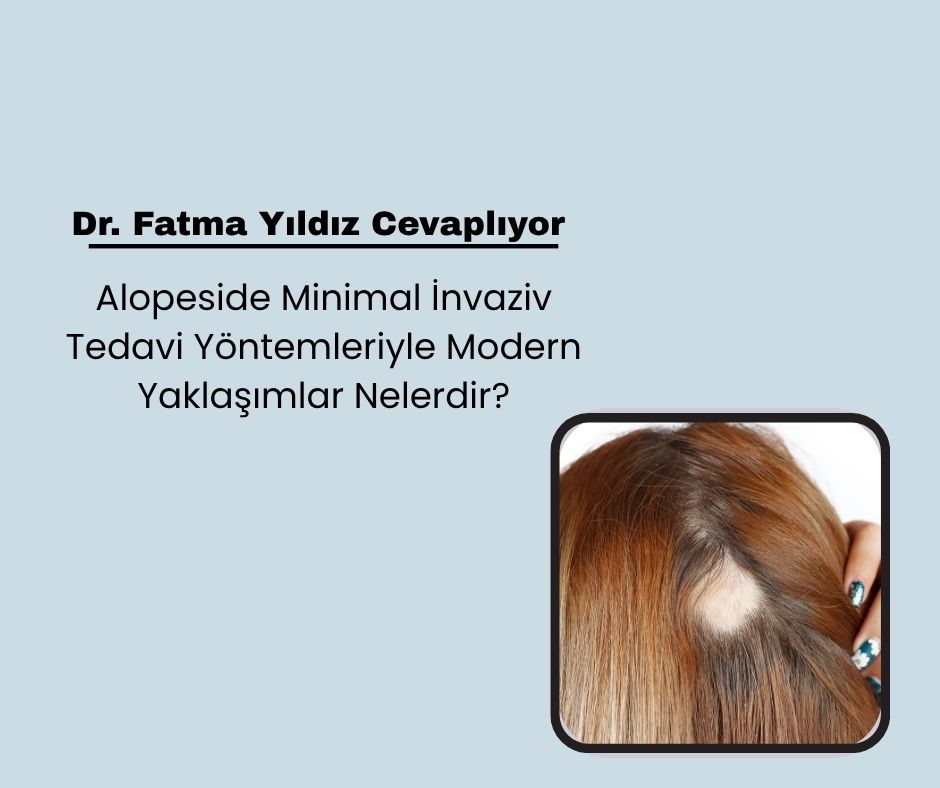

What are the Modern Approaches to Alopecia with Minimally Invasive Treatment Methods?
Hair loss, or alopecia as it is medically known, is one of the common dermatological problems that goes beyond aesthetic concerns and also affects the psychological health of the person. The innovative solutions offered by medical and cosmetic dermatology today are remarkable for this problem, which can occur for many reasons from genetic factors to hormonal disorders, environmental effects to systemic diseases. In this article, we examine the minimally invasive treatment methods used in alopecia in detail in the light of scientific data.
PRP (Platelet Rich Plasma) Treatment
PRP is based on the injection of platelet-rich plasma obtained from the patient's own blood into the scalp. Platelets are very rich in growth factors, and these factors trigger cellular renewal and help revitalize the hair follicles. With PRP application, the transition of the hair cycle to the anagen phase (active growth phase) is accelerated.
PRP treatment is frequently preferred especially in cases such as androgenetic alopecia, female-pattern hair loss and telogen effluvium. Studies have shown that regular PRP injections increase hair thickness, support new hair growth and make existing hair look healthier.
Mesotherapy
Mesotherapy involves injecting cocktails of vitamins, amino acids, minerals and growth factors directly into the scalp with micro needles. Thanks to this application, hair follicles are directly supported, blood circulation is increased and cellular renewal is encouraged. Mesotherapy stands out as an effective option especially for stress-related hair loss and strengthening thinning hair.
Planning the ingredients used in mesotherapy treatment specifically for the person increases the chance of success. Applications are usually made at 1-2 week intervals and visible results can be achieved after 6-10 sessions.
Dutasteride and Other Inhibitors
Dutasteride reduces DHT (dihydrotestosterone) production by suppressing both Type 1 and Type 2 isoforms of the 5-alpha reductase enzyme. With this effect, it is a strong treatment option especially for male-pattern hair loss (androgenetic alopecia). Since it can have systemic effects when taken orally, topical forms have also been developed today. Dutasteride applications not only slow down hair loss, but can also support new hair growth in some patients.
Conclusion
Minimally invasive methods used in the treatment of alopecia provide successful results without the need for invasive surgical procedures. Approaches such as PRP, mesotherapy and dutasteride are safe applications that have proven their effectiveness in both male and female patients. However, these treatments may yield different results for each patient; therefore, individual planning and dermatological evaluation are essential.
The advantage of minimally invasive methods is that they allow the patient to complete the treatment process without disrupting their social life. With these modern techniques, it has become possible to take strong and safe steps against hair loss.
This article was prepared by Dermatologist Doctor Fatma Yıldız and presented with the scientific content support of Ankara Life Polyclinic.
 Call
Call
 Whatsapp