


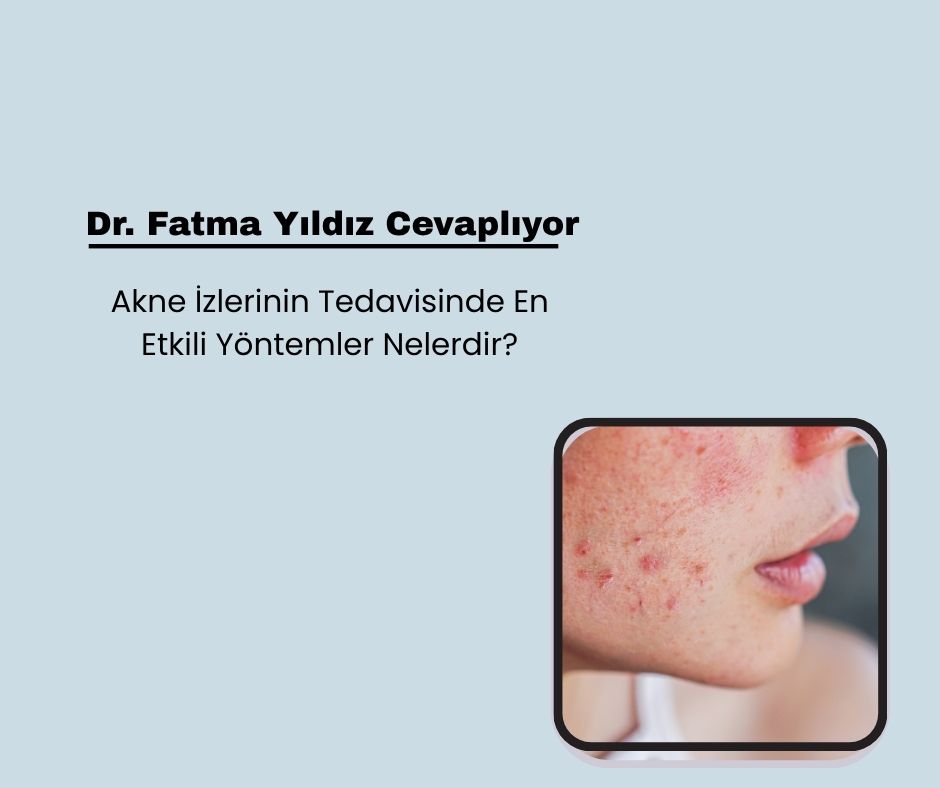

What Are the Most Effective Methods for Treating Acne Scars?
Acne vulgaris is a chronic, inflammatory skin disease that affects millions of people worldwide. It can have profound effects not only on physical appearance but also on psychological health. If left untreated, acne-related scars can be permanent and can significantly reduce an individual's quality of life.
So, how do acne scars form, and what are the most effective treatment options? Recent research has attempted to answer this question while also focusing on determining the most appropriate treatment protocols for different skin types and scar types.
What Causes Acne Scars?
In severe acne cases, inflammation in the skin causes deterioration in the skin's structure. During the healing process, some individuals may develop hypertrophic or keloid scars due to excess collagen production, while others may develop atrophic scars due to collagen loss. Atrophic scars are categorized as "ice pick," "roll," and "wagon-shaped."
A study showed that 47% of individuals diagnosed with acne develop permanent scarring. This highlights the seriousness of the problem.
What Methods Are Used in the Treatment of Acne Scars?
The treatment of acne scars is tailored to the type and severity of the scars, their skin type, and the patient's expectations. Research conducted over the last 10 years has revealed that non-invasive yet effective methods have come to the fore. Below are some of these methods and their success rates in clinical studies:
1. Fractional Carbon Dioxide (CO2) Laser
Skin resurfacing with the CO2 laser produces remarkable results, especially for atrophic acne scars. A 2023 study observed significant improvement in individuals treated with this method.
2. Combination of Microneedling and Radiofrequency
Microneedling stimulates collagen production by creating microchannels under the skin. Its effectiveness is further enhanced when combined with radiofrequency energy. Some studies have shown this method to be effective in over 80% of patients.
3. PRP (Platelet Rich Plasma)
PRP, derived from the patient's own blood, accelerates the healing process when used in combination with microneedling or laser. This treatment, which supports skin regeneration, is frequently preferred due to its low side effects.
4. Tranexamic Acid Injection with Mesotherapy
This treatment, particularly effective for post-acne erythema (redness), was evaluated by applying different applications to each side of the face. Significantly faster healing was observed on the injection side.
5. Subcision and Combined Procedures
This method, used to elevate subcutaneous scars, can yield even more effective results when combined with microneedling or laser.
6. Topical Stem Cell Applications
Products containing stem cells, one of the most recently developed regenerative medicine techniques, can support skin regeneration and reduce the appearance of scars.
Which Method is Suitable for Which Skin Type?
Each individual's skin type and acne scarring are unique. Therefore, a personalized treatment plan is crucial. Skin type and ethnicity also play a role in treatment selection:
Skin Type/Origin: Appropriate Treatment Approaches
Fitzpatrick I-III (Light skin): Laser, retinoids, fractional procedures
Fitzpatrick IV-VI (Dark skin): Gentler laser systems, procedures that do not trigger pigmentation
Asian Skin: Azelaic acid, gentle retinoids, cautious use of isotretinoin
Hispanic Skin: Combination treatments, sunscreen use is important
What Does the Scientific Data Say?
The systematic review analyzed 26 clinical studies between 2013 and 2023 in detail. These studies show that:
Microneedling, fractional laser, and PRP are among the most effective methods for atrophic scars.
Mesotherapy, subcision, and carboxytherapy are effective adjunctive methods.
Combination treatments offer higher success rates than single treatments.
When Should Treatment Begin?
Early intervention is crucial for reducing the persistence and severity of acne scars. The longer treatment is delayed, the deeper the tissue damage becomes, and the longer the treatment process becomes.
Conclusion: Is It Possible to Get Rid of Acne Scars?
Yes, but choosing the right treatment method and being evaluated by a specialist dermatologist is essential. Thanks to modern methods like fractional laser, microneedling, and PRP, the appearance of acne scars can be significantly reduced and the skin's natural texture can be restored.
You don't have to live with permanent scars. With the right timing, the right method, and expert support, smooth skin is no longer a dream.
 Call
Call
 Whatsapp