


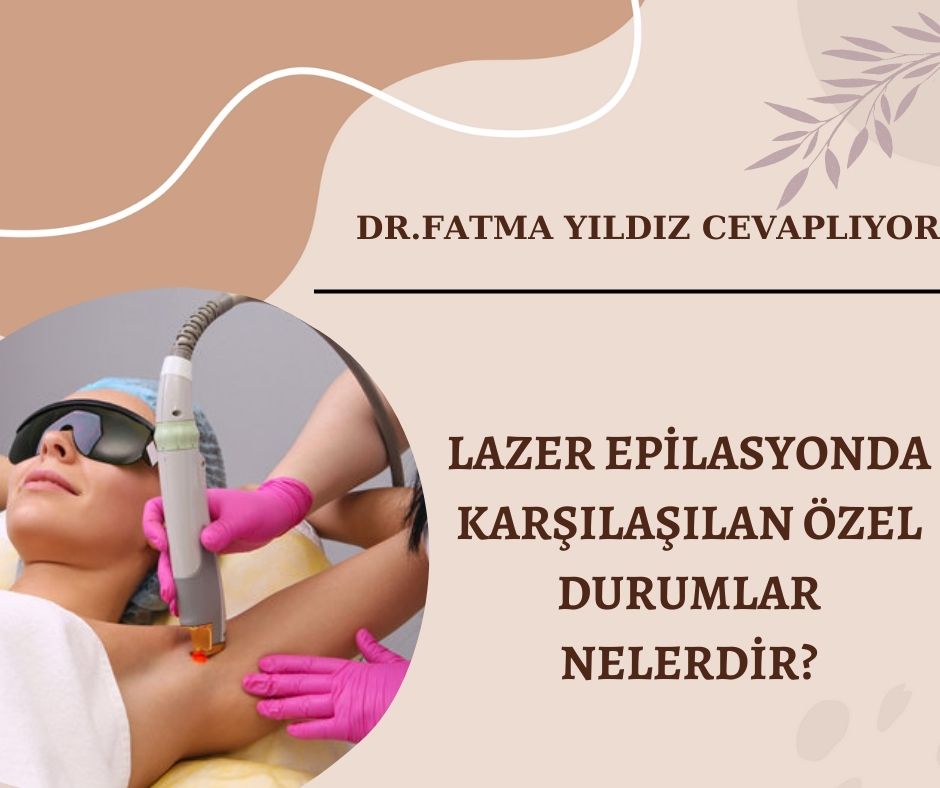

What are the Special Situations Encountered in Laser Epilation?
Since studies to increase the effectiveness of laser epilation include many different methods and conditions, it is quite difficult to evaluate the results clearly. Since the studies include different techniques, device settings, session numbers and monitoring periods, it is not easy to create a definitive guide on this subject. However, the methods that can be applied in some special cases and the points to be considered are as follows:
1. Patients with Hormonal Disorders
The effectiveness of laser epilation is generally lower in women with hormonal imbalance. However, laser epilation can reduce anxiety and depression in patients in this group and the satisfaction rate may increase as the number of sessions increases.
Laser treatment can be planned together with the medical treatment used for hormonal disorders in such patients.
2. Light-Colored or White Hairs
Laser epilation is generally ineffective in white and light-colored hairs because the amount of melanin is very low. Some methods have been tried to increase the effectiveness of the laser in these areas:
Melanin Solutions: Topical solutions that enrich the hair follicles with melanin have been tried, but the results are generally not satisfactory.
Photodynamic Therapy: A special chemical (5-ALA) was applied and then processed with a specific laser device, and 40% hair loss was achieved. However, this method is painful and carries the risk of skin damage and blemish formation.
3. Dark Skin Color and Tanned Patients
In dark-skinned or tanned people, the melanin in the upper layer of the skin absorbs more laser energy. This may increase the risk of side effects such as burns and skin blemishes. In addition, the energy reaching the hair follicles, which are the target of the laser, may decrease.
Recommended Methods:
Low energy levels and long pulse durations should be preferred.
A good cooling system should be used to protect the skin.
FDA-approved Diode and Nd:YAG lasers are suitable for dark skin. While the Nd:YAG laser is safer in terms of side effects, the Diode laser may be more effective.
Trial Shots: Trial shots can be made on a small area before the procedure and a few days can be waited for possible side effects.
Warnings: If the pain in these patients increases during the procedure, they should be checked for the possibility of burns. It should be explained to the patient that more sessions may be required because the energy used is low.
These methods can increase the effectiveness of laser hair removal in difficult patients and minimize the risk of side effects. However, each treatment should be customized according to the patient's individual characteristics.
 Call
Call
 Whatsapp