


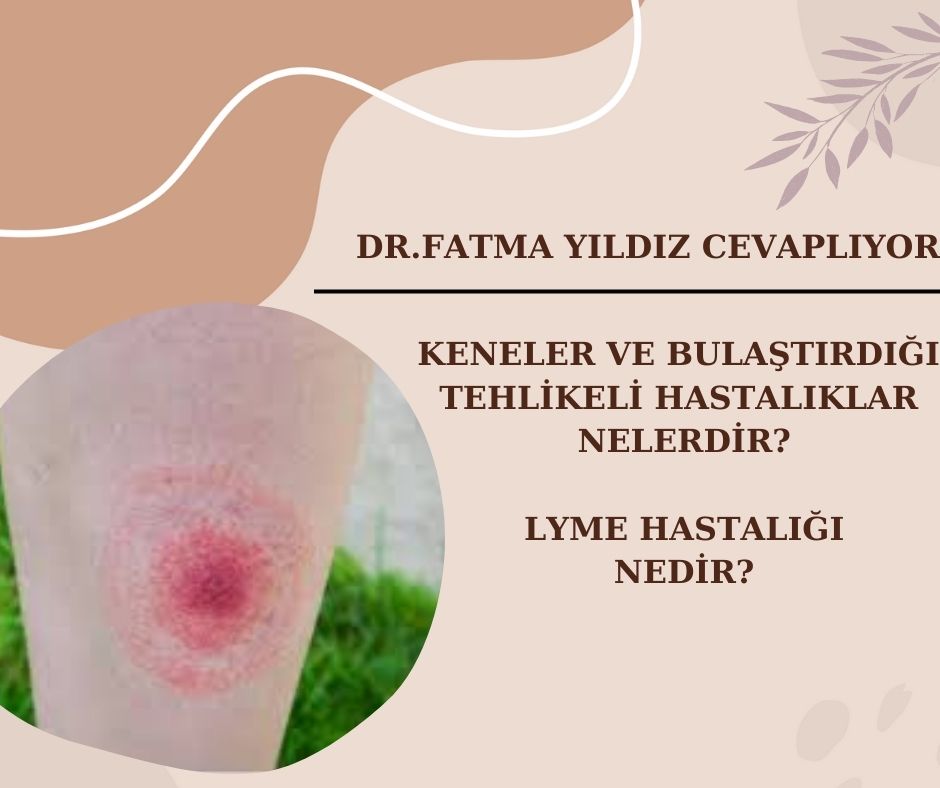

What are Ticks and the Dangerous Diseases They Transmit? What is Lyme Disease?
Ticks suck blood by attaching to human or animal skin and can carry viruses, bacteria or parasites in the process. They are usually found in grassy, forested and rural areas. Diseases carried by ticks may not show symptoms immediately, so caution should be taken against tick bites.
What is Lyme Disease and How is it Transmitted?
Lyme disease is an infection caused by a bacterium called Borrelia burgdorferi. This bacterium is usually carried by black-legged ticks (Ixodes type ticks) and is transmitted to humans through bites.
The transmission process is as follows:
It can take 24-36 hours for the bacteria to be transmitted after a tick bite.
If it is noticed early and the tick is removed, the risk of transmission is greatly reduced.
If left untreated, the disease progresses and can cause joint, nerve and heart disorders.
Lyme Disease Symptoms
The symptoms of Lyme disease usually appear in three stages.
In the first stage, a red-ringed rash (erythema migrans) develops in the area of the tick bite. Flu-like symptoms such as mild fever, fatigue, headache, muscle and joint pain may be observed.
In the second stage, if the disease progresses, symptoms such as severe headache, stiff neck, joint pain and palpitations may occur.
In the third stage, if the disease is not treated, it can lead to serious complications such as arthritis, nervous system problems, memory loss and muscle weakness.
Diagnosis and Diagnosis of Lyme Disease
Lyme disease is usually diagnosed by evaluating the patient's symptoms and medical history. Some tests may be performed for a definitive diagnosis:
Blood tests (ELISA, Western Blot) are used to detect the presence of Borrelia burgdorferi bacteria.
Cerebrospinal fluid analysis may be performed in patients with nervous system symptoms.
Treatment of Lyme Disease
If diagnosed early, Lyme disease is usually treated with antibiotics.
Doxycycline is usually used for 10-21 days.
Amoxicillin or Cefuroxime are the preferred antibiotics for pregnant women and children.
If left untreated, the disease can progress and cause serious health problems.
Ways to Protect Yourself from Ticks
It is very important to take some precautions to protect yourself from ticks.
Long-sleeved clothing should be worn in forested and grassy areas.
Ticks should be tucked into socks to prevent ticks from reaching the skin.
Tick-repellent sprays should be used.
After coming from outside, the body and clothes should be checked.
Conclusion: Do not underestimate tick bites!
Ticks may be small, but the diseases they carry can cause great danger. Early diagnosis and treatment of diseases such as Lyme can prevent serious health problems. When a tick bite is noticed, it is important to consult a health professional as soon as possible.
I wish you healthy days!
 Call
Call
 Whatsapp