


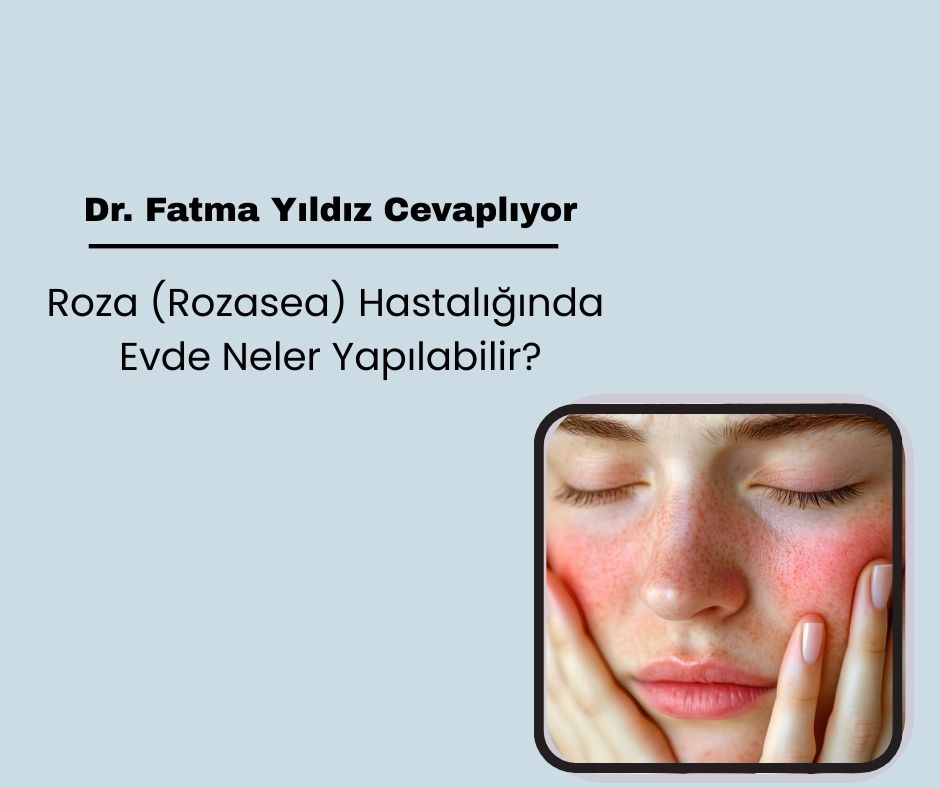

Recommendations from Doctor Fatma Yıldız on What Can Be Done at Home for Rosacea Disease
Rosa disease is a chronic skin problem that causes the skin to become sensitive, causing permanent redness and inflammatory lesions. The treatment process is long and requires patience. In the fight against this disease, not only medications but also simple changes that the patient makes in their daily lives are of great importance.
With supportive methods that can be applied at home for rosacea patients, both complaints can be relieved and the frequency of flare-ups of the disease can be reduced. Here is what you can do at home:
1. Avoiding Triggering Factors
Some factors are known to trigger redness and inflammation attacks in rosacea.
Avoiding these as much as possible at home helps keep the disease under control:
Excessively hot or cold environments
Exposure to direct sunlight
Consuming spicy foods
Drinking alcohol
Drinking hot beverages
Doing heavy exercise
Experiencing severe psychological stress
Menopausal hot flashes
Staying away from these triggers reduces the number and severity of flushing attacks.
2. Choosing the Right Product in Skin Care
Since rosacea skin is very sensitive, the cosmetic products used should be chosen carefully.
When doing home care, the following rules should be followed:
Gentle cleansers (syndets) should be used instead of soap.
Products containing alcohol, menthol, mint, camphor, perfume, sodium lauryl sulfate should be avoided.
Products that dry the skin such as tonics and astringents should not be used.
Light, oil-free, non-comedogenic products should be preferred.
If make-up is to be applied, green-tinted primer and light liquid foundations should be used.
A gentle skin care routine prevents irritation and flare-ups.
3. Regular Moisturizer Use
Since the skin barrier is weakened in rosacea patients, transepidermal water loss increases and the skin dries.
Therefore, regular moisturizer use is a must:
Moisturizer should be specific to sensitive skin.
Water-based, fragrance-free, light formulas should be preferred.
It should be applied after cleaning in the morning and evening without irritating the skin.
Moisturizing helps strengthen the skin barrier and reduces the risk of irritation. In addition, complaints such as burning and stinging on the skin are significantly relieved.
4. Be Sure to Protect Yourself from the Sun
Sun rays are one of the most important external factors that increase inflammation and vascular dilation in rosacea patients.
Things to do at home or when going out:
SPF 50 and above, broad-spectrum sunscreen should be used.
Physical protectors based on zinc oxide or titanium dioxide should be preferred.
Sunscreen should be used all year round, not just in the summer.
Direct sun exposure should be avoided during midday hours (11:00-16:00).
Sun protection both relieves existing redness and prevents new vascular dilation and skin damage.
5. Use Medications and Topical Products Carefully
Medications and topical treatments recommended by the doctor should be used regularly.
However:
Strong corticosteroid creams and similar products that may irritate the skin should be avoided.
All medications used (especially systemic medications such as blood pressure medications) should be reported to the physician.
Because some medications can aggravate rosacea symptoms.
6. Lifestyle Adjustments
Lifestyle adjustments also play a supportive role in the fight against rosacea:
Establishing regular and quality sleep habits
Applying stress management techniques (breathing exercises, meditation)
Eating a balanced and anti-inflammatory diet (a diet rich in vegetables and fruits)
In particular, correct management of stress reduces facial redness and skin sensitivity.
CONCLUSION
In rosacea, not only medical treatment but also the correct care and protective measures that the patient will apply in their daily life make a big difference in the course of the disease.
Small changes made at home contribute significantly to the relief of rosacea symptoms, the reduction of attacks and the preservation of skin health.
Therefore, using the right products, avoiding triggers, protecting from the sun and strengthening the skin barrier are integral parts of the treatment.
 Call
Call
 Whatsapp