


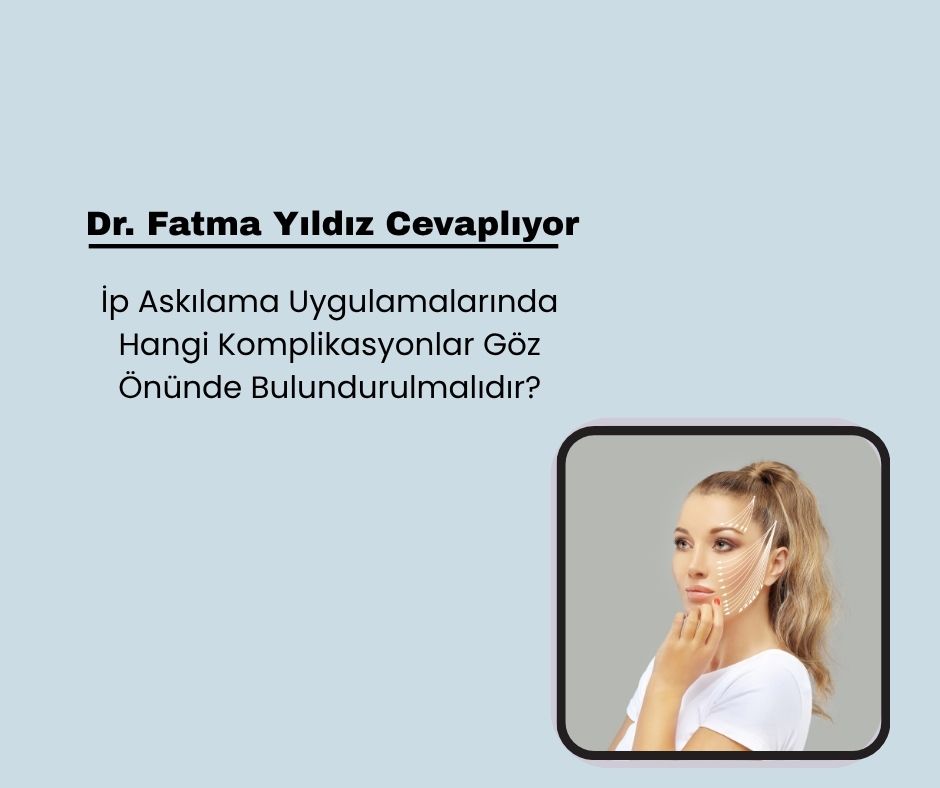

What Complications Should Be Considered in Thread Lift Procedures?
Thread lift procedures, developed as an alternative to surgery, have seen significant growth in the aesthetic world in recent years. Also known as a non-surgical facelift, this technique is preferred for correcting sagging skin, rejuvenating the facial contours, and creating a natural-looking lift. However, as with any aesthetic procedure, thread lift procedures carry some risks.
In this article, we discuss lesser-known but significant complications that can occur after thread lift surgery. From infection and nerve damage to parotid gland injury and the risk of hematoma, we will examine all the details to consider from an expert perspective.
How Can the Risk of Infection Be Prevented?
Redness, tenderness, swelling, and a feeling of warmth on the skin after a thread lift procedure can be signs of infection. To reduce the risk of infection:
Antiseptic cleansing (such as betadine) should be meticulously performed before the procedure.
Prophylactic antibiotics should be used for the first 3–5 days after the procedure.
The face should not be washed for the first 48 hours, and close contact with pets should be avoided.
Furthermore, the patient must be thoroughly informed about post-procedure care.
When Does Nerve Damage Occur?
The facial nerve and the greater auricular nerve (GAN) are important anatomical structures that can be damaged if incorrect technique is used during thread lifts. In particular, the use of sharp needles or excessive tension can cause neuropathy in these nerves. In the case of GAN damage:
Patients may experience numbness, tingling, and pain around the ear.
Mild injuries usually heal spontaneously.
However, in more severe injuries, sensory loss may last a long time.
Prevention: Using a cannula and working on the SMAS minimizes the risk of nerve damage.
Why Is Parotid Gland Injury Important?
Incorrectly placed sutures or involuntary jaw movements during the procedure can injure the parotid gland. In this case:
Unilateral swelling, discomfort, and increased pain at mealtimes are observed.
Early diagnosis is possible with ultrasound.
Treatment includes antibiotics, steroids, and, if necessary, botulinum toxin injections.
Such injuries usually heal with conservative methods; however, thorough knowledge of the anatomy is essential during the procedure.
What Results Does Lateral Canthus Elevation Produce?
Lateral canthus elevation may be preferred for patients who desire a more slanted and youthful appearance around the eyes. However, if the sutures are placed too close together:
A dull and harsh expression may occur.
An unnatural, unsightly appearance may be uncomfortable for the patient.
Therefore, it is recommended to maintain a distance of at least 3–4 cm between the lateral canthus and the suture placement. In middle-aged individuals, even a mild lifting effect can be effective for periorbital rejuvenation.
How to Prevent Hematoma Formation?
Overly aggressive needle maneuvers or sutures placed along a blood vessel can lead to large hematomas. Large vessels, such as the superficial temporal artery, are particularly at risk. To reduce this risk:
A local anesthetic containing epinephrine should be used.
A wait of 10–15 minutes should be allowed before starting the procedure.
Gentle cannula insertion should be preferred.
If a hematoma develops, pressure and monitoring can help control it; however, prevention is always better than cure.
Is There a Risk of Granuloma and Hyperpigmentation?
Granuloma formation can occur with superficially placed sutures or inadequate sterilization. This condition:
Can be cosmetically uncomfortable.
Can pose a risk of infection.
Can be treated with local steroid or suture removal.
Hyperpigmentation may also be observed at the suture insertion points. This is usually temporary and can be addressed with picolaser applications if necessary.
What Does a Retained Cannula Mean?
In rare cases, a portion of the cannula may remain in the tissue during the procedure. Cannulas, especially those containing aluminum or with manufacturing defects, are more prone to breakage. In this case:
Surgical removal may be necessary.
Product inspection should be performed before the procedure.
Excessive force should be avoided during cannula insertion.
What are the Golden Rules to Prevent Complications?
Anatomy is essential – A detailed understanding of the facial nerve, vascular structures, and fascia layers is essential.
Sterility is essential – Antiseptic preparation is as important as the procedure itself.
Patient education is essential – Post-procedure care should be fully explained.
Follow-up examinations should be conducted – Evaluation in the first few days and a few weeks later is important.
Proper technique should be used – Cannula selection should be made, and excessive tension should be avoided.
Conclusion: Success is Possible with Knowledge and Precision
Thread lift procedures are one of the indispensable techniques in the modern aesthetic world, offering safe, effective, and natural results. However, a successful outcome is not only possible with aesthetics; it is also possible with a safe, complication-free, and satisfaction-focused approach.
To ensure that the hands you entrust your face to are shaped with knowledge, experience, and care,
Ankara Life is by your side.
 Call
Call
 Whatsapp