


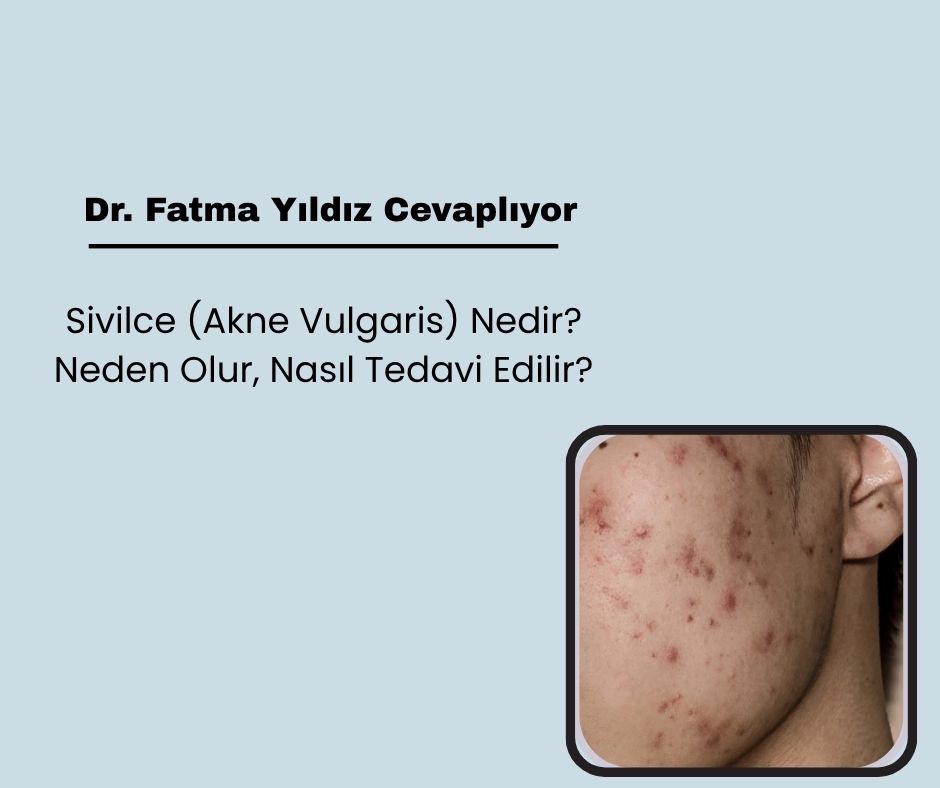

What is Acne (Acne Vulgaris)? Why Does It Happen, How Is It Treated?
Acne is an inflammatory or non-inflammatory skin lesion that starts especially during puberty and is seen in areas such as the face, back and chest. Medically known as acne vulgaris, it is a chronic inflammatory skin disease that affects millions of people worldwide. This condition, which is associated with many factors such as genetic predisposition, hormonal changes, nutrition, stress, and environmental factors, is not only an aesthetic problem but also a medical problem with psychological and social effects.
✅ How Common is Acne?
Acne vulgaris (acne) is one of the most common dermatological disorders, with a prevalence rate of up to 90%, especially in adolescence. In various studies conducted in Türkiye, the prevalence of acne varies according to age and gender:
The prevalence in adolescents between the ages of 12 and 18 varies between 21 and 28%.
While acne is more common in male adolescents, it occurs at an earlier age in girls due to the early onset of puberty.
Acne continues in approximately 20% of individuals over the age of 20. Adult acne is becoming increasingly common, especially in women.
Among individuals between the ages of 40 and 49, acne is seen in 3% of men and 5% of women.
✅ Why Does Acne Occur?
Acne vulgaris, or acne; is a chronic inflammation of the pilosebaceous unit, which consists of a hair follicle and a sebaceous gland. Four basic biological processes stand out in the development of this disease:
1. Increased Sebum Production
Androgen hormones, which increase during adolescence, stimulate the sebaceous glands in the skin, causing excessive sebum secretion. This oiliness clogs the pores and the first step of acne is taken.
2. Clogging of Skin Cells
When the shedding of dead skin cells slows down or becomes sticky, an accumulation begins in the pores, which causes the formation of blackheads (open comedones) or whiteheads (closed comedones).
3. Bacterial Colonization
Cutibacterium acnes (formerly Propionibacterium acnes) bacteria multiply in clogged pores. This bacteria breaks down oils and causes substances that initiate inflammation to appear.
4. Inflammation
The immune system responds to bacteria and other stimuli. During this process, redness, swelling and painful pimples occur on the skin.
✅ What are the Factors that Trigger Acne?
???? Genetic Predisposition
According to twin studies, genetic factors are up to 80% effective in the development of acne. If there is a family history of acne, the person is more likely to get acne and have it more severely.
???? Hormones
Androgen hormones such as testosterone directly affect acne vulgaris by increasing sebum production. In women, hormonal fluctuations such as menstrual cycle and ovarian cysts (PCOS) can cause adult acne.
???? Nutrition
High glycemic index foods (white bread, chocolate, fast food) can trigger acne by increasing blood sugar and insulin.
Milk and dairy products, especially skim milk, can increase acne due to the hormones they contain. Studies have observed a positive relationship between milk consumption and acne.
???? Stress
Hormones such as cortisol and CRH increase during periods of intense stress, which can increase acne severity by triggering sebum production and inflammation.
???? Smoking
Some studies have found that smoking reduces inflammatory acne, while others have found it ineffective. The results are contradictory.
???? Hygiene Habits
Washing your face twice a day is considered the most balanced practice for acne.
Excessive cleansing can damage the skin barrier and worsen acne.
???? Sweating and Sports
Sweating can clog pores. Taking a shower without delay after exercise reduces this effect.
✅ How Do Hormones and the Immune System Play a Role in Acne?
Androgens prepare the ground for acne by increasing oil production.
Neuropeptides and hormones such as Substance P, CRH and α-MSH support the inflammatory process.
The immune system increases cytokine production while responding to bacteria, and the inflammatory form of acne develops.
Systemic Approach to Acne (Acne Vulgaris) Treatment: Antibiotics, Hormones and Isotretinoin
Acne, medically known as acne vulgaris, causes lesions only on the skin surface in some individuals, while in others it appears in deeper, widespread and severe forms. While local (topical) treatments are sufficient in mild cases, systemic treatment is necessary in moderate and severe cases. In this article, we will discuss in detail the systemic treatment options used in acne, based on scientific sources.
✅ Systemic Antibiotics
Antibiotics are the most commonly used systemic drugs in the treatment of acne. Their main effect is to prevent the proliferation of the acne-causing bacteria Cutibacterium acnes (P. acnes). However, they also have a direct anti-inflammatory effect by reducing neutrophil migration, suppressing cytokine release, and reducing inflammation.
 Call
Call
 Whatsapp