


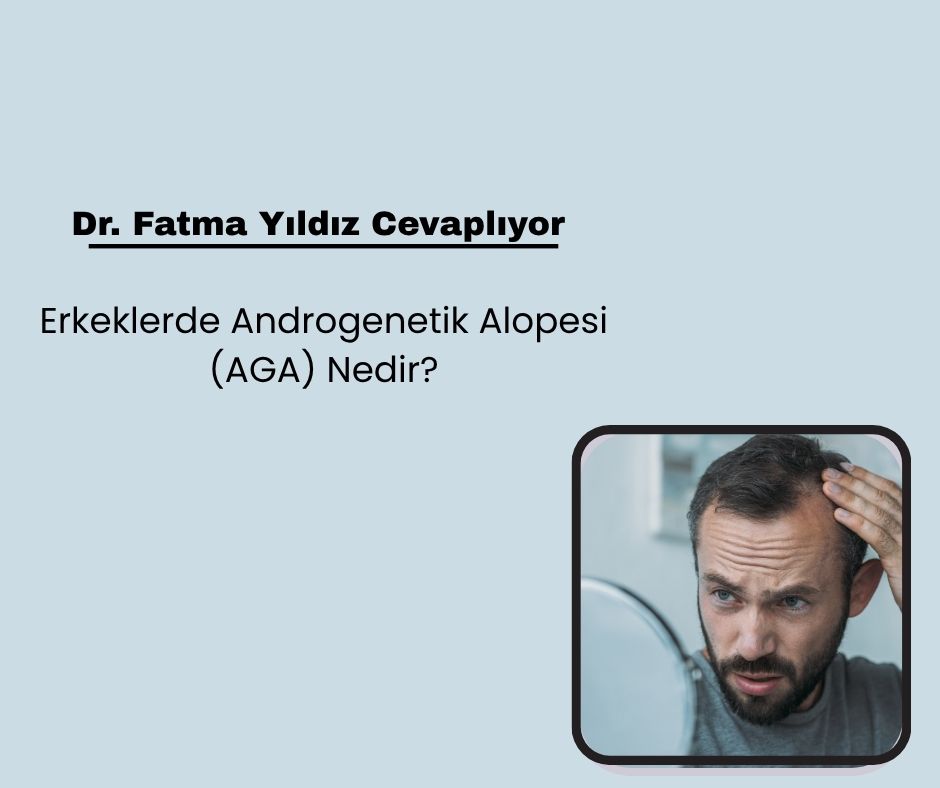

What is Androgenetic Alopecia (AGA) in Men? Symptoms, Causes and Current Treatment Methods
Androgenetic alopecia, or male-pattern hair loss, is the most common cause of hair loss in men. Its incidence increases with age. AGA symptoms can be detected in approximately 80% of men who are 70 years old. This condition, which sometimes has psychological and social effects, can negatively affect quality of life along with aesthetic concerns.
In this article, you will find the causes of androgenetic alopecia, the diagnostic process and all evidence-based treatment options in detail.
What is Androgenetic Alopecia?
AGA is a progressive and irreversible hair loss that occurs due to genetic predisposition and the effect of androgen hormones (especially dihydrotestosterone - DHT) on hair follicles. In men, it is characterized by the receding hairline and thinning in the crown area. Hair follicles miniaturize (shrink) over time, hair grows thinner and shorter, and eventually disappears completely.
Topical and Systemic Treatments in AGA
1. Topical Minoxidil
It is the first FDA-approved treatment option. It nourishes the hair follicle with its vasodilator effect and prolongs the anagen phase. It is available in 2% and 5% forms. Its effectiveness increases with regular use. Side effects include itching, hypertrichosis (unwanted hair growth) and contact dermatitis.
2. Topical Finasteride
In addition to minoxidil, topical finasteride also works by reducing DHT levels in the scalp. Although it has been shown to be effective, subcutaneous passage and systemic absorption should be carefully evaluated.
Systemic Treatment Options
3. Oral Finasteride
Oral finasteride is used daily at a dose of 1 mg and suppresses DHT production by 60-70%. This FDA-approved drug slows hair loss and supports regrowth. However, rare but important effects such as sexual side effects, decreased libido and depression may be observed. The permanent side effects called “post-finasteride syndrome” are still controversial.
4. Oral Dutasteride
It is a more powerful 5-alpha reductase inhibitor than finasteride. It is used at a dose of 0.5 mg per day. It has a higher DHT suppression power. Its side effects are similar to finasteride.
5. Hormonal Treatments
Anti-androgens (such as spironolactone) are not used systemically in men. They are preferred more frequently in female patients.
6. Physical Treatments
- LLLT (Low Level Laser Therapy)
This treatment, which slows down hair loss and increases hair thickness, can also be applied with home-type devices. Its effectiveness has been shown in clinical studies.
7. PRP (Platelet Rich Plasma)
Plasma obtained from the patient's own blood is injected into the scalp. It stimulates hair follicles thanks to the growth factors it contains. It is applied in several sessions at 3-4 week intervals. There may be mild pain in the injected area. Its standard protocol has not yet been determined.
8. Stem Cell (Exosomal) Treatments
Mesenchymal stem cell-based MSC-exosome treatments have attracted attention in recent years. Their use in skin rejuvenation and hair restoration is increasing. It is not yet a common practice.
9. Microneedling
This technique, applied to the scalp with microneedles, triggers collagen production. Combinations with PRP or minoxidil may be more effective.
10. Nutrition and Support Products
Zinc, biotin, iron, vitamin D and B12 deficiencies can affect hair health. Food supplements and antioxidant supports can be useful. However, they are not sufficient as a treatment alone.
11. Nutraceutical Products
These are formulas that aim to support the hair cycle with nutritional supplements. For example; They contain saw palmetto, pygeum, biotin, amino acids, keratin and marine extracts. Brands such as “Viviscal” and “Nutrafol” fall into this group.
12. Combination Therapies
Multiple treatment approaches such as finasteride + minoxidil + LLLT combination may be more effective in stopping hair loss and promoting hair growth. The literature has shown synergistic effects of these combinations.
13. Surgical Options: Hair Transplantation
If hair loss is advanced and does not respond to medical treatments, hair transplantation is the most effective solution. Follicular unit extraction (FUE) and follicular unit transplantation (FUT) are the most common techniques. Donor area quality and expert team are very important for achieving successful results.
14. New and Emerging Therapies
- JAK Inhibitors
These drugs, which are especially effective in the treatment of areata, are in the research phase in the treatment of AGA.
- Botulinum Toxin
It is thought that it can indirectly suppress DHT production. However, it has not yet been approved for use in the treatment of AGA.
- Prostaglandin Analogs (Latanoprost etc.)
It is thought that these molecules, which are effective in eyelash and eyebrow growth, can also be used in AGA.
Conclusion: Individualized Approach is Important in AGA Treatment
Androgenetic alopecia is a condition with many treatment options but requires patience and regular follow-up.
 Call
Call
 Whatsapp