


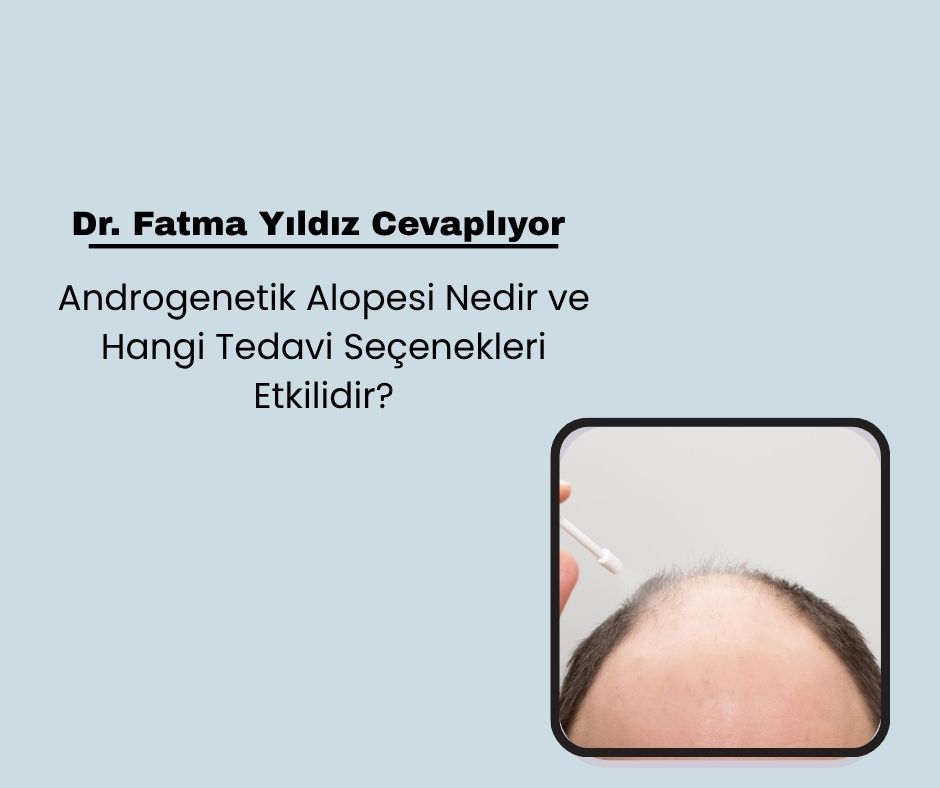

What is Androgenetic Alopecia and What Treatment Options Are Effective?
Hair loss is a significant problem for both men and women, affecting both physical appearance and psychological and social aspects. Androgenetic alopecia (AGA), commonly known as male-pattern or female-pattern baldness, is the most common cause of hair loss. So, what causes androgenetic alopecia, how is it treated, and which methods are truly effective?
What causes androgenetic alopecia?
Androgenetic alopecia develops due to genetic and hormonal factors. The primary factor is dihydrotestosterone (DHT), a derivative of the hormone testosterone. DHT causes miniaturization of hair follicles, reducing the blood supply to capillaries and, over time, leading to hair loss.
In men, the hairline generally recedes from the temples to the crown, while in women, the frontal hairline remains intact, but hair thins over a wider area. This condition is not only an aesthetic issue but also a health problem that directly impacts an individual's self-confidence and quality of life.
How is androgenetic alopecia diagnosed?
Diagnosis is usually made through a clinical examination. Dermatologists can easily diagnose AGA by examining the hair loss pattern, family history, and hair shaft thickness. If necessary, miniaturization (thinning of the hair follicles) can be assessed through dermoscopy or scalp biopsy.
What methods are used in the treatment of AGA?
Androgenetic alopecia is a chronic condition. Therefore, treatment is long-term and should be planned according to the patient's lifestyle, expectations, and budget. The main effective and scientifically supported treatment methods are:
1. Topical Minoxidil
This FDA-approved medication stops hair loss and promotes new hair growth. It is used in 2% and 5% solutions or foams. It improves the hair cycle by prolonging the anagen phase. Initial results are seen in 4-6 months. The most common side effects are itching and redness.
2. Oral Finasteride
Finasteride, another FDA-approved treatment, inhibits the conversion of testosterone to DHT in men. It is used at a dose of 1 mg per day. It is more effective for hair loss on the crown of the head. However, sexual side effects (decreased libido and erectile dysfunction) may occur, and these effects may be permanent in some individuals.
3. Topical Finasteride
This is an ideal option for those who want to avoid systemic side effects. However, its effectiveness can vary depending on the formulation used. It is usually administered once daily, and long-term data is limited.
4. Low-Level Laser Therapy (LLLT)
This light-based treatment stimulates the hair follicle by increasing cellular energy production. It is particularly beneficial for early-stage AGA. It can be administered with both home and clinical devices.
5. PRP and Exosome Therapies
PRP (platelet-rich plasma) is the injection of growth factors derived from a person's own blood into the scalp. Exosome treatments are advanced technology methods that enhance cellular communication and support hair follicles. These two methods can be used as adjuncts to other treatments.
6. Hair Transplantation
This is a surgical procedure that offers a permanent solution for advanced-stage AGA. Resistant hair follicles, particularly those in the nape of the neck, are harvested and transplanted to the areas experiencing hair loss. When performed with the correct technique, the aesthetic results are quite successful.
What factors are important in treatment selection?
The cause of hair loss, severity, expectations, and financial situation are different for each patient. Therefore, a personalized treatment plan should be developed. The following factors should be considered when selecting treatment:
Effectiveness
Side effect profile
Ease of use and compliance with treatment
Cost
The patient's aesthetic goals
It is important to remember that AGA treatment requires patience and persistence. A combination of methods may often be necessary for effective results.
What are the ethical concerns in finasteride treatment?
Systemic medications such as finasteride can cause ethical debate due to their side effects. Sexual dysfunction, depression, and even, in rare cases, persistent side effects can negatively impact patients' quality of life. Therefore, it is within the ethical responsibility of physicians to provide detailed information, obtain patient consent, and offer alternative treatment options.
Conclusion: There is no one-size-fits-all solution!
Androgenetic alopecia is a condition that requires a multifaceted approach. While scientifically based treatments have a high success rate, treatment requires patience. A treatment plan developed in collaboration with a physician who understands the patient's needs, expectations, and lifestyle increases the likelihood of success.
Hair loss is not only an aesthetic problem but also a psychological one. Therefore, an effective, safe, and ethical treatment plan is crucial.
 Call
Call
 Whatsapp