


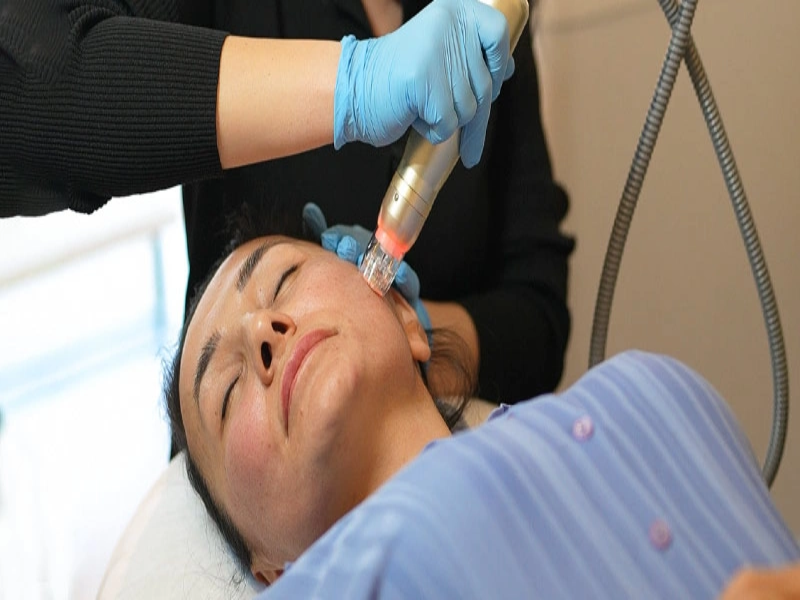

Radiofrequency microneedling, often referred to as “gold needle” treatment, is a procedure used to improve the appearance of selected acne scars and uneven skin texture. The treatment combines microneedles with radiofrequency energy delivered at controlled depths within the skin.
The needles create temporary microchannels, while the radiofrequency energy produces controlled thermal stimulation in the deeper skin layers. This process may support collagen remodelling over time.
The procedure does not leave the skin completely unaffected. Temporary redness, swelling, sensitivity, pinpoint bleeding, dryness or mild crusting may occur after treatment.
The treatment plan should be based on the type and depth of the acne scars, skin tone, medical history and individual healing response.
Which Acne Scars May Be Considered for Treatment?
Acne scars are not all the same. The initial assessment should determine which scar types are present.
Common categories include:
-
Rolling scars
-
Boxcar scars
-
Ice-pick scars
-
Raised or hypertrophic scars
-
Post-inflammatory pigmentation
-
Persistent redness after acne
Radiofrequency microneedling may be more suitable for some rolling and boxcar scars than for deep ice-pick scars.
Ice-pick scars may require other approaches, while raised scars need a different treatment strategy. Dark marks and redness are colour changes rather than true depressions and may not respond in the same way as structural scars.
A combination of treatments may therefore be more appropriate than relying on one procedure alone.
Why Is the Initial Evaluation Important?
The first consultation helps determine whether radiofrequency microneedling is suitable and what level of improvement may realistically be expected.
The evaluation should include:
-
Acne-scar type
-
Scar depth
-
Number and distribution of scars
-
Skin texture
-
Natural skin tone
-
Current acne activity
-
Previous treatments
-
Tendency to develop pigmentation
-
History of abnormal scarring
-
General health and medication use
The practitioner should also clarify the individual’s expectations. The purpose of treatment is generally to reduce the visibility of scars and improve texture. Complete removal of acne scars cannot be guaranteed.
Is Active Acne Present?
Active inflammatory acne should be assessed separately from acne scarring.
Performing microneedling over active pustules, cysts or infected skin may increase irritation and may spread inflammation.
Active acne may need to be controlled before scar treatment begins.
The consultation should therefore distinguish between:
-
Current acne
-
Residual redness
-
Dark marks
-
Depressed scars
-
Raised scars
Each condition may require a different approach.
Assessment of Scar Type and Depth
The practitioner should examine the skin under appropriate lighting and, when useful, from different angles.
Rolling scars may become more visible when the skin is stretched. Boxcar scars may have sharply defined edges, while ice-pick scars are narrow and extend deeper into the skin.
Scar depth affects treatment selection. Very deep or tethered scars may respond only partially to radiofrequency microneedling and may require procedures such as subcision or other targeted methods.
The presence of several scar types in the same area is common.
Skin Tone and Pigmentation Risk
Natural skin tone is an important factor in treatment planning.
Individuals with darker skin tones may have a greater risk of post-inflammatory hyperpigmentation after procedures that create heat or inflammation.
This does not automatically prevent treatment, but conservative energy settings, appropriate needle depth and careful aftercare may be required.
The assessment should also review:
-
Previous darkening after acne
-
Pigmentation after laser or peeling
-
Recent tanning
-
Sun exposure habits
-
Use of irritating skincare products
Medical History and Contraindications
The practitioner should review relevant medical information before treatment.
Important factors include:
-
Pregnancy or breastfeeding
-
Active skin infection
-
Herpes history
-
Uncontrolled eczema or dermatitis
-
Abnormal wound healing
-
Keloid tendency
-
Autoimmune conditions
-
Bleeding disorders
-
Use of blood-thinning medication
-
Implanted electrical or cardiac devices
-
Recent isotretinoin use
-
Previous aesthetic procedures
Prescription medication should not be stopped without approval from the prescribing physician.
The device manufacturer’s contraindications and the individual’s medical condition should be considered together.
Previous Treatments
The consultation should include details of previous acne and scar treatments.
These may include:
-
Chemical peels
-
Laser procedures
-
Microneedling
-
Dermal fillers
-
Subcision
-
Surgical scar treatment
-
Prescription retinoids
-
Isotretinoin
-
Topical acne products
The timing of previous procedures may affect when radiofrequency microneedling can be performed safely.
The skin should be allowed to recover fully before another intensive procedure is planned.
Treatment Expectations
Results vary according to scar type, skin characteristics, device settings and healing response.
Some individuals may notice gradual improvement after a series of sessions, while others may experience only limited change.
Collagen remodelling develops over time. Final improvement should not be assessed immediately after the procedure.
The practitioner should explain:
-
Expected degree of improvement
-
Likely number of sessions
-
Interval between sessions
-
Possible need for combination treatment
-
Temporary side effects
-
Recovery period
-
Risk of pigment changes
-
Maintenance requirements
A fixed session number or guaranteed result should not be promised.
How Is the Procedure Performed?
Before treatment, the skin is cleaned and a topical anaesthetic may be applied.
The device is adjusted according to the treatment area, scar depth and skin characteristics. Microneedles enter the skin at controlled depths, and radiofrequency energy is delivered through the selected needle system.
The procedure time varies according to the size of the area and the treatment plan. A standard duration of 30 to 60 minutes does not apply to every individual.
Discomfort may occur despite anaesthetic cream. The procedure should not be described as completely painless.
Possible Benefits
In suitable individuals, radiofrequency microneedling may help improve:
-
Depressed acne-scar appearance
-
Uneven skin texture
-
Selected enlarged-looking pores
-
Mild skin laxity
-
Fine lines
-
Some forms of post-acne textural irregularity
The procedure does not physically close pores or permanently eliminate scars.
Any improvement in pigmentation or redness is variable and may require a different treatment method.
Possible Side Effects
Common temporary reactions may include:
-
Redness
-
Swelling
-
Tenderness
-
Warmth or burning sensation
-
Dryness
-
Pinpoint bleeding
-
Mild crusting
Less common risks include:
-
Infection
-
Prolonged redness
-
Post-inflammatory pigmentation
-
Temporary lightening
-
Acne flare
-
Scarring
-
Uneven texture
-
Persistent sensitivity
Individuals with increasing pain, pus, blistering, spreading redness or fever should seek medical advice.
Recovery Process
Recovery varies according to treatment intensity, needle depth, skin sensitivity and the individual healing response.
Redness and swelling may last for several hours or several days. Mild dryness or crusting may also occur.
The skin should not be scrubbed, peeled or picked during recovery.
The practitioner may recommend temporarily avoiding:
-
Retinoids
-
Exfoliating acids
-
Abrasive products
-
Heavy make-up
-
Intense exercise
-
Saunas and steam rooms
-
Swimming
-
Direct sun exposure
The timing for restarting skincare products should be determined individually.
Aftercare
Gentle Cleansing
A mild cleanser may be used according to the practitioner’s instructions. Hot water and vigorous rubbing should be avoided.
Moisturising
A suitable moisturiser may support the skin barrier and improve comfort.
Moisturising does not guarantee faster collagen production or a better final result.
Sun Protection
Broad-spectrum sunscreen, hats and shade may help reduce the risk of post-inflammatory pigmentation.
Freshly treated skin may initially require physical protection if sunscreen causes burning or irritation.
Avoiding Irritating Products
Retinoids, acids, scrubs, alcohol-based products and fragranced formulations may need to be paused until the skin has recovered.
Radiofrequency Microneedling in Çankaya
Clinics in Çankaya may offer radiofrequency microneedling for acne scars and other selected skin concerns.
Ankara Laser or another provider should perform an individual medical and skin assessment before treatment.
The decision should not be based only on the device name, popularity or promotional claims.
Important factors include:
-
Practitioner qualifications
-
Device approval and maintenance
-
Sterile single-use needle cartridges
-
Appropriate treatment settings
-
Infection-control standards
-
Clear aftercare instructions
-
Availability of follow-up care
No clinic or device can guarantee visible improvement after every session.
Who May Be a Suitable Candidate?
Radiofrequency microneedling may be considered for adults with selected depressed acne scars and realistic expectations.
Suitability depends on:
-
Scar type
-
Skin tone
-
Active acne status
-
Medical history
-
Previous treatments
-
Healing tendency
-
Ability to follow aftercare
Age alone does not determine eligibility.
Individuals with active infection, uncontrolled inflammatory skin disease or certain medical conditions may need treatment to be postponed.
Is It a Permanent Solution?
Collagen remodelling may produce long-lasting improvement in selected scars, but the procedure should not be described as a permanent cure.
Existing scars may become less visible without disappearing completely.
New acne lesions may also produce new scars if active acne is not controlled.
Long-term results depend on scar type, ageing, sun exposure, acne control and individual skin response.
Frequently Asked Questions
Is the Procedure Painful?
A topical anaesthetic may reduce discomfort, but pressure, heat or stinging may still be felt.
Pain tolerance and treatment intensity vary between individuals.
How Many Sessions Are Required?
The number of sessions depends on scar type, severity, skin response and treatment goals.
A personalised plan should be created after assessment.
When Are Results Visible?
Some changes may be noticed gradually over several weeks. Collagen remodelling may continue for several months.
Immediate redness or swelling should not be mistaken for the final result.
Can All Acne Scars Be Treated?
No single procedure is suitable for every scar type.
Deep ice-pick, tethered, raised or mixed scars may require combination treatment.
Is There Downtime?
Temporary redness, swelling and sensitivity are common. Recovery time varies according to treatment intensity and individual response.
In conclusion, the initial evaluation for radiofrequency microneedling acne-scar treatment in Çankaya should assess scar type, depth, active acne, skin tone, pigmentation risk, medical history and previous procedures. Personalised treatment planning is essential because not every acne scar responds in the same way, and complete or permanent removal cannot be guaranteed.
 Call
Call
 Whatsapp