


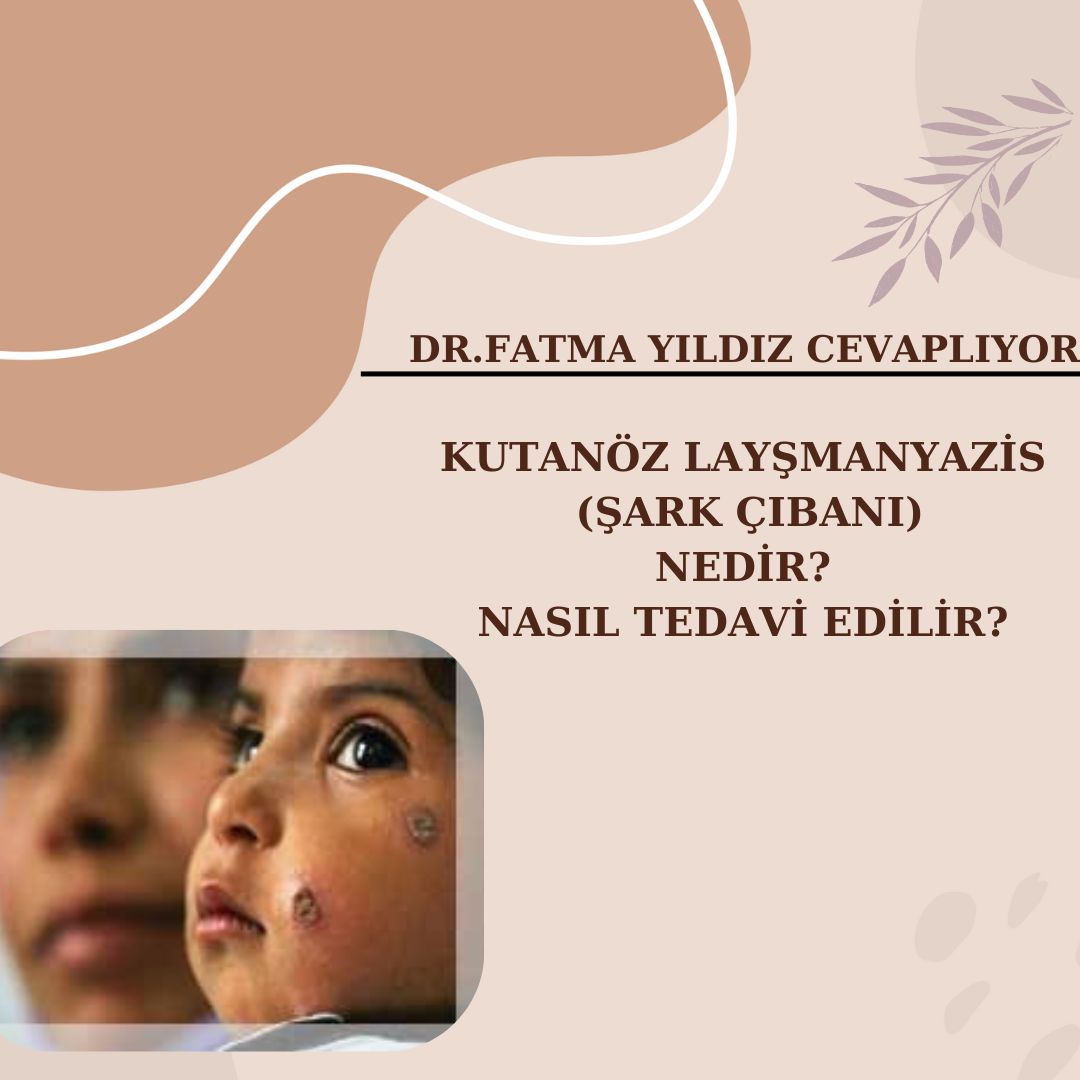

What is Cutaneous Sore and How is it Transmitted?
Cutaneous sore is a skin disease that is not widely known among the public but is frequently seen in some regions. This disease, called "cutaneous leishmaniasis", occurs with the bites of infected sand flies (midges). It usually causes painless wounds that take a long time to heal. So how is this disease transmitted and how can we protect ourselves?
Cutaneous sore is a skin infection caused by a parasite called Leishmania. This parasite is transmitted through the bites of small sand flies known as midges. The fly that bites an infected person or animal acquires the parasite and then transmits it to another person through the bite.
Who is at Risk?
Cutaneous sore is especially common in hot and humid climates. The Southeastern Anatolia, Mediterranean and Eastern Anatolia regions of Turkey are risky areas.
Those who work outdoors and camp are at greater risk.
Individuals with weak immune systems may experience the disease more severely.
What are the symptoms?
Symptoms of the disease usually appear weeks or months after the bite of a sandfly.
Painless swelling on the skin: Initially seen as a small, red swelling.
Slow-growing wound: The blister grows over time and may turn into an open wound.
Crusting and healing period: The wound heals by crusting, but full recovery may take months or even years.
Scarring: The disease usually leaves a permanent scar on the skin after healing.
How is it diagnosed?
If you have a wound on your body that does not heal for a long time, crusts and does not heal, you should see a doctor. The doctor can make the diagnosis by examining the parasite under a microscope with a small sample from the wound. Special laboratory tests may also be performed if necessary.
Treatment Methods
Although oriental boils usually heal on their own, treatment may be required in some cases. If left untreated, the wound may grow or leave permanent scars on the skin.
Local (Regional) Treatment: Creams or ointments can be applied in minor and mild cases.
Cryotherapy (Freezing Treatment): The wounded area is treated by freezing it with liquid nitrogen.
Drug Treatment: In more serious cases, antiparasitic drugs prescribed by the doctor can be used.
Surgical Intervention: In rare cases, minor surgical procedures may be required for large and non-healing wounds.
Ways to Protect Yourself from Oriental Boil
The most effective method for preventing the disease is to prevent fly bites.
Sandflies are most active at sunset and at night. Therefore, care should be taken when going outside.
Wearing long-sleeved clothes and pants can protect the skin.
Insect repellent sprays and insect repellents should be used.
Placing thin fly screens on doors and windows can prevent flies from entering the house.
Conclusion
Although oriental boil is generally not a serious disease, it can be disturbing because the healing process is long. Protection from flies is of great importance, especially for those living in risky areas. If you notice a wound on your skin that has not healed for a long time, it is recommended that you consult a dermatologist for early diagnosis.
 Call
Call
 Whatsapp