



What is Dissecting Cellulitis? What are the Diagnosis and Current Treatment Approaches?
Dissecting cellulitis is a rare but serious disease characterized by inflammation, nodules, abscesses and progressive scarring on the scalp. It is usually seen in young adult men. The disease has a chronic course and can lead to irreversible hair loss. Therefore, early diagnosis and effective treatment are very important.
Clinical Features of Dissecting Cellulitis
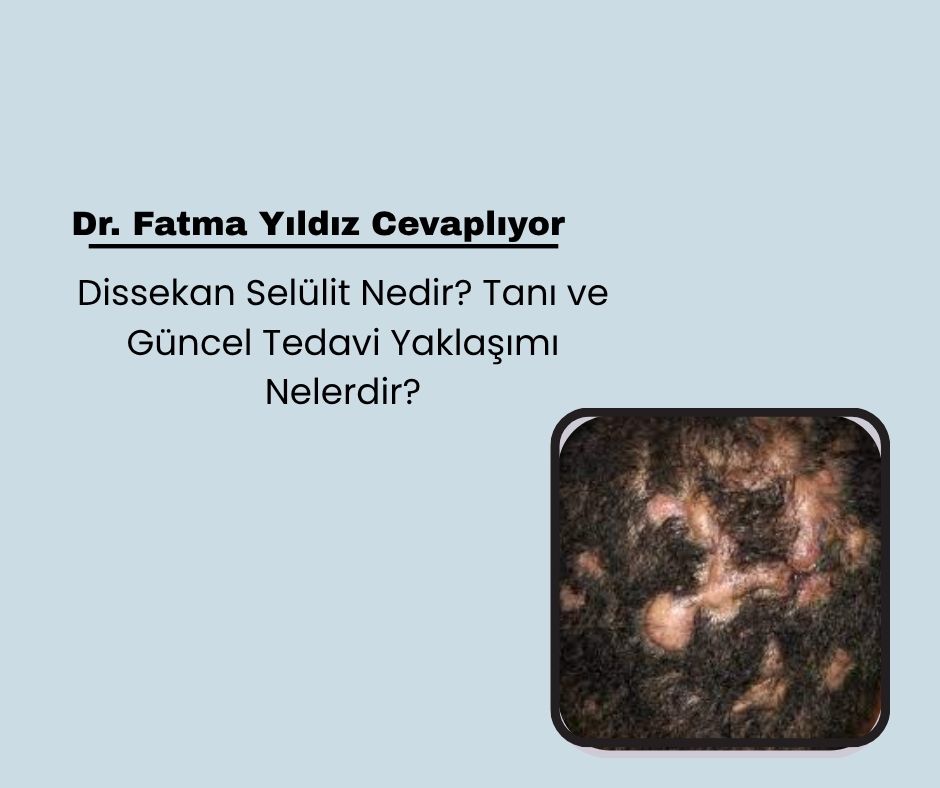
Dissecting cellulitis usually begins in the vertex region. Lesions initially appear as painful nodules and coalesce over time to form fluctuant abscesses. These abscesses can become fistulized and eventually heal with scar tissue, leading to permanent hair loss. In the clinic, findings such as comedones, papules, pustules, nodules and sinus tracts can be seen simultaneously. This causes the disease to be evaluated together with diseases such as Hidradenitis Suppurativa and Acne Keloidalis Nuchae.
Treatment Approach: What Options Are Available?
The aim of dissecting cellulitis treatment is to control inflammation, prevent scarring and prevent secondary infections. The treatment process should be planned with a multidisciplinary approach and individually.
Preferred Initial Treatments
Oral Tetracyclines
They are generally the first-line agents preferred in dissecting cellulitis treatment. Drugs such as doxycycline and minocycline slow down the progression of the disease with their anti-inflammatory properties. They are usually used for 3 months. Long-term treatment may be required.
Oral Isotretinoin
Used in severe cases. It is effective by reducing sebaceous gland activity. It can be started at a dose of 0.5-1 mg/kg per day. It is also preferred because it is effective in other scarring hair diseases such as MSSA.
Other Pharmacological Treatments
Antibiotics: Agents such as rifampicin and clindamycin can be preferred in the presence of sinus tracts. It is usually applied as a combined treatment.
Biological Agents: TNF-α inhibitors (such as adalimumab) provide promising results in resistant and widespread cases. However, they have not yet been approved for widespread clinical use in the treatment of dissecting cellulitis.
Oral Corticosteroids: They can be used for short periods, especially in acute inflammation control.
Procedural Treatments
Laser Treatments: Nd:YAG laser and carbon dioxide (CO₂) laser may be beneficial in destroying sinus tracts and reducing inflammation.
Physical Drainage: Draining fluctuant abscesses helps reduce pain and increase response to treatment.
Surgical excision for inflammatory lesions: Excision of sinus tracts in scarred areas is recommended. However, it is a limited option in widespread cases.
Topical Treatments
Topical antibiotics and antiseptics can be used as supportive measures to prevent secondary infections.
Follow-up and Lifestyle Recommendations
Dissecting cellulitis is chronic. Therefore, regular follow-up and compliance with treatment are very important. Trauma to the scalp should be avoided, proper hygiene should be provided and irritant products should be avoided. It should not be forgotten that psychological support may be required.
Conclusion
Dissecting cellulitis is a hair disease that is difficult to treat but can be controlled. If diagnosed early and appropriate treatment is started, scar formation can be prevented. Pharmacological and procedural treatment methods should be planned according to the patient's complaints and the stage of the disease. Treatment success can be increased with long-term follow-up, patient education and lifestyle adjustments.
 Call
Call
 Whatsapp