


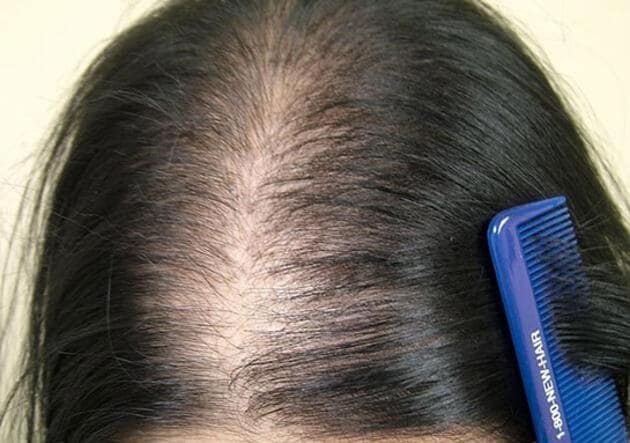

What is Female Pattern Hair Loss (Androgenic Alopecia) and How is It Treated?
Hair loss is not only an aesthetic concern for women, but also a significant health problem that affects their psychological and social lives. Female Pattern Hair Loss (FPHL), also known medically as androgenic alopecia, is the most common type of hair loss in women. So, what are the characteristics of this condition, why does it occur, and how is it treated?
How does female pattern hair loss develop?
Female pattern hair loss is characterized by follicular miniaturization in the hair follicles. While hair follicles normally produce thick and long hairs, over time these follicles shrink, forming vellus hairs, which are shorter, finer, and softer.
Terminal hair: Thick, long, and healthy hair strands.
Vellus hair: Fine, short, and soft, and usually appear sparsely on the scalp.
Hair follicles enter a new growth phase with each cycle. However, in FPHL, this growth phase (anagen phase) gradually shortens. As a result, hair falls out before it grows back, and thinning begins over time.
The frontal hairline is usually maintained, but in some women, this line may recede. Extensive thinning of the hair, especially on the crown and midsection, is noticeable.
What are the psychological effects of hair loss in women?
Hair is seen as a symbol of beauty, youth, and self-confidence in women. Therefore, female-pattern hair loss becomes not only a physical but also a psychological problem.
Loss of self-confidence in social interactions
Avoidance of being photographed or in public
Development of depression and anxiety disorders
A tendency to withdraw from work and personal life
Research shows that the impact of hair loss is more devastating for women than for men.
What are the causes of female-pattern hair loss?
The most important causes of FPHL are genetic and hormonal factors. Androgen hormones (especially dihydrotestosterone (DHT)) affect sensitive areas in the hair follicles, causing shrinkage. Additionally:
Hormonal changes (menopause, postpartum)
Thyroid diseases
Iron deficiency
Stress and poor eating habits
Certain medications
can trigger or accelerate hair loss in women.
How is female pattern hair loss diagnosed?
A dermatologist uses various methods to determine the type of hair loss:
Clinical examination (observation of thinning and distribution of hair on the scalp)
Trichogram and dermatoscopy (examination of hair follicles)
Blood tests (to rule out hormonal and metabolic causes)
These tests determine whether the hair loss is due to female pattern hair loss or another cause.
What are the treatment options for female pattern hair loss?
1. Topical treatments
Minoxidil: This FDA-approved hair loss treatment is the most commonly used treatment for women. Regular use slows hair loss and promotes new hair growth.
2. Systemic treatments
Antiandrogen medications (spironolactone, finasteride, dutasteride): Reduce the negative effects of hormones on hair follicles.
Hormonal treatments: Can be used especially in conditions such as polycystic ovary syndrome.
3. Supportive treatments
PRP (Platelet Rich Plasma): Stem cell-rich blood plasma is injected into the scalp to stimulate follicles.
Hair mesotherapy: Mixtures containing vitamins, minerals, and amino acids are applied to the scalp.
Laser treatments: Low-energy laser devices stimulate hair follicles and support the growth phase.
4. Hair transplantation
For advanced-stage female-pattern hair loss, hair transplantation can be a permanent solution for suitable patients. It provides particularly successful results in women with a preserved frontal hairline but experiencing significant thinning at the crown.
Things to consider during treatment
The treatment is long-lasting; results usually appear within 3–6 months.
Hair loss may recur if regular use is discontinued.
The treatment plan should be personalized based on the individual's age, genetic predisposition, and hormonal status.
What can be done to prevent female pattern hair loss?
Balanced diet: Consume foods rich in protein, vitamins, and minerals.
Stress management: Meditation, exercise, and regular sleep.
Careful hair care: Avoid chemical treatments, excessive heat, and tight hairstyles.
Early detection: Consult a dermatologist immediately when hair loss is noticed.
 Call
Call
 Whatsapp