


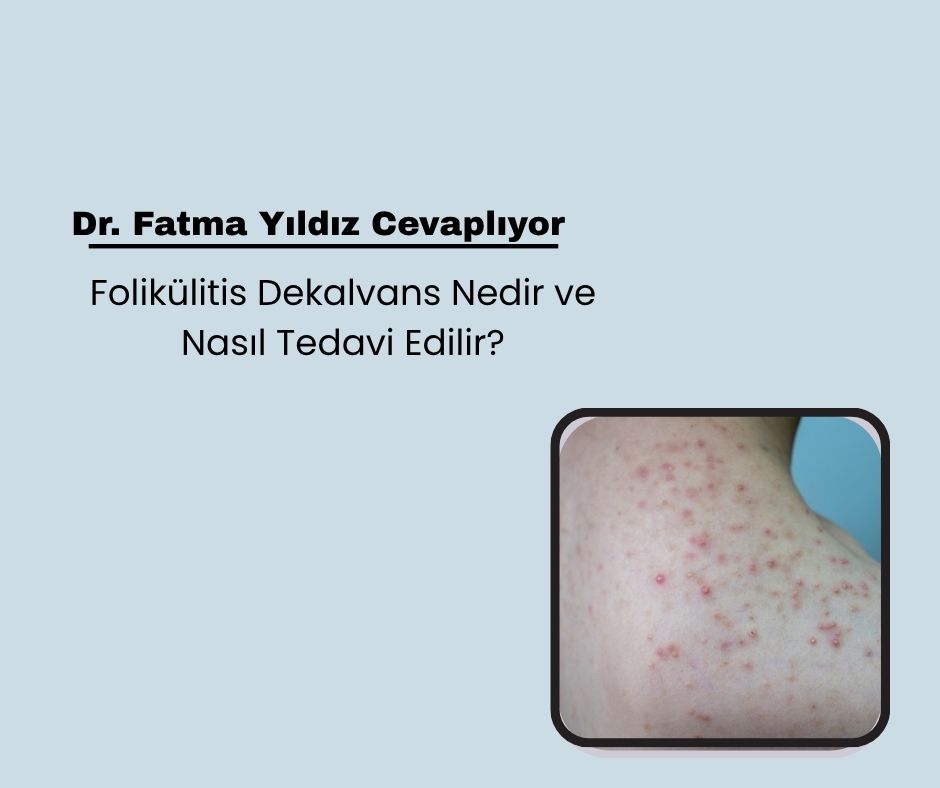

What is Folliculitis Decalvans and How is it Treated?
Folliculitis Decalvans (FD), a rare but very stubborn disease that can cause permanent hair loss on the scalp, is a hair loss problem that usually affects adult men. In this condition, inflammation develops in the hair follicles, and over time, this inflammation destroys the roots and leaves scars (scar tissue). As a result, hair cannot grow back and permanent gaps occur.
What are the symptoms?
The most common symptoms of Folliculitis Decalvans include:
Redness and tenderness on the scalp,
Pusty acne-like lesions,
Itching or burning sensation,
Shiny and scarring gaps in the areas of hair loss on the scalp.
These symptoms are sometimes mild at the beginning of the disease, but can spread to large areas if left untreated. The disease usually starts in certain areas such as the crown and back hairline.
How is it Diagnosed?
One of the most important criteria for diagnosis is the clinical symptoms and trichoscopy findings seen on the scalp. In addition, the diagnosis can be confirmed with a skin biopsy. Since FD can often be confused with other hair diseases, it is important to be evaluated by an experienced dermatologist.
Treatment Methods
The treatment of folliculitis decalvans is shaped according to the severity and progression rate of the disease. Although it is difficult to completely eliminate, its progression can be stopped by taking it under control.
1. Topical Treatments
Topical corticosteroids: Used to suppress inflammation. Generally preferred in mild cases.
Topical antibiotics: If accompanied by bacterial infection, antibiotic creams such as clindamycin can be effective.
2. Systemic Treatments
Antibiotics: This is the most commonly used method. Tetracycline group antibiotics (such as doxycycline) suppress inflammation with long-term use.
Oral corticosteroids: Can be used for short periods in severe cases.
Isotretinoin: Can be used especially in resistant and widespread cases.
3. Other Options
Biological agents and JAK inhibitors: These are among the new treatment alternatives. These drugs, which are still being evaluated experimentally, can stop the progression of the disease by regulating the immune system.
Course of the Disease and Quality of Life
FD can affect patients both physically and psychologically. Permanent hair loss can lead to loss of self-confidence. Therefore, it should not be forgotten that the fight against the disease should be supported not only with medications but also with psychological support.
Conclusion
Folliculitis decalvans can be controlled with early diagnosis and regular treatment. Although it is difficult to achieve full recovery, the progression of the disease can be stopped and existing hairy areas can be protected. If you have acne, itching and shedding areas on your scalp that have not gone away for a long time, it is important to consult a dermatologist.
Regular follow-up and a personalized treatment plan are essential for healthy hair.
Dr. Fatma Yıldız
Dermatology Specialist
Ankara Life Polyclinic
 Call
Call
 Whatsapp