


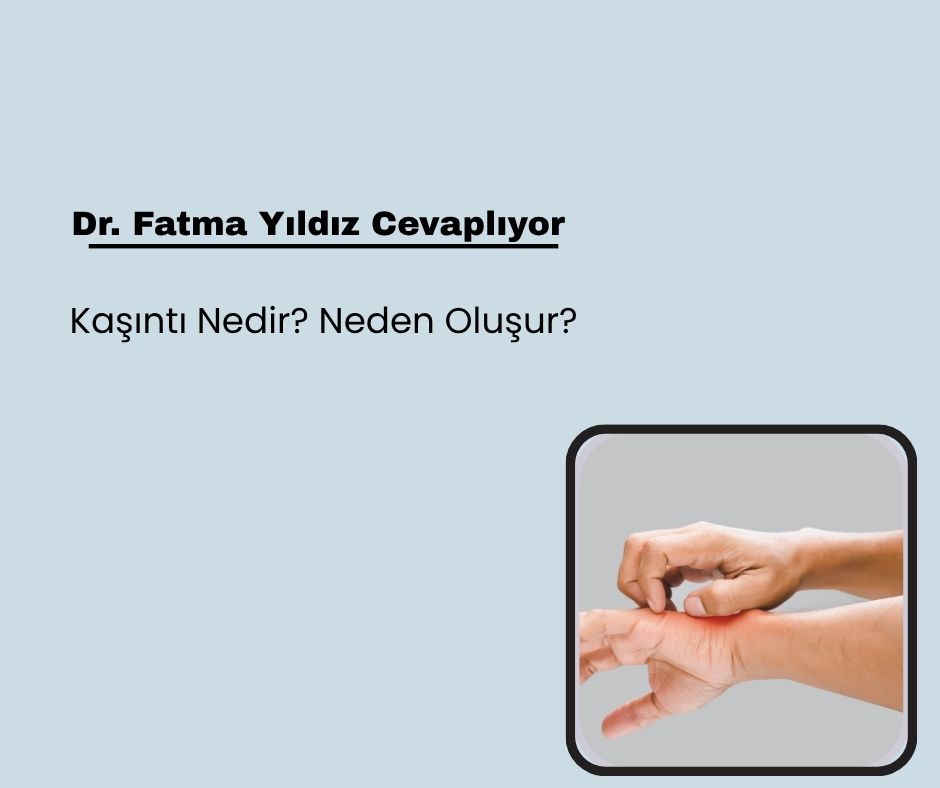

What is Itching? Why Does It Occur?
Itching (pruritus) is the distinctive and most disturbing symptom of allergic dermatological diseases. This sensation specific to the skin and mucosa is the main component of diseases such as atopic dermatitis (AD), urticaria and allergic contact dermatitis (ACD). However, itching is not limited to these diseases; conditions such as nasal itching in allergic rhinitis, eye stinging in conjunctivitis and oral itching in oral allergy syndrome also show the strong relationship of pruritus with allergy.
Neuroimmune Mechanism of Pruritus
Itching begins with a pruritogenic trigger stimulating free nerve endings via mediators. This stimulus is transmitted to the brain via unmyelinated C fibrils. Many pruritus mediators have been identified, including histamine, serotonin, bradykinin, interleukins, substance P, NGF, opioid peptides and leukotrienes. Special neuronal pathways and cortical regions play a role in the transmission of the itch sensation. This shows that pruritus is not only peripheral but also related to the central nervous system.
Urticaria and Itching
In patients with urticaria, itching develops under the influence of histamine released from mast cells. It is known that H1 and H4 receptors are effective in this process. The acceptance of histamine as the “last common pathway” is the basis for antihistamines being the first choice in treatment. Studies have determined that itching in urticaria usually increases in the evenings, and that heat and sweating aggravate the symptoms. Itching in urticaria is also closely related to emotional states.
The Complexity of Atopic Dermatitis and Itching
In atopic dermatitis, pruritus is the basic symptom of the disease, independent of the lesions. It has been shown that cytokines such as IL-31, IL-4 and IL-13 play a central role in the formation of pruritus in AD. Biological agents developed for these cytokines (e.g. dupilumab) have been found to be effective in reducing pruritus. Molecules such as NGF, LTB4, and TSLP also increase in AD lesions. In AD, itching is triggered not only by physical but also by emotional and environmental factors. Factors such as sleep disorders, stress, and contact with woolen fabrics can increase itching. This condition is defined as “hyperkinesis” and “allokinesis”.
Allergic Contact Dermatitis and Pruritus
In ACD, itching begins simultaneously with inflammation that develops after contact and continues until the inflammation disappears. In experimental studies, increased sensitivity to mechanical and thermal stimuli (hyperalgesia and allodynia) has been detected in ACD. The increase in chemokines such as CXCL10, especially in ACD, may cause this form of itching to be more intense.
Clinical Importance and Treatment Approach
Itching is a symptom that seriously affects the quality of life of patients and can lead to psychological problems. Identification of non-histamine pruritus mediators leads to the development of new treatment targets for conditions where classical antihistamine treatments are inadequate. In particular, treatments targeting both peripheral and central mechanisms are gaining importance in multifactorial diseases such as atopic dermatitis.
As Ankara Life Polyclinic, serving in Ankara, under the management of Dermatologist Doctor Fatma Yıldız, the causes of pruritus in allergic skin diseases are evaluated based on scientific basis; it is aimed to eliminate itching symptoms with personalized treatment plans specific to each patient.
 Call
Call
 Whatsapp