


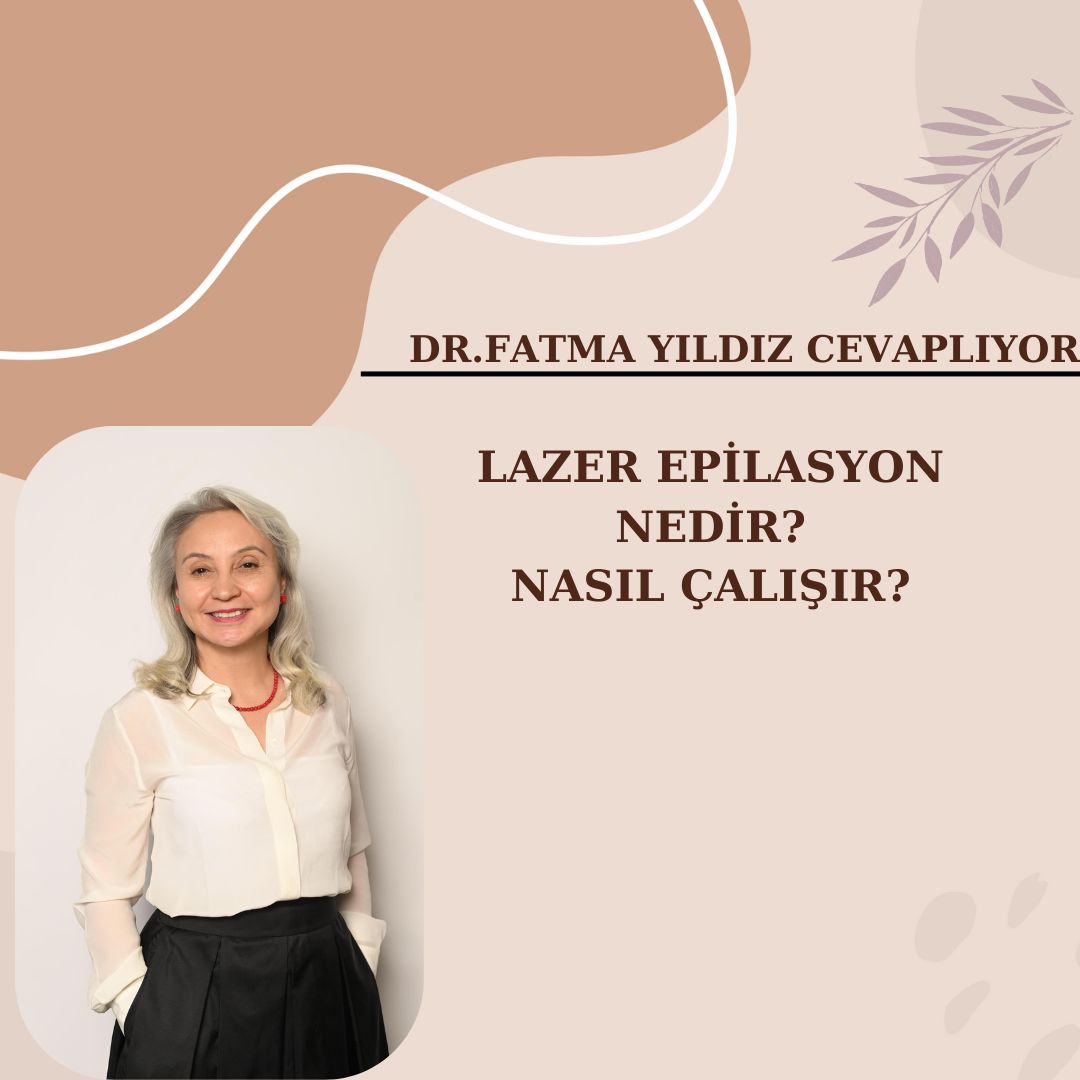

Dear Readers, I am Dr. Fatma Yıldız
I am Dr. Fatma Yıldız, a dermatologist. Today, I would like to give you information about laser epilation, one of the most frequently applied cosmetic procedures. In this article, I will explain how laser epilation works, which laser systems are used and what to consider during the application.
What is Laser Epilation and How Does It Work?
Laser epilation is a procedure that permanently reduces unwanted hair. Its operating principle is based on the selective photothermolysis mechanism. The laser beam is absorbed by the melanin pigment in the hair follicle and turns into heat, damaging the hair root cells. This process greatly reduces hair regrowth.
However, in order not to damage the skin, the wavelength, energy level and pulse duration of the laser device should be adjusted according to the skin type. Incorrect adjustments can lead to side effects such as burns, blemishes or crusting on the skin. Therefore, laser epilation should definitely be performed by an experienced specialist.
Which Laser Types Are Used?
The most commonly used laser hair removal devices today are:
Alexandrite Laser (755 nm): The most effective option for people with light skin, dark skin and thick hair.
Diode Laser (808-810 nm): Can be used on a wider range of skin types.
Nd:YAG Laser (1064 nm): The safest and most effective laser type for dark-skinned individuals.
For dark-skinned or tanned individuals, Alexandrite laser doses should be adjusted and advanced cooling systems should be used with longer pulse durations. For thin hair, Alexandrite laser can be applied together with other laser systems such as Q-Switch Nd:YAG laser to obtain more effective results.
Safety and Side Effects of Laser Hair Removal
In order for laser hair removal to be safe and effective, your skin type and hair structure should first be evaluated by a specialist. Laser devices produce light energy and it is very important that this energy is adjusted correctly so that it does not damage the skin tissue by targeting only the hair follicles.
A slight redness, swelling or burning sensation may occur after the procedure. These usually go away on their own within a few hours or at most a few days.
Is Laser Epilation Permanent?
Laser epilation is not permanent hair removal, but a permanent hair reduction method. With regular sessions, the hair becomes thinner and the growth cycle slows down, but it may not disappear completely due to some hormonal factors.
Conclusion and Recommendations
Laser epilation is a modern and effective cosmetic treatment, and the best results are achieved when performed under the supervision of a doctor. Pre- and post-session care rules should be followed, and expert guidance should be followed.
Remember, your skin health is more important than anything else. I wish you healthy and beautiful days!
 Call
Call
 Whatsapp