


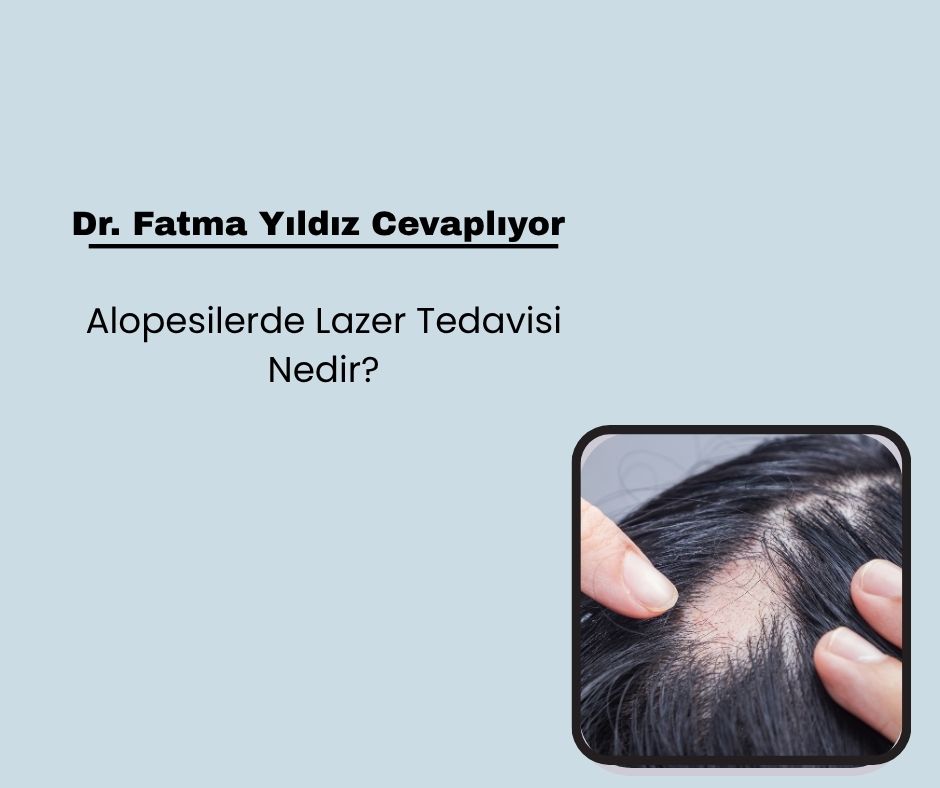

What is Laser Treatment in Alopecia?
Current Approaches to Androgenetic Alopecia and Alopecia Areata
Today, laser technologies are widely used in the treatment of many diseases in the field of dermatology. Laser systems, which have proven their effectiveness in areas such as epilation, skin rejuvenation, treatment of vascular and pigmented lesions, as well as tattoo removal, are now promising against hair loss problems. Ankara Life Polyclinic, one of the health institutions specialized in laser treatments in Ankara, closely follows the developments in this field under the leadership of Specialist Dr. Fatma Yıldız and offers effective solutions to its patients.
Fundamentals of Laser Technology and Its Interaction with the Skin
Laser means “amplification of light by stimulated emission” and produces an intense, directional and consistent light at a specific wavelength. Thanks to these features, it creates a targeted effect on the skin. It provides various therapeutic effects by being absorbed by chromophores such as water, hemoglobin and melanin in the skin. Laser systems that damage stem cells by affecting melanin in the hair follicle can also have hair growth stimulating effects in addition to epilation. This paradox has brought laser treatment of alopecia to the agenda.
Androgenetic Alopecia and Low-Dose Laser Therapy (LLLT)
Androgenetic alopecia is a common type of hair loss seen in 50% of individuals over the age of 40 in men and up to 75% in women over the age of 65. In the treatment of this condition, which develops due to genetic predisposition and the effect of androgen hormones, only minoxidil and finasteride are drugs with scientifically proven effectiveness. However, these drugs may not be effective in every patient and also require long-term use.
For this reason, low-dose laser therapy (LLLT) stands out as a new and promising treatment option. LLLT increases cellular metabolism, stimulates the hair follicle and supports hair growth by using laser beams in red and near-infrared wavelengths. This effect, which was noticed in the 1960s with Endre Mester's animal experiments, is supported today by FDA-approved devices such as HairMax-LaserComb. These devices are used in both male and female pattern hair loss, and provide an increase in hair shaft diameter and density.
LLLT protocols applied by Specialist Dr. Fatma Yıldız at Ankara Life Polyclinic are organized according to the individual hair loss severity and the patient's treatment history. When laser treatment is combined with minoxidil and finasteride, it shows a synergistic effect and increases the success rate.
Alopecia Areata and Excimer Laser Applications
Alopecia areata is a condition that usually has an autoimmune origin and progresses with patchy hair loss. Although topical and systemic immune modulators, light treatments such as PUVA and narrow-band UVB are used in its treatment, no treatment method can provide a complete cure. For this reason, laser treatments are considered as an alternative.
The 308 nm wavelength excimer laser provides promising results in alopecia areata patients. Studies have shown that 41% of patients with AA in the form of patches have new hair growth with excimer laser treatment applied twice a week for an average of three months. Recovery rates of up to 60% have been reported even in children who are resistant to treatment. In addition, there are cases where lesion closure of nearly 100% has been achieved with fractional laser applications.
Ankara Life Polyclinic, led by Specialist Dr. Fatma Yıldız, successfully uses laser technologies in the treatment of alopecia areata and offers personalized treatment plans to its patients. Excimer laser is thought to work by stimulating T cell apoptosis and is considered a safe option in this respect.
Conclusion and Future Perspective
Laser technologies have become an important treatment alternative in alopecia treatments, especially with low-dose laser (LLLT) and excimer laser applications. These methods, which provide effective results in both androgenetic alopecia and hair loss problems such as alopecia areata, offer a safe and effective solution for patients who do not respond to drug treatments or cannot tolerate drugs.
However, the long-term efficacy and safety profiles of laser treatments need to be clarified with larger, comparative clinical studies. Ankara Life Polyclinic and Specialist Dr. Fatma Yıldız closely follow the developments in this field and continue to offer scientifically based, safe and effective treatment options to individuals experiencing hair loss.
 Call
Call
 Whatsapp