


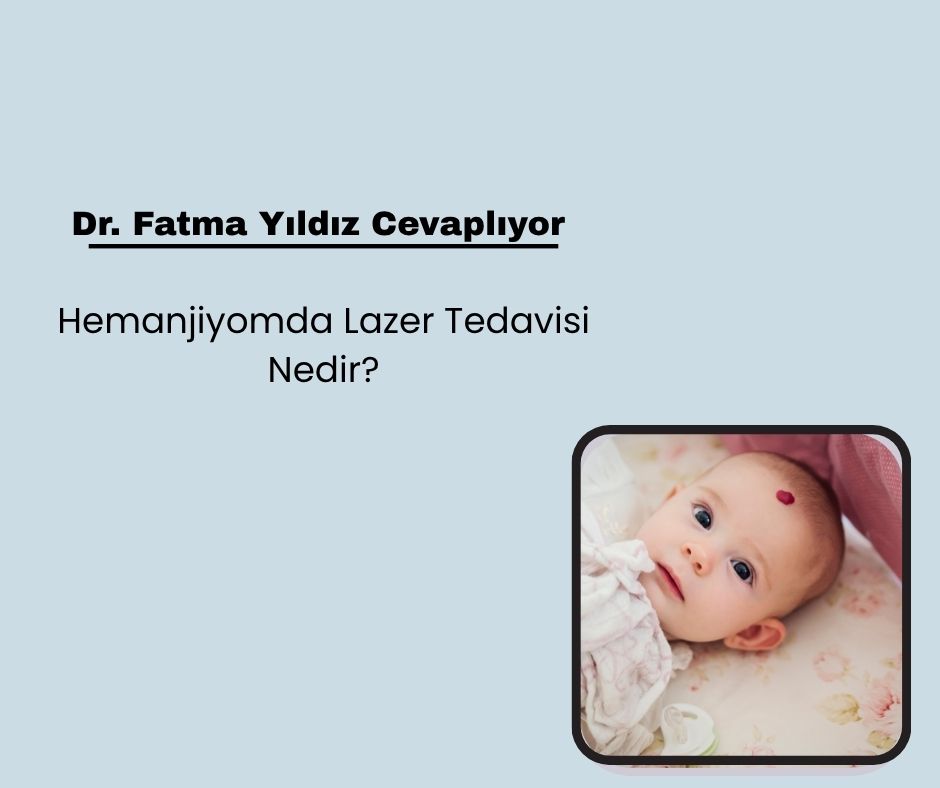

What is Laser Treatment in Hemangioma?
Modern Approaches and Effectiveness
Hemangioma is the general name of benign vascular tumors formed by abnormal proliferation of endothelial cells. These lesions are structurally classified into three main groups: capillary, cavernous and telangiectatic. These formations, which are especially common in infancy, can cause significant problems in terms of both aesthetics and functionality. Today, laser applications are among the remarkable, effective and safe methods in the treatment of hemangiomas.
Types of Hemangioma and Their Biological Behavior
Infantile hemangioma (strawberry nevus) is the most common benign vascular tumor that occurs at birth or in the first few weeks after birth. It usually appears as superficial, deep or mixed (including both types). These tumors go through three main stages:
Proliferative stage (0–12 months): There is rapid proliferation of endothelial cells.
Involution phase (1–12 years): The lesion gradually shrinks and fibrous tissue formation begins.
Residue phase: Erythema and superficial vascular dilatations may remain.
Although most hemangiomas regress spontaneously, treatment may be required in some cases.
In Which Cases is Treatment Required?
Indications for treatment include:
Location affecting vital functions such as vision and respiration
Ulceration
Large facial lesions
Systemic involvement
Aesthetically significant disorders
Laser Hemangioma Treatment
Laser treatments, especially Pulse Dye Laser (PDL), are effectively used in hemangiomas. Oxyhemoglobin, the target chromophore in vascular lesions, is selectively absorbed by the laser light, causing damage to vascular structures. This principle is defined as the selective photothermolysis theory.
Laser Types Used:
Pulse Dye Laser (PDL): This is the most commonly used laser type. It operates at a wavelength of 585–595 nm. It is effective in superficial and early-stage lesions.
Nd:YAG Laser (1064 nm): It is preferred for deeper-seated lesions, but its effectiveness is limited in children.
Sequential Laser Applications: Combined treatments with different wavelengths (e.g. PDL + Nd:YAG) may increase success rates.
PDL Application Details
PDL application is usually performed with the following parameters:
Fluence: 5.5–6 J/cm²
Spot width: 5 mm
Pulse duration: 1.5 ms
Session interval: 2–4 weeks
Total number of sessions: may vary between 2–12
Local/topical anesthesia is preferred in children during treatment, while general anesthesia may rarely be required.
Effectiveness and Clinical Findings
Studies on the effectiveness of laser treatment provide conflicting results. While some studies have found no difference between patients treated with PDL and those followed without treatment, some studies have observed that PDL stops growth, especially in ulcerated and early hemangiomas.
Advantages such as shorter proliferative phase and less pigmentary changes have been reported in babies treated with PDL.
Side Effects and Complications
The most common side effects of laser treatments are:
Crust formation
Vesicle and erosion
Hyper-hypopigmentation
Rarely: herpes reactivation, wound infection, excessive granulation tissue, pyogenic granuloma
Laser + Medical Treatment Combinations
Laser treatments combined with propranolol may be more effective, especially in resistant or widespread lesions. These combinations may provide more successful results than laser or drug treatment alone.
Conclusion and Recommendations
Laser treatment in infantile hemangiomas is safe and effective, especially in the early stages, in ulcerated lesions, and in the removal of residual erythema-telangiectasias after involution. An individual evaluation should be made for each patient and an appropriate treatment plan should be created.
 Call
Call
 Whatsapp