


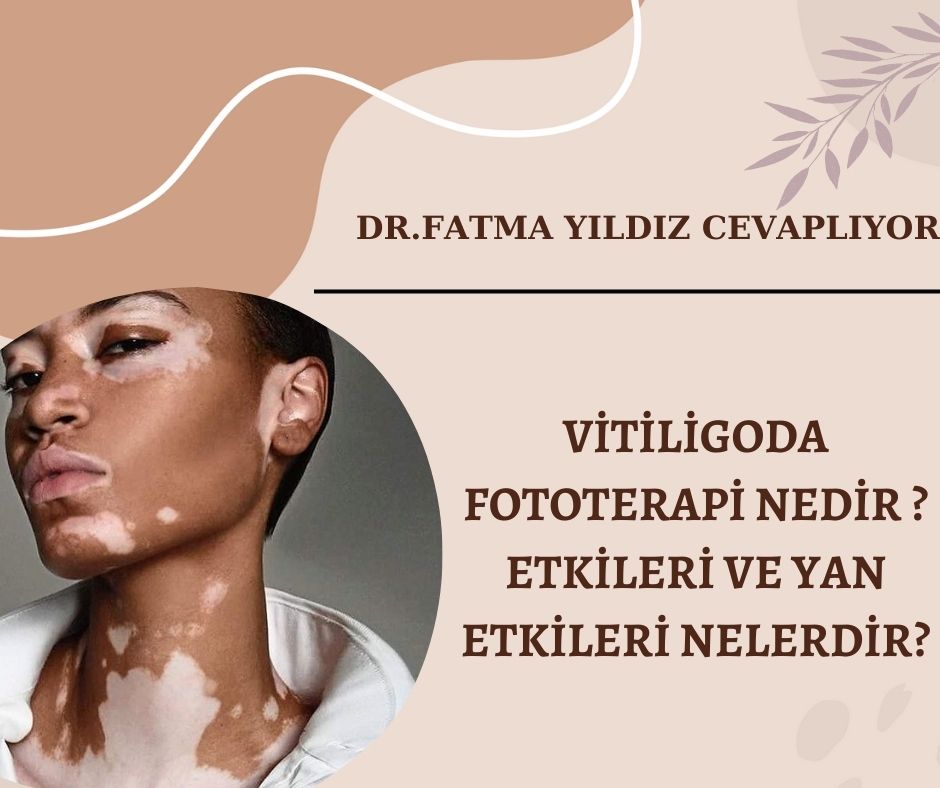

What is Phototherapy in Vitiligo?
In the treatment of vitiligo, phototherapy aims to restore color to the skin using special ultraviolet rays. In particular, narrow-band ultraviolet-B (DBUVB) treatment is the first choice for patients with widespread vitiligo. The light given to the skin during phototherapy stimulates melanocytes and increases color production.
DBUVB is considered a safe method for both children and adults. In general, the treatment needs to be applied regularly for 12 months to be effective. Studies have shown that DBUVB gives better results than other methods.
Side Effects of Phototherapy
Although phototherapy is mostly a safe method, it may have some side effects:
Short-Term Side Effects: Reactions such as redness, burning sensation or swelling may occur on the skin. These conditions are usually mild and can be controlled with creams.
Long-Term Side Effects: Long-term use of phototherapy can lead to problems such as dryness, wrinkles and decreased skin elasticity.
Phototherapy and Skin Cancer Risk
The risk of skin cancer is a frequently discussed topic during phototherapy. However, recent studies have shown that DBUVB treatment does not significantly increase the risk of skin cancer. Some studies have indicated that the risk of some lesions on the skin, such as actinic keratosis, may increase with very long-term treatments (more than 200 sessions). However, in general, the rate of melanoma or other types of skin cancer in vitiligo patients is low.
Is Phototherapy Safe?
According to research, DBUVB phototherapy is a safe and effective method in the treatment of vitiligo. However, especially the elderly, those with fair skin or patients who have received phototherapy for a long time should be monitored more carefully for skin cancer.
In conclusion, phototherapy offers both an effective option in the treatment of vitiligo and is generally considered safe. However, regular doctor check-ups are important during the treatment process and a personalized plan should be made.
 Call
Call
 Whatsapp