


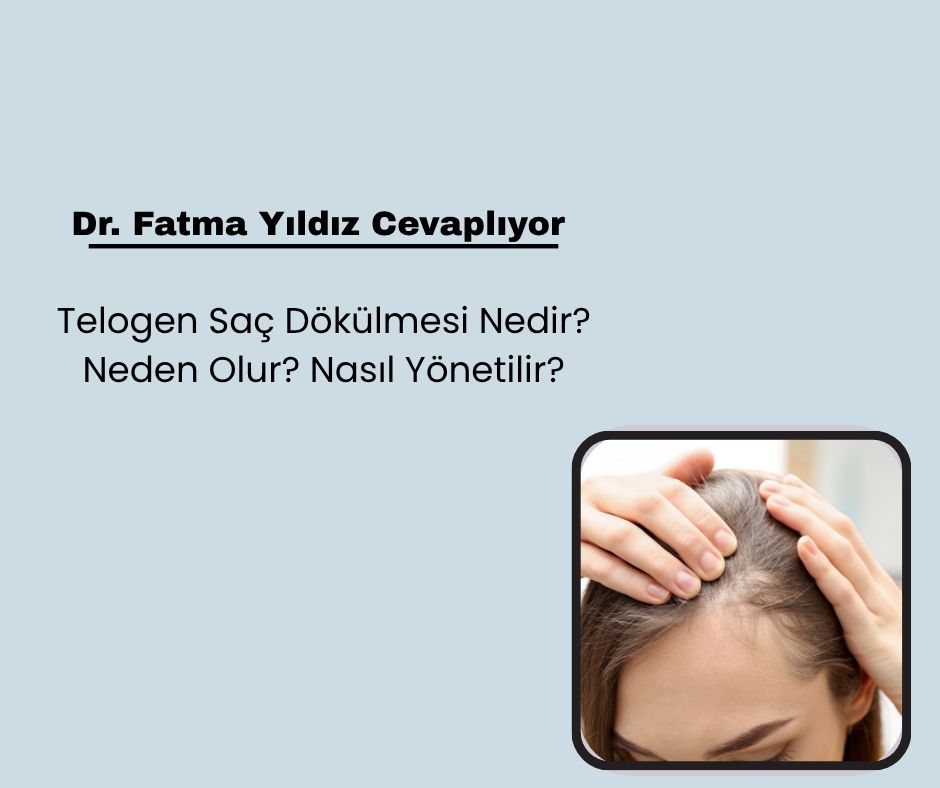

What is Telogen Hair Loss? Why does it occur? How is it managed?
Telogen hair loss, or telogen effluvium (TE), as it is known in medicine, is one of the most common types of hair loss that develops due to disruptions in the resting phase of the hair cycle. TE is often temporary, but it is a very worrying condition for patients. So what are the causes of this loss, how is it diagnosed, and what methods can it be treated with?
What is Telogen Effluvium?
Hair moves in a cycle throughout its life: it goes through the anagen (growth), catagen (transition), and telogen (resting) phases. Under normal conditions, 85-90% of hair is in the anagen phase, and 10-15% is in the telogen phase. It is considered normal to lose 50-100 hairs per day. However, if this number exceeds 150, telogen effluvium may be suspected.
TE is a condition in which hair loss becomes apparent when the hair follicles suddenly or gradually switch to the telogen phase. Generally, widespread shedding is observed throughout the scalp. Telogen hair loss is divided into two categories: acute and chronic.
Acute Telogen Effluvium (ATE)
ATE is usually triggered by reasons such as sudden stress, birth, high fever diseases, traumas, surgeries or hormonal changes. Under the influence of these factors, hair begins to fall out within 1-2 months and this situation can last up to 6 months. It is especially common in women after giving birth.
Chronic Telogen Effluvium (CTE)
CTE is characterized by hair loss that lasts longer than 6 months. It is usually more common in women and there is an underlying health problem. It can occur due to reasons such as iron deficiency, thyroid disorders, systemic diseases, some medications, chronic stress or nutritional deficiencies.
Causes of Telogen Effluvium
Some common causes of acute and chronic TE are presented in a table below:
Causes of Acute TE Causes of Chronic TE
Infections Androgenetic alopecia
Fever diseases Dermatological diseases
Birth Thyroid diseases
Surgical operations Chronic starvation, malnutrition
Accident, trauma Chronic diseases, anemias
Drugs (retinoids, anticoagulants) Autoimmune diseases (e.g. SLE)
Acute stress Long-term physical stress
Diagnostic Approach
The first step in diagnosis is to question the stressors and triggering factors in the 2-5 months before the onset of hair loss. In the physical examination, the general condition of the scalp, structures such as inflammation, atrophy, and scars are examined. In addition, diagnostic tools such as the “modified hair washing test”, trichoscopy, trichogram, and phototrichogram are also used.
Methods Used in Diagnosis
1. Modified Hair Washing Test: After washing the hair of a patient who has not washed their hair for 5 days, the lost hair is collected and evaluated. If there is more than 10% hair in the telogen phase, it is interpreted in favor of TE.
2. Trichogram: Hair roots are examined under a microscope, the telogen and anagen ratio is determined. If there is more than 25% telogen hair, TE is supported.
3. Phototrichogram: A determined area on the scalp is shaved and photographed at different times to calculate the telogen hair ratio.
4. Trichoscopy: Examination of the hair and scalp with a dermoscope. It is very helpful in distinguishing TE from androgenetic alopecia.
5. Biopsy: It is very rarely necessary. Diagnosis is usually made with a 4 mm punch biopsy.
Treatment and Management
The most important point in the treatment of TE is to determine the underlying cause. If there is a stress factor, it must be eliminated. In cases of dietary deficiencies, vitamin deficiencies or drug-related hair loss, when the cause is corrected, hair loss stops and hair grows back.
In chronic cases, supportive treatments such as topical minoxidil or PRP can be applied to increase hair density. Minoxidil is used in concentrations of 2-5% in both female and male patients. In addition, treatments such as topical caffeine, ketoconazole shampoo, systemic antioxidants, iron and zinc supplements may also be beneficial.
Important: Biotin, selenium, zinc, iron, vitamin C and B12 deficiencies have been shown to play an important role in the development of TE.
New Approaches in Telogen Effluvium
In recent years, mesotherapy, stem cell-supported treatments, polynucleotide-containing products and low-dose laser therapies have also begun to be used in the treatment of telogen hair loss. In addition, TZP (platelet-rich plasma) injections are also promising. A study published in 2023 showed that TZP treatment increased hair thickness and density.
In addition, shampoos containing acrylate polymers and keratin in hair cosmetics help thicken hair strands.
As a result, detailed history should be taken, diagnostic tests should be performed and the underlying causes should be investigated in patients who apply with telogen effluvium hair loss complaints. With correct diagnosis and personalized treatment, this type of hair loss is largely reversible.
If you would like to get more information on this subject and create your own personal treatment plan, you can contact Dermatologist Doctor Fatma Yıldız at Ankara Life Polyclinic.
 Call
Call
 Whatsapp